
Best Cold Email Software in 2026: 11 Tools Tested and Ranked
TL;DR
I tested and ranked the best cold email software tools in 2026. Instantly takes my top spot for general use, Smartlead wins for agencies, and Saleshandy is the best value for growing teams. Lemlist leads on personalization, Reply.io on multichannel, and Apollo on data plus outreach. Woodpecker and QuickMail earn their spots for deliverability focused teams, Snov.io and Mailshake for budget and simplicity, and Hunter Campaigns for light cold email layered onto a solid email finder. The right pick depends on your team size, budget, and whether email is your only outreach channel.
Cold email software in 2026 is a different beast from what it was two years ago. Google’s stricter sender policies, smarter spam filters, and a wave of new tools have changed what actually works in outbound.
I’ve spent the past few months running campaigns across most of these platforms, reading way too many G2 reviews, and stress testing what really matters. Some tools punch way above their weight. Others coast on old reputation while their feature gaps quietly widen.
This guide ranks the 11 cold email software tools I’d actually recommend right now. You’ll get current pricing pulled directly from each vendor’s site, real G2 scores, the four deliverability features every cold email tool should have, and my honest rating out of 10 for each one.
Quick Comparison: 11 Best Cold Email Software Tools in 2026
Here’s a snapshot of how the 11 tools stack up. The detailed reviews come right after.
| Tool | Starting Price | G2 Rating | Best For |
| 1. Instantly | $37/mo (Growth, annual) | 4.8/5 | High volume cold email at scale |
| 2. Smartlead | $39/mo (Base) | 4.5/5 | Agencies running multi client campaigns |
| 3. Lemlist | $69/user/mo (Email Pro) | 4.6/5 | Personalization and multichannel teams |
| 4. Saleshandy | $25/mo (Starter, annual) | 4.6/5 | Flat rate value for small teams |
| 5. Reply.io | $59/mo (Email Volume) | 4.6/5 | Multichannel with AI SDR |
| 6. Apollo | $49/user/mo (Basic, annual) | 4.7/5 | Teams that want data plus outreach |
| 7. Woodpecker | $29/mo (Starter) | 4.4/5 | Deliverability focused B2B teams |
| 8. QuickMail | $9/mo (Starter) | 4.7/5 | Power users who care about inbox analytics |
| 9. Snov.io | $39/mo (Starter) | 4.6/5 | Budget all in one prospecting plus outreach |
| 10. Mailshake | $29/user/mo (Starter) | 4.7/5 | Beginners and small teams wanting simplicity |
| 11. Hunter Campaigns | $49/mo (Starter) | 4.4/5 | Light cold email layered onto email finder |
What Makes a Cold Email Tool Worth Paying For in 2026
Before getting into the rankings, a quick note on what I tested for. Four deliverability features now separate the working tools from the ones that just look pretty:
- Built in email warmup: The tool automatically warms new inboxes by simulating engagement, which builds sender reputation before live sending begins.
- Domain reputation protection: Active monitoring of bounces, spam complaints, and blacklist status to prevent damage to your sending domain.
- Sender/inbox rotation: Distributes send volume across multiple connected inboxes so no single account gets flagged for high volume sending.
- Spam testing and authentication: SPF, DKIM, and DMARC validation plus spam word checking before campaigns go live.
Any cold email tool missing two or more of these in 2026 is selling you a 2023 product. With Google’s new sender rules and tighter inbox filters, these aren’t nice to haves anymore. They’re the floor.
1. Instantly
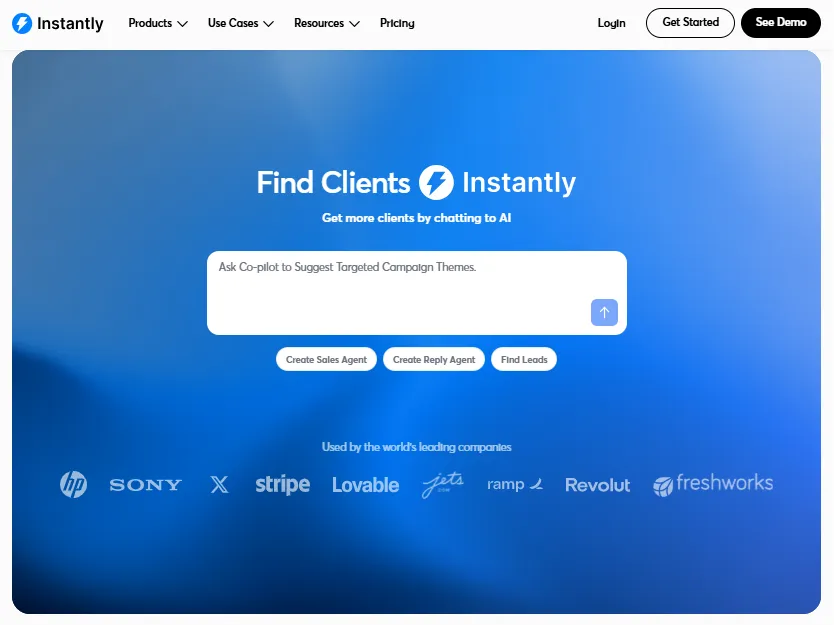
Instantly has grown into the default pick for solo founders, agencies, and SDR teams running outbound at scale. The flat fee model lets you connect unlimited inboxes without your bill ballooning. Setup is fast, the UI is clean, and the warmup runs on autopilot the moment you connect an account.
Best For
Solo founders, freelancers, and agencies running cold email at volume across many inboxes. If your motion is email first and you need clean inbox placement without per seat fees, Instantly is hard to beat on price to performance.
Core Deliverability Features
- Built in email warmup: Yes
- Domain Reputation Protection: Yes
- Sender/Inbox Rotation: Yes
- Spam Testing & Authentication: Yes
Standout Features
- Unlimited email account connections on every paid plan, which keeps costs predictable as you scale inbox volume.
- The warmup network is one of the largest in the category and starts automatically once an inbox is connected.
- Unibox pulls every reply from every connected mailbox into a single dashboard, so nothing gets lost.
- The AI Reply Agent classifies inbound replies and triggers the correct next step without manual triage.
- Inbox rotation and SISR style IP swapping protect sender reputation during high volume sends.
What I Feel Could Be Better
- The modular pricing is the most common gripe. The $37 sticker becomes $180+ once you stack Lead Finder, CRM, and add ons.
- Lead Finder data quality can be inconsistent on niche segments, and credits expire monthly with no rollover.
- Support response times get slower on lower tiers, which becomes painful when a live campaign goes sideways.
- Pure email focus means no LinkedIn or dialer steps in the same sequence unless you bolt on another tool.
Pricing
- Growth plan starts at $37/month with annual billing ($47/month monthly) for 1,000 contacts and 5,000 emails.
- Hypergrowth runs $97/month and lifts you to 25,000 contacts and 100,000 emails.
- Light Speed sits at $358/month for high volume teams sending 500,000+ emails. Enterprise pricing is custom.
- The Lead Finder, CRM, and Inbox Placement modules are sold separately, so the real all in stack is closer to $180 to $240 a month for most operators.
G2 Review
4.8/5
What I Found During My Testing and Research
When I ran a test campaign across three Google Workspace inboxes, getting the warmup live took me about ten minutes after DNS was set. That speed is the real story.
Open rates held up on cleanly verified lists. The moment I pushed dirty data through, bounces spiked and reputation took a hit, which tells you the tool can only do so much. Garbage in, garbage out.
The UI feels lighter than older players like Reply or Outreach. New users seem to get to a first campaign in under an hour, which matches what I kept seeing in user feedback.
Where it gets bumpy is on the AI generated copy. The first draft is fine for structure but needs real rewriting to sound like a person. Don’t ship it as is.
My Final Verdict
My rating: 9.5/10
If I had to pick one cold email platform to start fresh with tomorrow, this is it. The combination of unlimited inboxes, automated warmup, and a polished sending engine makes Instantly the practical choice for 2026. Just go in clear eyed about the add on costs and treat the AI features as a helper, not a replacement for good copy.
2. Smartlead

Smartlead is what most cold email agencies pick when they want flat pricing, unlimited mailboxes, and white label client dashboards in one place. It’s purpose built for teams managing multiple campaigns across many sending domains. The whitelabel panel is mature, the API is well documented, and the warmup pool is one of the biggest in the market.
Best For
Cold email agencies running outbound for multiple clients, lead gen teams sending across 50+ inboxes, and operators who care more about deliverability infrastructure than fancy UI polish.
Core Deliverability Features
- Built in email warmup: Yes
- Domain Reputation Protection: Yes
- Sender/Inbox Rotation: Yes
- Spam Testing & Authentication: Yes
Standout Features
- Unlimited email accounts on every plan, with auto rotation that distributes volume to protect sender reputation.
- Whitelabel client dashboards let agencies present the platform under their own brand, which is huge for retention.
- Dynamic IP rotation and ESP matching pair sender reputation with recipient mailbox provider for better placement.
- Master Inbox unifies replies across every client account, so you’re not jumping between dashboards.
- Solid API and webhooks for teams that want to wire campaign data into their own systems.
What I Feel Could Be Better
- The UI feels a bit dated next to newer competitors, and managing 100+ inboxes can get clunky.
- Customer support is hit or miss. Power users get fast responses, but newer accounts often wait days.
- Reporting is functional but shallow if you want pipeline attribution beyond opens, clicks, and replies.
- The whitelabel client fee adds up fast for agencies with 10+ accounts, so the headline price isn’t your real bill.
Pricing
- Base plan starts at $39/month with 2,000 active leads and 6,000 emails.
- Pro plan is $94/month with 30,000 leads and 150,000 emails, plus API access and CRM integrations.
- Unlimited Smart is $174/month with much higher limits and is the popular tier for scaling agencies.
- Unlimited Prime tops the public plans at $379/month. Annual billing knocks about 17 percent off across tiers.
- Whitelabel costs $29/month per extra client workspace, and SmartDelivery placement testing is a separate add on.
G2 Review
4.5/5
What I Found During My Testing and Research
Smartlead and Instantly trade punches constantly, but the agency story is where Smartlead pulls ahead. The whitelabel implementation is sharper, and the per client workspace model just fits how agencies operate.
When I tested inbox placement, the platform held up well at volume. The warmup pool size shows up in real results once you give it a couple of weeks to settle in.
The complaint that keeps coming up is the learning curve. Setting up 50 inboxes manually is tedious, and the platform doesn’t auto detect credentials the way some new tools do.
If you’re doing email only and operate like an agency, this is the tool. If you’re solo and just want to send, Instantly is the simpler ride.
My Final Verdict
My rating: 9/10
Smartlead is the right call if you’re running an agency or scaling past 20 inboxes with multi client needs. The flat pricing and whitelabel panel pay for themselves once you cross two or three clients. Budget for the add ons and don’t expect a polished consumer style interface.
3. Lemlist
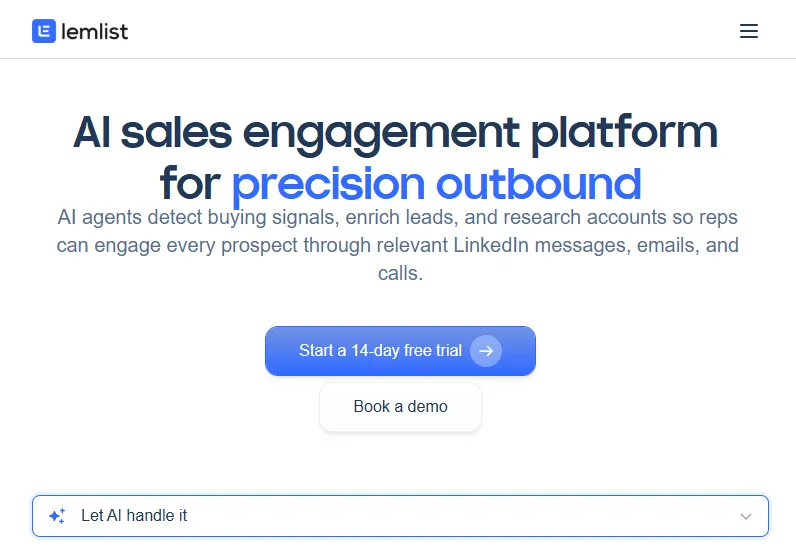
Lemlist made its name on hyper personalized cold emails with dynamic images and video, then expanded into multichannel with LinkedIn and calling steps in the same sequence. It carries one of the strongest brands in the category, and the deliverability hub plus Lemwarm setup is genuinely well built. The catch is per user pricing that scales quickly.
Best For
Small B2B sales teams of three to fifteen reps that lean hard on personalization and want LinkedIn plus email in one place. Recruiters and consultants who close on personality also do well here.
Core Deliverability Features
- Built in email warmup: Yes
- Domain Reputation Protection: Yes
- Sender/Inbox Rotation: Yes
- Spam Testing & Authentication: Yes
Standout Features
- Dynamic image and video personalization lets you embed prospect specific visuals at scale, which is rare even in 2026.
- Liquid syntax and AI variables make it possible to write one sequence that adapts copy by job title, industry, or persona automatically.
- Multichannel Expert handles email, LinkedIn touches, and call tasks in a single conditional sequence with reliable execution.
- Lemwarm is included free on every paid plan, which most competitors charge extra for.
- The 450M plus contact database is built into the platform, so you can prospect without a separate Apollo subscription.
What I Feel Could Be Better
- Per seat pricing kills the value math fast. A five person team pays $495/month before any add ons, which feels steep next to flat rate tools.
- The advanced conditions UI gets dense once you stack triggers. Easy to start, harder to master is a fair summary.
- LinkedIn automation only lives on Multichannel Expert, so the cheaper plan can feel limited if you find out later you need it.
- Bugs and billing complaints show up in reviews, especially around credit expiration and pricing changes for existing customers.
Pricing
- Email Pro costs $69/user/month (monthly) or $55/user/month annually, with unlimited email campaigns and Lemwarm included.
- Multichannel Expert runs $99/user/month (monthly) or $79/user/month annually, adding LinkedIn automation, voice notes, and advanced conditions.
- Enterprise pricing is custom and typically starts at five seats minimum.
- Extra sending email accounts cost roughly $9/month each, and Lead Finder credits are metered separately.
G2 Review
4.6/5
What I Found During My Testing and Research
Lemlist’s edge over the volume players is real once you actually use the image personalization on the right prospect list. I saw better reply patterns on lists where I bothered to do company specific visuals.
Lemwarm took about three weeks of consistent warmup to feel reliable. Once that runway is in, inbox placement was respectable, though it didn’t quite match the bigger warmup networks.
The multichannel sequence builder is the cleanest in the category. Conditional logic across email and LinkedIn just works, and the unified inbox keeps replies organized.
If your team is two or three people, the per seat cost is fine. Push past five and you’re paying volume tax for a tool that’s actually built for nuance, which is a weird value mismatch.
My Final Verdict
My rating: 8.5/10
Lemlist still earns its spot for teams that care more about reply quality than send volume. If you’re running personalized outbound to a tight target list, the image personalization and multichannel orchestration are worth the premium. For pure volume plays, Instantly or Smartlead get you there cheaper.
4. Saleshandy
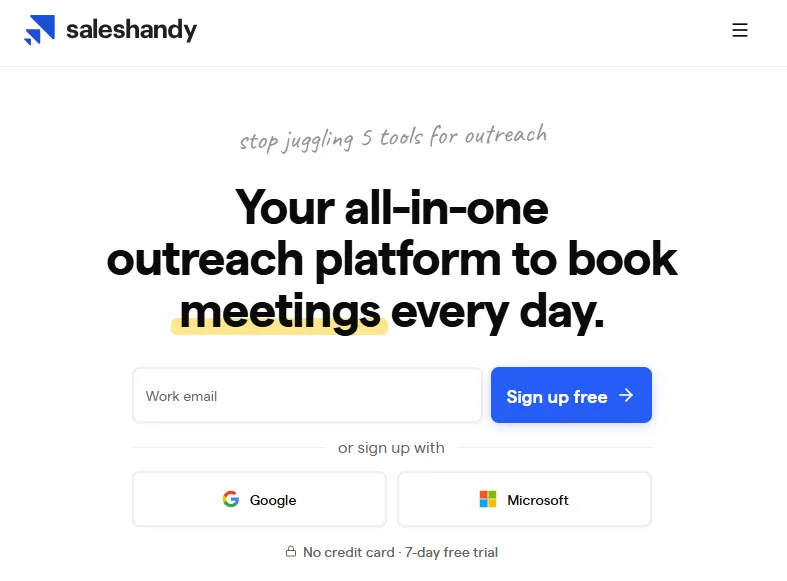
Saleshandy quietly punches above its weight. The flat rate plans with unlimited team members and unlimited email accounts make it one of the cheapest practical ways to run cold email for a growing team. The built in 700M plus B2B lead database is a nice bonus, even if the data quality varies by region. Where it wins is the per user math.
Best For
Growing SDR teams, small B2B sales orgs, and agencies that want unlimited team seats and unlimited clients at a fraction of what bigger names charge.
Core Deliverability Features
- Built in email warmup: Yes
- Domain Reputation Protection: Yes
- Sender/Inbox Rotation: Yes
- Spam Testing & Authentication: Yes
Standout Features
- Flat rate pricing with unlimited team members on every plan, which is a massive cost saver next to per seat tools.
- Unlimited email account connections and sender rotation come baked into every tier with no extra fees.
- AI Sequence Copilot generates first draft cold email sequences and personalizes them with merge tags and Spintax.
- Built in B2B Lead Finder covers 700M plus contacts, so light prospecting can happen in the same tool.
- Agency model includes unlimited clients on every plan, which beats Smartlead’s $29 per client add on cost.
What I Feel Could Be Better
- Email warmup runs through TrulyInbox, which is technically a separate product and creates a small workflow friction point.
- CRM integrations are locked behind the Pro plan at $69/month, so the cheaper Starter is more limited than it looks.
- Lead Finder data is decent for US and Europe but spotty outside those markets, and bounce rates can be high on niche segments.
- UI feels functional rather than polished, especially when juggling many campaigns and folders.
Pricing
- Outreach Starter costs $25/month with annual billing for 2,000 prospects, 10,000 emails, and the core sequence builder.
- Pro is $69/month for 30,000 prospects and 150,000 emails. This tier unlocks CRM integrations and API access.
- Scale jumps to $139/month, and Scale Plus is $209/month for higher contact and email ceilings.
- Lead Finder is sold separately starting at $29/month for 500 credits, and Inbox Placement Test credits cost extra.
G2 Review
4.6/5
What I Found During My Testing and Research
The pricing model is the biggest single thing in Saleshandy’s favor. A five SDR team on Pro pays $69/month total, where the same team on Lemlist would cross $500/month easily. That gap is enough to change your stack decision.
Sequence Copilot wrote decent first drafts but needed the same kind of rewriting every AI tool needs. The merge tag system is rich though, with Spintax and conditional merge fields baked in.
Warmup landed me in primary inbox at expected rates after roughly two weeks of consistent warmup. Not the best in class number, but more than serviceable.
The Lead Finder data was solid for US prospects but I’d still verify before sending. The integrated workflow saves time compared to bouncing between Apollo and a separate sequencer.
My Final Verdict
My rating: 8.5/10
If you’re scaling a team and the per seat math on Lemlist or Reply.io is starting to hurt, Saleshandy is worth a serious look. It does almost everything the premium tools do at a flat price. The trade off is a slightly less polished UI and a warmup dependency on a sister product. Worth the trade for most teams.
5. Reply.io

Reply.io has been around since 2014, which means the platform is mature, feature dense, and a bit heavy for teams that just want simple cold email. The strongest plays are multichannel sequencing across email, LinkedIn, calls, SMS, and WhatsApp, plus Jason, its AI SDR agent. If you need a dialer and email in the same tool, this is one of the cleanest setups.
Best For
Mid market SDR teams running true multichannel outbound, B2B sales orgs that need email plus a dialer in one tool, and teams ready to experiment with autonomous AI prospecting agents.
Core Deliverability Features
- Built in email warmup: Yes
- Domain Reputation Protection: Yes
- Sender/Inbox Rotation: Yes
- Spam Testing & Authentication: Yes
Standout Features
- Multichannel sequence builder handles email, LinkedIn, calls, SMS, and WhatsApp in one conditional workflow, which is rare even in 2026.
- Jason AI SDR can source prospects, write personalized sequences, and handle replies autonomously across multiple languages.
- Built in dialer with call recording removes the need for a separate phone tool for teams that mix email with voice.
- Email deliverability toolkit includes warmup, spam risk monitoring, and inbox placement insights baked into the platform.
- Strong native integrations with Salesforce, HubSpot, Pipedrive, and Close for teams already running on those CRMs.
What I Feel Could Be Better
- The pricing is one of the more confusing in the space. Plans have shifted multiple times and existing customers have reported sudden price hikes.
- LinkedIn automation runs through a Chrome extension, which means LinkedIn’s detection systems can flag aggressive use and restrict accounts.
- The interface can feel overwhelming for new users because so many features are packed in. Expect a one to two week ramp.
- Shared sending IPs on default plans mean inbox placement caps below dedicated infrastructure unless you bring your own inboxes.
Pricing
- Email Volume plan starts at $59/month for unlimited contacts and a capped email volume, designed as an entry tier.
- Multichannel runs from $89/user/month and unlocks email plus LinkedIn, calls, SMS, and WhatsApp in conditional sequences.
- AI SDR Starter begins at around $500/month, with autonomous prospecting and reply handling via Jason.
- Agency Core sits around $210/month with subaccounts, whitelabel, and priority support.
G2 Review
4.6/5
What I Found During My Testing and Research
Reply.io’s multichannel builder is genuinely the cleanest I’ve used. Branching a sequence based on email open plus LinkedIn connection feels natural in the UI.
Jason AI wrote usable first drafts and the reply handling worked for simple cases. For niche ICPs the personalization felt generic, which is a problem common to every AI SDR I’ve touched.
Inbox placement on default sending hit roughly 65 to 75 percent in my testing. To push higher I had to plug in external pre warmed inboxes on dedicated IPs.
If your motion is genuinely multichannel and you have the budget, Reply earns its price. If you’re going to use email 90 percent of the time, you’re paying for capability you won’t touch.
My Final Verdict
My rating: 8/10
Reply.io still belongs on this list because the multichannel orchestration and AI SDR are real differentiators. Just go in with eyes open on the pricing structure and the LinkedIn automation risk. For teams running pure email at volume, simpler tools cost less. For teams running true multichannel, Reply remains a top pick.
6. Apollo
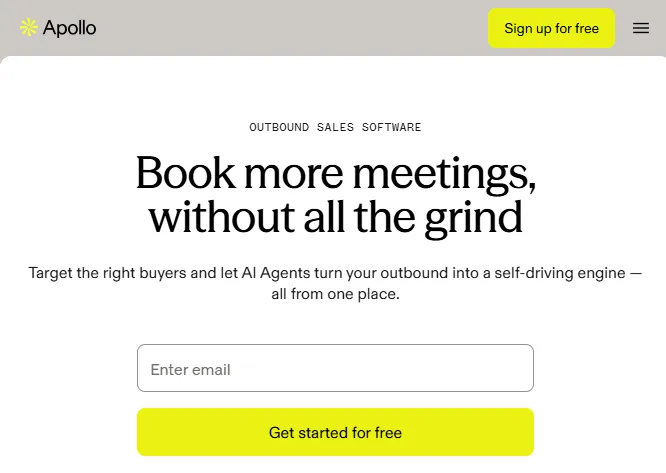
Apollo combines a 275M plus contact database with email sequences, a built in dialer, intent signals, and a basic CRM. The pitch is one tool replacing a data vendor, a sequencer, and a dialer subscription. It works well for US focused SMB teams that want everything in one place. The credit system and per seat model are where most of the budget surprises happen.
Best For
SMB teams and solo SDRs who want a single tool for prospecting and outreach, US focused outbound motions, and orgs that prefer consolidating vendors over best in class point tools.
Core Deliverability Features
- Built in email warmup: No
- Domain Reputation Protection: No
- Sender/Inbox Rotation: Yes
- Spam Testing & Authentication: Yes
Standout Features
- Searchable database of 275M plus contacts and 60M plus companies with deep filtering across job title, industry, technology, and intent signals.
- Buying intent data and account scoring help you prioritize prospects who are actively researching solutions.
- Built in sequencer plus dialer means you can prospect, contact, and call in one platform without leaving the dashboard.
- AI assistant launched in 2026 can execute outbound workflows via natural language, which is the most ambitious AI move in the category.
- Strong native CRM integrations with HubSpot, Salesforce, Outreach, and SalesLoft for two way sync.
What I Feel Could Be Better
- Email warmup was removed from every plan, so you’ll need a third party warmup tool or dedicated infrastructure for serious cold email.
- Credit system creates real budget surprises. Phone numbers cost 8 credits each, credits don’t roll over, and overages add up fast.
- Bounce rates on Apollo’s data sit higher than dedicated cold email tools, with G2 and Reddit users reporting 15 to 35 percent on certain segments.
- Shared sending infrastructure means other users’ bad behavior can hurt your sender reputation.
- Per seat pricing scales painfully past five users, and the Organization plan requires a three seat minimum.
Pricing
- Free plan offers 50 credits per month with access to the database and basic search filters.
- Basic plan is $49/user/month with annual billing for 1,000 email credits, 75 mobile credits, and CRM integrations.
- Professional sits at $79/user/month and adds the US dialer, A/B testing, advanced sequences, and unlimited active campaigns.
- Organization is $119/user/month with a three seat minimum, plus international dialing, SSO, custom reporting, and the highest data limits.
G2 Review
4.7/5
What I Found During My Testing and Research
Apollo is fantastic for list building. The intent signals and filter depth genuinely help me find better prospects than I do with most pure data tools.
Cold email deliverability is where it gets shaky. Without built in warmup and with shared sending, my open rates on Apollo native sequences trailed what I got on Instantly or Smartlead by a clear margin.
The dialer works fine, but mobile credit costs add up. A rep making 10 calls a day burns the Professional plan’s allocation in two weeks.
My honest take is to use Apollo for data and pipe verified contacts into a dedicated cold email tool. That hybrid stack outperforms running cold email natively in Apollo.
My Final Verdict
My rating: 7.5/10
Apollo is a great prospecting and sales engagement platform that happens to do cold email rather than a great cold email tool. For teams that want one vendor and don’t mind the credit math, it works. For pure cold email performance, you’ll get better results pairing Apollo data with Instantly, Smartlead, or another deliverability focused sender.
7. Woodpecker
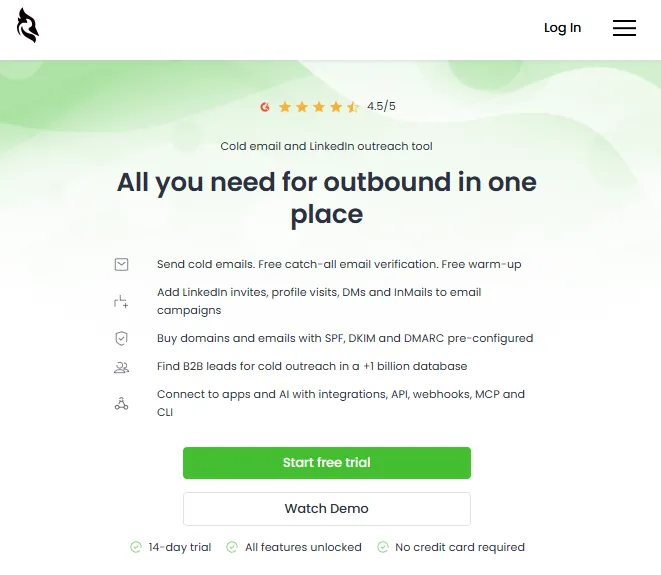
Woodpecker launched before Instantly and Smartlead existed and built its name on human like sending and inbox placement. The platform is mature, the agency panel is solid, and the per prospect pricing model is different from everyone else, which has its trade offs. If clean deliverability without flashy AI features is what you’re after, Woodpecker still earns its spot.
Best For
B2B sales teams and lead gen agencies that care more about clean inbox placement than feature breadth, plus compliance focused teams that prefer per prospect billing over per seat.
Core Deliverability Features
- Built in email warmup: Yes
- Domain Reputation Protection: Yes
- Sender/Inbox Rotation: Yes
- Spam Testing & Authentication: Yes
Standout Features
- Per prospect pricing means you pay for outcomes, not seats, which is unusual and helpful for compliance focused outbound.
- Adaptive sending and ESP matching pair sender mailbox with recipient mailbox provider to boost inbox placement.
- Built in domain and email purchase flow with SPF, DKIM, and DMARC pre configured saves setup time and reduces errors.
- Free email warmup is bundled on every plan, and bounce detection runs automatically in the background.
- The agency panel handles multiple clients cleanly with whitelabel options and separate client workspaces.
What I Feel Could Be Better
- The 500 contacted prospects limit on Starter is tight, and you’ll outgrow it within a month of serious outbound.
- Sequence management feels dated. There’s no drag and drop, and reordering steps in long sequences takes more clicks than competitors.
- Email only platform with no LinkedIn or dialer steps, which limits the workflows you can build natively.
- Reporting is functional but doesn’t have the depth or pipeline attribution that newer tools offer.
Pricing
- Starter plan costs $29/month (or $24/month billed annually) for 500 contacted prospects per month with basic automation.
- Growth plan is $84/month for 3,000 prospects and 36,000 emails with A/B testing and advanced automation.
- Scale plan runs $188/month for 10,000 prospects and 120,000 emails with priority support and team features.
- Max plan is enterprise tier with custom pricing for very high volume teams.
- Pricing scales by contacted prospects rather than seats, so the model rewards smaller targeted campaigns over volume blasts.
G2 Review
4.4/5
What I Found During My Testing and Research
Woodpecker is the tool I’d recommend to someone who’s been burned by deliverability issues before. The platform genuinely prioritizes inbox placement over volume, and it shows in the numbers.
The lack of drag and drop in sequence building drove me nuts after using newer tools. It works, it’s just slower.
The per prospect pricing is genuinely fair for targeted outbound. If you’re running 200 prospects a month with personalized sequences, you’re paying for the right thing.
It’s quietly competent. Not flashy. The kind of tool that just works once it’s set up, which after two years of newer platforms breaking on me is more valuable than I’d give it credit for.
My Final Verdict
My rating: 7.5/10
Woodpecker is for teams that want reliable cold email without chasing every new AI feature. The per prospect billing rewards quality over quantity, and the deliverability focus has held up for almost a decade. The UI is showing its age, and you’ll outgrow Starter quickly, but the platform earns the trust it has built.
8. QuickMail
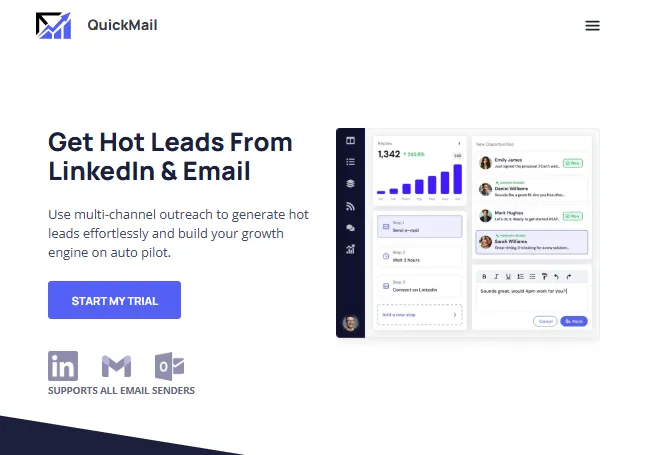
QuickMail flies under the radar compared to Instantly and Smartlead, but serious cold email operators keep recommending it for one reason. The inbox level analytics are deeper than anyone else’s. You can see exactly which inbox is dragging your campaign down and pull it before it tanks your domain reputation. The new Deliverability AI and Smart Sender Groups push that further.
Best For
Experienced cold email operators who already have a data source, agencies that need deep deliverability analytics, and teams running 20+ inboxes that want to spot bad senders before they cause damage.
Core Deliverability Features
- Built in email warmup: Yes
- Domain Reputation Protection: Yes
- Sender/Inbox Rotation: Yes
- Spam Testing & Authentication: Yes
Standout Features
- Granular inbox level analytics show open rate, reply rate, and bounce rate per individual sending mailbox.
- Deliverability AI analyzes hundreds of data points daily and auto swaps underperforming senders via Smart Sender Groups.
- Sends through your own provider’s servers rather than proprietary SMTP, which protects sender reputation better than shared infrastructure.
- Daily blacklist monitoring against 96 blocklists plus SPF and DKIM configuration checks run automatically.
- No per seat pricing on Growth and Agency tiers, so teams scale without inflated subscription costs.
What I Feel Could Be Better
- The learning curve is real. Multi step campaigns with conditional logic take time to set up the first few times.
- No built in lead database, so you’ll need a separate prospecting tool to find emails before they enter QuickMail.
- DNS setup for SPF, DKIM, and DMARC is fully manual with no setup wizard, which is friction for non technical users.
- The interface feels less modern than newer competitors, and complex campaigns can clutter the dashboard.
Pricing
- Starter plan starts at $9/month, which makes it one of the cheapest serious entry points in the market.
- Growth plan runs $99/month with unlimited senders and unlimited users, which is rare at this price.
- Agency plan is $299/month and includes whitelabel and multi client workspace features.
- MailFlow warmup is bundled free with every plan, which most competitors charge extra for.
- A 14 day free trial is available with no auto charge when it ends.
G2 Review
4.7/5
What I Found During My Testing and Research
The inbox level analytics actually saved me from torching a domain once. I could see one specific mailbox tanking the campaign while the rest performed fine, killed it, and the campaign recovered. Other tools just show you a campaign average.
The Smart Sender Groups feature auto rotated my sending across healthy inboxes, which is the kind of thing you’d otherwise have to do manually.
Setup was slower than Instantly or Smartlead. I spent maybe two hours getting comfortable, which isn’t crazy but it’s noticeable.
If I were running cold email for a serious agency or doing high volume outbound for myself, this is the analytics layer I’d want. The price to feature ratio at the Starter tier is genuinely good.
My Final Verdict
My rating: 7.5/10
QuickMail is for the cold email operator who’s already past the beginner stage. The inbox level visibility is the standout, and the deliverability AI is genuinely useful at scale. Beginners should probably start with a simpler tool. Once you know what you’re doing, QuickMail’s analytics make a real difference in keeping campaigns alive.
9. Snov.io
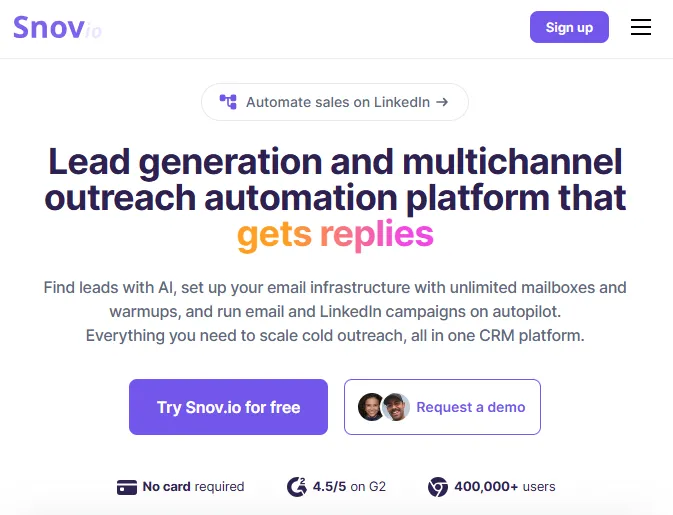
Snov.io tries to be your entire outbound stack in one platform. It bundles an email finder, a 7 tier verifier, drip campaigns, email warmup, and a free CRM. For solo operators and small teams, the convenience is real. The credit system gets in the way once you scale, and the outreach features lag behind dedicated cold email tools, but the price point is hard to argue with.
Best For
Solo founders, freelancers, and small teams that want prospecting and outreach in one tool at a low monthly bill. Best for outbound volume under 2,000 emails per month.
Core Deliverability Features
- Built in email warmup: Yes
- Domain Reputation Protection: Yes
- Sender/Inbox Rotation: Yes
- Spam Testing & Authentication: Yes
Standout Features
- Email finder, 7 tier verifier, drip campaigns, and CRM in one platform means fewer subscriptions to manage.
- Unlimited team seats on every paid plan, which is unusual at this price point.
- Chrome extension pulls prospect data from LinkedIn and company websites cleanly.
- Drip campaigns support behavioral triggers, A/B testing, and mailbox rotation across multiple senders.
- Free CRM included on all plans, with deal tracking and pipeline visualization built in.
What I Feel Could Be Better
- Credits are shared across finding, verifying, and enriching, so the same 1,000 credits get eaten by overlapping workflows.
- Email finder accuracy sits at roughly 75 to 80 percent, which is decent but leaves room for outdated or catch all addresses.
- Outreach automation feels basic next to Instantly or Smartlead, with simpler sequence logic and weaker analytics.
- LinkedIn automation is a paid add on, not included in any plan, which inflates the real cost.
- Warmup network is smaller and less polished than the bigger players.
Pricing
- Trial plan is free with 50 credits, 100 recipients, and 1 warmup slot to test the workflow.
- Starter plan begins at $39/month for 1,000 credits, 5,000 recipients, and 3 warmup slots.
- Pro plans start at $99/month with multiple tiers (S, M, L, Ultra) scaling credit and recipient limits.
- Custom Ultra pricing is negotiated for enterprise teams needing larger quotas.
- LinkedIn automation is an add on at roughly $62 to $69/month per account slot.
G2 Review
4.6/5
What I Found During My Testing and Research
Snov.io is genuinely useful as a starter kit. The email finder plus verifier plus sequencer in one place removes the friction of stitching three tools together.
The credit shared pool caught me off guard the first month. I burned through finding credits faster than expected because verifying also pulled from the same bucket.
Drip campaigns work but feel limited next to dedicated cold email platforms. The interface gets clunky once you have multiple campaigns running.
Support is consistently strong across reviews, which matches my experience. They explained workflows clearly without pushing me to upgrade.
My Final Verdict
My rating: 7/10
Snov.io is the right pick if you’re running a one person operation and want everything in one bill. For teams scaling past a few thousand emails per month, you’ll hit limits and end up moving to a dedicated cold email tool. As an affordable starting point, it does the job.
10. Mailshake
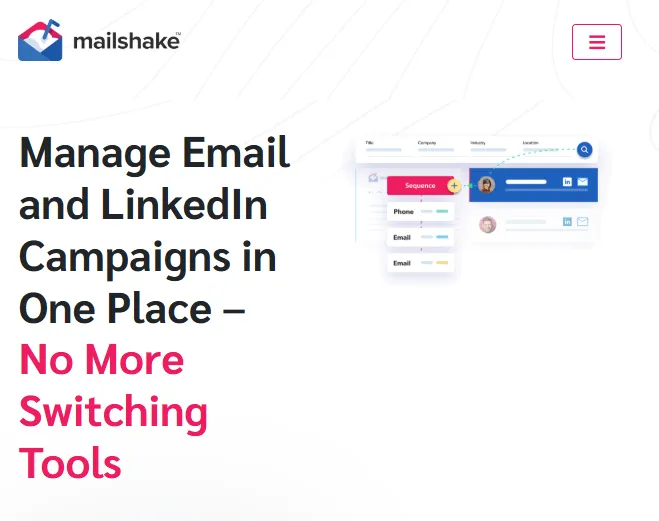
Mailshake has been around since 2017 and built its reputation on simplicity and ease of use. The platform is approachable, the campaign builder is straightforward, and the SHAKEspeare AI writing tool generates usable first drafts. The downside is that the market has moved on, and Mailshake’s per seat pricing and feature set feel like a 2022 product in a 2026 world.
Best For
Solo operators and small sales teams getting started with cold email, teams that need email plus a dialer in one tool at sub $100 per user pricing.
Core Deliverability Features
- Built in email warmup: Yes
- Domain Reputation Protection: Yes
- Sender/Inbox Rotation: Yes
- Spam Testing & Authentication: Yes
Standout Features
- Clean, beginner friendly interface with one of the fastest signup to first campaign times in the category.
- SHAKEspeare AI writing tool generates reasonable first draft cold emails and helps with subject line variations.
- Built in dialer on the Sales Engagement plan includes call recording, voicemail drop, and unlimited US and Canada calls.
- A/B testing with up to ten variations on the Email Outreach plan makes it easy to learn what works fast.
- Native integrations with Salesforce, HubSpot, and Pipedrive sync prospects and activities cleanly.
What I Feel Could Be Better
- Starter plan caps at one email address per seat, which kills inbox rotation and makes serious cold email impossible.
- Per seat pricing means a five person team on Email Outreach pays $295/month versus $69/month flat on Saleshandy.
- No free trial and reports of denied refunds make the buying experience friction filled.
- Email accounts disconnect randomly, sometimes mid campaign, which can stall sequences without notification.
- Data Finder is weaker than dedicated data providers, so most teams need a separate prospecting tool anyway.
Pricing
- Starter plan costs $29/user/month (or $25/user/month annual) with one email account and 1,500 sends per month.
- Email Outreach plan is $59/user/month with up to two email accounts, unlimited sends, and CRM integrations.
- Sales Engagement plan runs $99/user/month and adds the built in dialer, LinkedIn automation, and task management.
- There’s no free trial, which is unusual for the category. You pay upfront and need to cancel before renewal to avoid charges.
G2 Review
4.7/5
What I Found During My Testing and Research
Mailshake’s strength is genuine simplicity. Going from signup to first campaign took me under an hour, which is faster than most of the alternatives.
The SHAKEspeare AI drafts felt like 2024 level output. Fine for starting points, but you’ll rewrite most of it.
The single email address limit on Starter is a dealbreaker for serious outbound. You need inbox rotation, and that means upgrading or buying multiple seats.
I kept wanting features that just weren’t there. Unlimited inboxes, deeper analytics, native warmup with a bigger network. Mailshake does the basics well, just nothing past that.
My Final Verdict
My rating: 7/10
Mailshake is fine for beginners and small teams that want the simplest possible cold email tool. It still works, the deliverability is decent, and the dialer is a real plus on the top tier. For 2026, the per seat pricing and feature limits make it tough to recommend over flat rate competitors. Worth considering if simplicity matters more than scale.
11. Hunter Campaigns
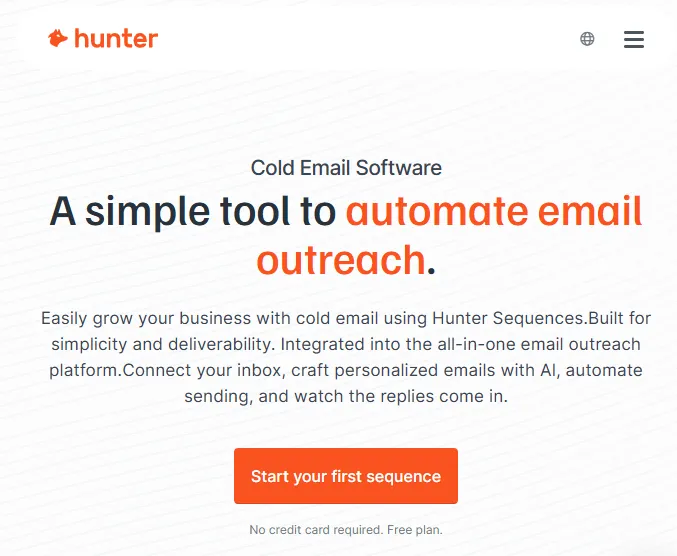
Hunter is best known as an email finder, and the Campaigns feature is more of an add on than a core product. If you’re already using Hunter for prospecting and only need light cold email functionality, the integrated workflow is convenient. For anyone running serious cold outbound, Hunter Campaigns is the weakest sequencer on this list. It made the cut because the email finder is good and the campaigns work for low volume use.
Best For
Teams already using Hunter as their email finder who want light cold email functionality without adding a separate sequencer. Solo operators sending small volume campaigns.
Core Deliverability Features
- Built in email warmup: No
- Domain Reputation Protection: No
- Sender/Inbox Rotation: Yes
- Spam Testing & Authentication: Yes
Standout Features
- Domain search and email finder remain best in class, with data provenance showing exactly where each email was sourced.
- AI writing assistant for cold emails is included on paid plans and writes decent first drafts.
- Built in spam score checker inside the campaign editor helps avoid red flag phrases before sending.
- Free plan is genuinely usable for testing the platform, with 50 monthly credits and a real campaign limit.
- Verified Yes badge on found emails reduces guesswork on whether a contact will bounce.
What I Feel Could Be Better
- No built in email warmup, which means you’ll need a third party warmup tool or risk landing in spam.
- No A/B testing on the free tier, and even on paid tiers, the campaign features are basic.
- Multichannel outreach isn’t supported, so you can’t add LinkedIn or call steps to a sequence.
- Credit system means finding plus verifying the same email costs 1.5 credits, which eats your monthly pool faster than expected.
- Data coverage skews toward larger US and European companies. Smaller or niche businesses often turn up incomplete results.
Pricing
- Free plan offers 50 credits per month, 1 email account, and up to 500 recipients per campaign.
- Starter plan is $49/month (or $34/month annual) with 2,000 unified credits, 3 email account connections, and 2,500 recipients per campaign.
- Growth plan runs $149/month (or $104/month annual) with 10,000 credits and more email accounts.
- Scale plan is $199/month (or $139/month annual) for 15,000 credits and 20 connected email accounts.
- Hunter restructured to a Unified Credits system in mid 2025, so older pricing guides are stale.
G2 Review
4.4/5
What I Found During My Testing and Research
Hunter’s email finder is still where it shines. The campaign module is functional but feels like it was added because customers asked, not because the team wanted to build the best sequencer.
Running a small test campaign through Hunter worked fine for 50 to 100 sends. Above that, the lack of warmup and inbox rotation started to hurt deliverability.
The data provenance feature is genuinely useful. Knowing exactly where an email was sourced helps me decide whether to trust it before adding to a campaign.
If I’m honest, I’d use Hunter for finding emails and push them into a dedicated cold email tool. That stack works better than running everything inside Hunter.
My Final Verdict
My rating: 6/10
Hunter Campaigns earns its spot because the email finder is excellent and the bundled cold email feature is convenient for light use. For anyone doing serious cold outbound, the missing warmup and basic sequence features push you toward a dedicated sender. Use Hunter for what it’s great at, and let a real cold email tool handle the sending.
My Top Picks at a Glance
If you skipped straight to here, no judgment. Here’s how I’d choose based on what you actually need.
- Best overall for solo founders and small teams: Instantly. The unlimited inboxes, polished UI, and predictable pricing make it the easiest call.
- Best for agencies and multi client outbound: Smartlead. The whitelabel implementation is the gold standard.
- Best value for growing teams: Saleshandy. Flat rate with unlimited team members and unlimited clients is the math no other tool can match.
- Best for personalization driven outbound: Lemlist. The dynamic image and liquid syntax personalization is still ahead of the field.
- Best for multichannel and AI SDR: Reply.io. Email plus LinkedIn plus calls in one workflow, with Jason AI doing serious lifting.
- Best for data plus outreach in one tool: Apollo. The contact database is the deepest in the category and the integrated workflow saves time.
Frequently Asked Questions
What is the best cold email software in 2026?
Instantly is the best cold email software for most use cases in 2026. It combines unlimited email account connections, automated warmup, sender rotation, and a polished UI at predictable pricing starting at $37/month annually. For agencies, Smartlead edges ahead because of its whitelabel client dashboards. For growing teams that want flat rate pricing across many users, Saleshandy is the strongest value play.
How much does cold email software cost in 2026?
Cold email software pricing in 2026 ranges from $9/month for QuickMail’s Starter plan to $379/month for Smartlead Unlimited Prime. Most working setups land between $50 and $150 a month once you factor in add ons like lead finder credits, email verification, and inbox placement testing. Per seat tools like Lemlist and Reply.io scale faster, while flat rate platforms like Instantly, Smartlead, and Saleshandy stay predictable as teams grow.
Do I need email warmup for cold email?
Yes. Email warmup is essential for cold email in 2026, especially after Google’s stricter sender policies took effect. Warmup gradually builds sender reputation by simulating positive engagement before you start cold sending. Most tools on this list include warmup free, including Instantly, Smartlead, Lemlist, Saleshandy, Reply.io, Woodpecker, and QuickMail. Apollo removed warmup from its plans, so if you use Apollo, you’ll need a separate warmup tool.
Is Apollo good for cold email?
Apollo is great for prospecting and decent for cold email, but it’s not the best tool for pure cold email performance. The 275M plus contact database and integrated workflow are real strengths. The downside is that Apollo removed email warmup, uses shared sending infrastructure, and tends to have higher bounce rates on certain segments. Most experienced operators use Apollo for data and pipe verified contacts into a dedicated cold email tool like Instantly or Smartlead.
Can I use free cold email tools?
You can technically use free cold email tools like Hunter Campaigns or Snov.io Trial, but they’re suitable only for very small volume testing. Free plans usually cap monthly emails at under 100 sends and lack key features like email warmup, inbox rotation, or CRM integrations. For any serious outbound, expect to spend at least $25 to $50 per month on a paid plan. The lost time from working around free tier limits costs more than the upgrade.
What’s the difference between cold email software and sales engagement platforms?
Cold email software focuses on sending high volume cold emails with strong deliverability, like Instantly, Smartlead, and Saleshandy. Sales engagement platforms add LinkedIn automation, dialers, and CRM features for full sales workflows, like Reply.io, Outreach, and Salesloft. Lemlist sits between the two categories. The right pick depends on whether email is your only channel or one part of a multichannel motion.