Webinar Lead Generation: 12 Steps to Turn Webinars Into Pipeline
TL;DR
- Webinar lead generation works because people give you their time, not just their email. That makes attendees warmer than most leads.
- Pick a topic your buyers are stuck on right now, and teach before you pitch.
- Promote in waves and keep going until the session starts. A big share of people register in the final week, and some sign up the same day.
- Use polls, questions, and CTA clicks to score attendees. Engagement tells you who’s ready for sales.
- Follow up within 24 hours, with different messages for attendees and no-shows.
Webinar lead generation has a reputation problem. Plenty of marketers have sat through a 60-minute “webinar” that turned out to be a sales deck with a stock photo slide.
So it’s easy to assume webinars are dead.
Only the lazy ones are.
I’ve seen webinars flop with 14 attendees and zero follow-ups. I’ve also seen a single, sharp session fill a sales team’s calendar for a month.
The difference was never the webinar software or the budget. It was the topic, the promotion, and what happened in the 24 hours after the session ended.
This guide walks through the full process, from choosing a topic people care about to turning attendees into sales conversations.
What Is Webinar Lead Generation?
Webinar lead generation is the process of using live or on-demand online sessions to attract potential buyers. It captures their details and moves them toward a sales conversation. People register with their contact information, attend to learn something useful, and show their level of interest through how they engage.
A webinar works as a lead magnet and a qualification tool at the same time. The registration form captures the lead. The session itself tells you how interested they are.
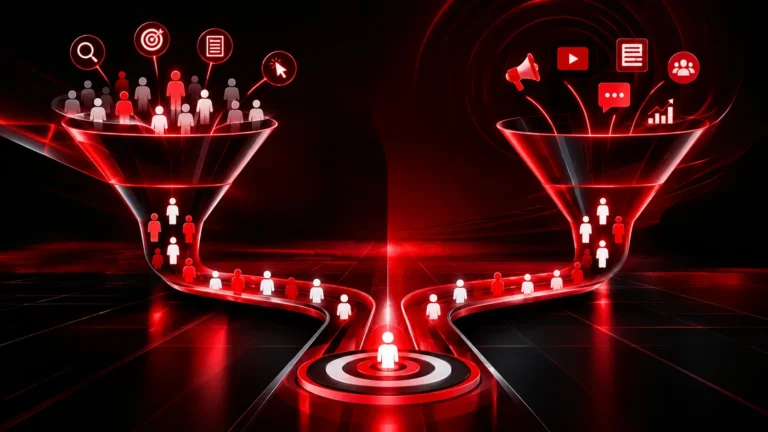
Here’s how a typical webinar lead generation funnel flows:
- Promote: You invite your audience through email, social, partners, and ads.
- Register: Interested people sign up on a registration page.
- Attend: Registrants join live or watch the recording later.
- Engage: Attendees ask questions, answer polls, and click calls to action.
- Follow up: You send tailored messages based on who attended and how they engaged.
- Convert: The most engaged attendees move into sales conversations. The rest move into nurture.
It’s the same logic as any lead generation funnel, just compressed into one event.
Why Webinar Lead Generation Still Works in B2B
A webinar asks for something most content doesn’t: 30 to 60 minutes of attention. When someone gives you that, they’re telling you the topic matters to them.
The data backs it up. ON24’s 2026 webinar benchmarks, based on its platform data from 2025, found:
- The average webinar drew 239 attendees, up 11% from the year before.
- 60% of registrants turned into attendees.
- Attendees stayed engaged for an average of 49 minutes.
- Demo bookings from webinars rose by 73%.
That last number matters most for lead generation. People aren’t just watching. They’re raising their hands for sales conversations.
B2B marketers see the value too. Content Marketing Institute’s 2025 B2B research asked marketers which channels work best. 51% named webinars, second only to in-person events at 52%.
Types of Webinars for Lead Generation
Not every webinar serves the same purpose. Match the format to where your buyer is in the journey.
| Webinar type | What it looks like | Best funnel stage |
|---|---|---|
| Educational workshop | You teach a practical skill or framework step by step | Top to middle |
| Expert panel | Two to four experts debate a hot topic in your industry | Top |
| Partner co-hosted webinar | You team up with a complementary company and share audiences | Top to middle |
| Customer story session | A customer explains the problem they solved and the results | Middle to bottom |
| Live product demo | You show how the product solves a specific problem | Bottom |
| Office hours or Q&A | Open questions from prospects and customers | Middle to bottom |
| On-demand or evergreen webinar | A recorded session people can watch anytime | All stages |
For pure lead generation, educational workshops and partner co-hosted webinars usually bring in the most new names. Demos and customer stories convert better, but mostly for people who already know you.
How to Generate Leads With Webinars: 12 Steps
These webinar lead generation steps follow the life of a session, from planning through follow-up. Skip one, and the whole thing leaks.
1. Pick a Topic Your Buyers Are Stuck On
The topic decides everything. A great speaker can’t save a topic nobody cares about.
The best webinar ideas come from real conversations, not brainstorms. Look at:
- Questions that come up again and again on sales calls.
- Objections that stall deals.
- Support tickets and onboarding struggles.
- Topics where your blog posts get the most traffic and comments.
Then make the promise specific. “The State of B2B Marketing” is vague.
“How to Cut Your Cost per SQL in 90 Days” tells people exactly what they’ll walk away with.
Pro tip: Run your topic past two or three customers before you commit. If they say “I’d join that,” you’re on the right track. If they say “sounds interesting,” keep looking.
2. Choose the Right Speakers and Format
People register for people, not logos. Your speaker lineup can double or halve your registrations.
A few options that work well:
- A practitioner from your team who does the work every day.
- A customer who can share real numbers and lessons.
- A partner company with an overlapping audience, which lets you reach their list as well as yours.
- An industry voice your buyers already follow.
Keep panels small. Two or three speakers leave room for real depth. Five speakers usually means everyone says one thing and nobody says anything useful.
3. Build a Registration Page That Converts
Your registration page has one job: get the right people to sign up. Keep it simple.
Include these elements:
- An outcome-driven headline that says what attendees will learn.
- Three or four bullets on the key takeaways.
- Speaker photos and short bios to build trust.
- Date, time, and time zone, plus a note that the recording will be shared.
- A short form, with name, work email, company, and role.
Add one qualifying question if it matters to sales, like team size or biggest challenge. It helps you prioritize follow-up later. Just don’t add five, or registrations drop.
Pro tip: Say “Can’t make it live? Register anyway, and I’ll send you the recording.” This captures people who would otherwise skip the form.
4. Schedule It When People Can Show Up
Timing affects attendance more than most hosts expect.
Livestorm analyzed 4.35 million registrations for its webinar timing research. It found Tuesday had the highest show-up rate at 51.7%, with Monday and Wednesday close behind. Late morning and early afternoon slots tend to work best.
For B2B audiences, avoid Friday afternoons, Monday mornings, and lunch hours. If your audience spans time zones, pick a slot that suits the largest groups. Lean on the recording for everyone else.
5. Promote in Waves, Right Up to Start Time
Many hosts promote hard two weeks out, then go quiet. That’s a mistake.
The same Livestorm data showed that 49.6% of registrations happen in the final week, and 15.3% come in on the day itself. Late promotion isn’t desperate. It’s where half your audience comes from.
A simple three-week promotion plan:
| When | What to do |
|---|---|
| 3 weeks out | Announce to your email list. Post from speakers’ LinkedIn profiles. Brief your sales team. |
| 2 weeks out | Send a second email with a new angle, like a speaker quote or a key question you’ll answer. Share with partners. |
| 1 week out | Send your strongest email. Ask sales reps to personally invite target accounts. Run a short paid push if you have budget. |
| Day of | Send a “last chance” email in the morning. Post that you’re going live soon. |
Personal invites from sales reps and speakers often outperform brand emails. A short note from a real person feels like an invitation, not a campaign.
Promoting on LinkedIn? Create a LinkedIn Event for the session. It gives people an easy way to register and share it with their network.
6. Send Reminders That Cut No-Shows
Registration is only half the battle. Reminders turn registrants into attendees.
A reminder sequence that works:
- Confirmation email right after sign-up, with a calendar invite attached.
- One week before, a reminder with one teaser of what they’ll learn.
- One day before, a short reminder with the join link.
- One hour before, a final nudge.
- “Live now” email when the session starts, for people who forgot.
The calendar invite is the most important piece. Once the webinar sits in someone’s calendar, they’re far more likely to show up.
7. Teach First, Pitch Last
The fastest way to lose an audience is to spend 20 minutes on your company history. People came to learn something.
A good rule is roughly 80% teaching and 20% product, with the product part coming at the end. Show your expertise through the content itself. If your teaching is useful, people will ask how your product helps without being pushed.
Structure the session like this:
- Quick intro (two minutes max): who you are and what they’ll learn.
- The core content: frameworks, examples, and practical steps.
- Live Q&A: often the most valuable part for attendees.
- One clear next step: your call to action.
8. Make It Interactive, and Use Polls to Qualify
A webinar with no interaction feels like a lecture. Interaction also gives you data.
ON24’s benchmark data shows polls drive the most interaction on its platform, with an average of 150 poll responses per webinar. Use that to your advantage.
Design one or two polls that entertain and qualify:
- “What’s your biggest challenge with [topic] right now?”
- “How big is your team?”
- “Are you planning to change how you handle [topic] in the next six months?”
The answers tell you who has a pressing problem and who’s planning to act. That’s gold for your follow-up.
Keep the chat open, call out questions by name, and answer as many as you can live. People remember being heard.
9. Give One Clear Call to Action
Every webinar should end with one next step. Not three.
Pick the CTA that fits the audience’s stage:
- Top of funnel: Download a related template or checklist.
- Middle of funnel: Book a free assessment or audit.
- Bottom of funnel: Schedule a demo or a call with the speaker.
Mention the CTA near the start, again in the middle, and clearly at the end. Put the link in the chat and in the follow-up email.
10. Score Leads by How They Engaged
Not every registrant deserves a sales call. Engagement tells you who does.
Look at these signals:
- Did they attend live or only register?
- How long did they stay?
- Did they ask a question or answer a poll?
- What did they say in the polls?
- Did they click the CTA or download a resource?
Then sort them into tiers:
| Tier | Signals | What to do |
|---|---|---|
| Hot | Stayed most of the session, asked a question, or clicked the demo CTA | Send to sales within 24 hours |
| Warm | Attended and engaged with polls or chat | Personal follow-up email, then nurture |
| Cool | Attended briefly or watched the recording only | Add to a nurture sequence |
| No-show | Registered but didn’t attend | Send the recording and a related resource |
Feed these signals into your lead scoring model, so webinar engagement counts alongside website visits and other behavior.
11. Follow Up Within 24 Hours
Interest fades fast. The day after the webinar is when attendees are most likely to reply.
Send different emails to different groups:
- Hot leads: A short, personal note from the speaker or a rep. Reference their question or poll answer, and suggest a quick call.
- Warm attendees: The recording, the slides, and one related resource.
- No-shows: “Sorry I missed you” with the recording and the key takeaways in three bullets.
Keep the follow-up useful, not pushy. People who weren’t ready yet should move into a lead nurturing sequence built around the webinar topic.
Pro tip: Include one great question from the Q&A and its answer in the follow-up email. It adds value for attendees and gives no-shows a reason to watch.
12. Repurpose the Webinar So It Keeps Working
A live webinar lasts an hour. The content can generate leads for months.
The ON24 data found that 43% of attendees chose to watch on-demand. Treat the on-demand version as a main event, because a big part of your audience will only ever see that.
Ways to stretch one webinar:
- Keep an on-demand version gated on your site as an evergreen lead magnet.
- Cut three to five short clips for social media.
- Turn the core content into a blog post or guide.
- Build an FAQ from the best audience questions.
- Send highlights to your newsletter subscribers.
One well-planned webinar can feed your content calendar for weeks.
Webinar Lead Generation Metrics to Track
Registrations feel good, but they’re only the start of webinar lead generation. Track the full chain, from sign-up to pipeline.
| Metric | Formula | What it tells you |
|---|---|---|
| Registration page conversion rate | Registrations ÷ Page visitors × 100 | Whether your topic and page pull people in |
| Attendance rate | Live attendees ÷ Registrations × 100 | Whether your reminders and timing work |
| Average watch time | Total minutes watched ÷ Attendees | Whether the content holds attention |
| Engagement rate | Attendees who asked, polled, or chatted ÷ Attendees × 100 | Whether the session felt interactive |
| CTA click rate | CTA clicks ÷ Attendees × 100 | Whether your offer fits the audience |
| Cost per registrant | Total promotion spend ÷ Registrations | How efficient your promotion is |
| Attendee-to-MQL rate | New MQLs from the webinar ÷ Attendees × 100 | Whether the webinar produced qualified leads |
| Pipeline generated | Value of opportunities from webinar leads | Whether the webinar paid off |
Pipeline is the number that matters most, and it takes time. Give each webinar’s leads a few months before judging the final result.
Common Webinar Lead Generation Mistakes
I’ve made several of these. They’re easy to fix once you spot them.
- Choosing a topic that’s all about you. Nobody registers to hear about your company’s journey.
- Stopping promotion too early. Half your registrations can come in the final week.
- Skipping reminders. No calendar invite and no day-of email means lots of no-shows.
- Pitching for 40 minutes. People leave, and they remember why.
- Offering three different CTAs. Confused attendees don’t click anything.
- Treating every registrant the same. A hot lead and a no-show need completely different follow-ups.
- Waiting a week to follow up. By then, the webinar is a distant memory.
- Letting the recording die. On-demand viewers are a big share of your audience.
Final Thoughts
A webinar is a promise. You’re asking people for an hour of their day, and you’re promising to make it worth it.
Keep that promise, and webinars become one of the warmest lead sources you’ll ever have. Break it with a disguised sales pitch, and people won’t register next time.
So pick one topic your buyers are stuck on. Teach it better than anyone else, follow up the next day, and treat every question as the start of a conversation. That’s how an hour on a screen turns into real pipeline.
Frequently Asked Questions
What is webinar lead generation?
Webinar lead generation is the process of using online sessions to attract potential buyers and capture their details. People register to learn something useful, and how they engage during the session shows how interested they are. The most engaged attendees become sales conversations.
Are webinars good for B2B lead generation?
Yes. Webinars work well for B2B because they attract people willing to spend 30 to 60 minutes on a topic. That signals real interest.
Polls, questions, and CTA clicks also help you qualify leads before sales reaches out.
How far in advance should you promote a webinar?
Start about three weeks before the event, then promote in waves. Don’t stop early.
Registration data shows that about half of sign-ups happen in the final week. A meaningful share come in on the day itself.
What is a good webinar attendance rate?
It varies by audience and platform. ON24’s benchmark data showed 60% of registrants attending in 2025, while other platforms report rates closer to 50%. Track your own rate over time, and use reminders and calendar invites to improve it.
How do you turn webinar attendees into leads?
Score attendees by engagement, like watch time, questions, poll answers, and CTA clicks. Send the most engaged people to sales within 24 hours with a personal note. Everyone else should get the recording and move into a nurture sequence tied to the topic.
Should webinar recordings be gated?
Usually, yes. A gated on-demand recording keeps generating leads long after the live event. If the webinar is mainly for awareness, you can also share short clips and key takeaways openly to reach a wider audience.