What Is a Lead Magnet? 10 B2B Examples That Get Real Leads
TL;DR
- A lead magnet is a free, useful resource you give away in exchange for a buyer’s contact details.
- The best B2B lead magnets solve one narrow problem fast. Templates, calculators, and original data beat long ebooks.
- Match the form length to the value. A checklist earns an email. A benchmark report can earn a job title.
- Don’t gate everything. Open content feeds search and AI answers. Gate the tools and data people want to use.
- A download is only step one. Without a follow-up plan, a lead magnet just collects emails.
Your lead magnet is probably a 40-page ebook that nobody reads past page three.
I don’t say that to be mean. I’ve built a few of those myself.
They looked great in the launch meeting. Then they pulled in a trickle of students, competitors, and people with fake emails.
That’s the problem with a lot of gated content today. Buyers are tired of forms, and a generic PDF gives them no reason to fill one out.
This guide fixes that. You’ll learn what a lead magnet is and what separates good ones from dead weight. You’ll also get 10 B2B examples and a simple way to build your own.
What Is a Lead Magnet?
A lead magnet is a free resource or offer that a business gives away in exchange for a visitor’s contact details. It can be a template, a checklist, a report, a free tool, or a webinar. The goal is to turn an anonymous visitor into a lead you can follow up with.
People also call it gated content or an opt-in offer. The form in front of it is the gate.
It’s one of the oldest moves in the lead generation toolkit, and it still works. The difference today is that buyers are pickier about what they’ll trade their inbox for.
How a Lead Magnet Works
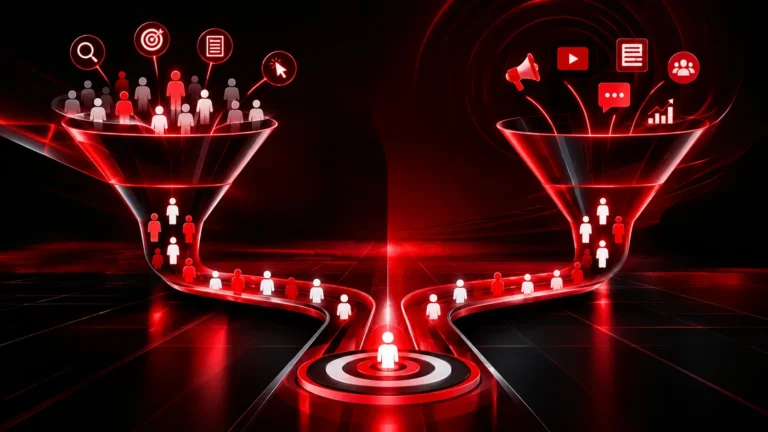
Every lead magnet runs on the same simple loop:
- Attract: A buyer finds your content through search, social, ads, or an email.
- Offer: They see a resource that solves a problem they have right now.
- Exchange: They fill out a short form with their email and maybe a few details.
- Deliver: They get the resource right away, usually by email or instant download.
- Follow up: You send more useful content based on what they downloaded.
Step five is where the money is. The download itself is just a handshake.
Why Lead Magnets Still Matter in B2B
B2B buyers do a lot of research before they talk to sales. A good lead magnet lets you show up during that research and prove you know your stuff.
It also tells you something. A person who downloads a pricing calculator is in a different place entirely from someone who grabbed a beginner checklist. That signal is gold for your follow-up.
But here’s a warning from the field.
Content Marketing Institute’s 2025 B2B research includes a story from Robert Rose. One company he worked with made 250 thought leadership PDFs in a year. Only 63 of them earned more than 20 downloads.
That’s the lead magnet graveyard. And it fills up fast when you create assets because the calendar says so.
What Makes a Good Lead Magnet?
After building and auditing lead magnets for years, I judge them on five things. If one fails, the whole thing usually does.
- It’s specific. “The Complete Guide to Marketing” helps no one. “A 12-Point Checklist for Your Next Website Migration” helps someone today.
- It delivers a quick win. The buyer should get value in minutes, not after a weekend of reading.
- It matches the page. The offer should fit the reason the visitor landed there in the first place.
- It qualifies the lead. The topic should attract your buyers and repel people who will never buy.
- It’s a fair trade. The value has to feel bigger than the cost of handing over an email.
That last point deserves its own section.
The Value Exchange Test
Every form field is a small price. Ask for too much, and people bail. Ask for too little on a high-value asset, and you miss data sales needs.
I use this rough rule of thumb:
| What you offer | Perceived value | Fields worth asking for |
|---|---|---|
| Checklist or cheat sheet | Low | Email only |
| Template or swipe file | Medium | Email and first name |
| Calculator or assessment | Medium to high | Email, company, and role |
| Original research report | High | Email, company, role, and company size |
| Free audit or consultation | Highest | Full details plus a qualifying question |
What to do: Look at your current forms. Cut every field that sales doesn’t use in the first follow-up. If nobody reads it, don’t ask for it.
10 B2B Lead Magnet Examples That Work
These are the lead magnet types I’ve seen pull in real B2B leads. For each one, I’ve noted the funnel stage it fits best.
1. Templates
A template saves the buyer from starting at a blank page. Think of a campaign brief, a QBR deck outline, or a sales territory planner.
Templates convert well because the value is obvious at a glance. People can picture using it the minute it lands.
Best for: Top and middle of the funnel.
2. Checklists
A checklist turns a messy process into clear steps. A launch checklist or a data migration checklist are good examples.
They’re fast to make and fast to use. The catch is that easy content can pull in low-intent leads, so keep the topic tight to your buyer’s world.
Best for: Top of the funnel.
3. Original Research and Benchmark Reports
Buyers love to know how they compare. A report with original data gives them numbers they can’t find anywhere else.
This format is still underused. In the same CMI study, 45% of B2B marketers said research reports produced their best results. That’s the same share as e-books and white papers.
Yet only 36% of marketers created research reports, compared with 51% who made e-books or white papers.
That gap is an open lane. Fewer people run in it, and it works just as well.
Best for: Middle of the funnel, and great for earning links.
4. Calculators and Free Tools
An ROI calculator, a cost estimator, or a simple grader gives the buyer a personal answer. That makes it far more useful than a generic article.
A calculator also hands you intent data. If someone plugs in a 200-person team and a big budget, you know a lot about them. You can feed those answers into your lead scoring model right away.
Best for: Middle and bottom of the funnel.
5. Assessments and Scorecards
A short assessment asks 10 to 15 questions and returns a score with advice. A “GTM readiness scorecard” or a “data quality assessment” are classic examples.
People can’t resist finding out how they rank. (I’ve taken more of these than I’d like to admit.) The answers also make your first sales call sharper.
Best for: Middle of the funnel.
6. Swipe Files and Example Libraries
A swipe file is a collection of real examples the buyer can copy or adapt. Cold email openers, landing page headlines, or pricing page layouts all work.
It’s one of the easiest lead magnets to build if you already collect good examples. Just make sure they’re yours to share.
Best for: Top of the funnel.
7. Webinars and Live Workshops
A webinar trades an hour of the buyer’s time for expert insight. Live workshops, where people build something alongside you, tend to pull in warmer leads than slide-heavy talks.
The CMI research backs this up. B2B marketers rated webinars (51%) second only to in-person events (52%) as their top distribution channel.
Best for: Middle of the funnel.
8. Email Courses
An email course delivers one short lesson a day for five to seven days. It builds a habit of opening your emails before you ever pitch anything.
It doubles as your nurture sequence. That makes it a two-for-one build.
Best for: Top and middle of the funnel.
9. Playbooks and Guides
A playbook is a focused, step-by-step guide to one outcome. Keep it short. A tight 10 pages beats 40 loose ones every time.
This is where the old ebook can still earn its keep. Cut the fluff, add real frameworks, and name it after the result it delivers.
Best for: Top and middle of the funnel.
10. Free Audits and Consultations
A free audit is a lead magnet for buyers who are close to a decision. You review their setup and show them what to fix.
It costs you real time, so gate it with a qualifying question or two. Done well, it’s the shortest path from lead to deal.
Best for: Bottom of the funnel.
Quick Comparison of B2B Lead Magnet Types
| Lead magnet | Effort to create | Lead intent | Funnel stage |
|---|---|---|---|
| Checklist | Low | Low | Top |
| Template | Low | Medium | Top to middle |
| Swipe file | Low | Low to medium | Top |
| Email course | Medium | Medium | Top to middle |
| Playbook | Medium | Medium | Top to middle |
| Webinar | Medium | Medium to high | Middle |
| Assessment | Medium | High | Middle |
| Calculator | High | High | Middle to bottom |
| Research report | High | High | Middle |
| Free audit | High (ongoing) | Highest | Bottom |
How to Create a Lead Magnet in 6 Steps
This is the process I follow when I build a lead magnet from scratch. It keeps me from making another PDF for the graveyard.
- Pick one buyer. Start with your ideal customer profile and choose one role inside it. A lead magnet built for “marketers” is built for no one.
- Find one painful problem. Look at sales call notes, support tickets, and the questions prospects ask. The best topics come straight from those conversations.
- Choose the fastest format. Ask what format solves that problem quickest. If a spreadsheet does it, don’t write a guide.
- Match it to the page. Place the offer where it fits the search intent of the visitor. A blog post about budgeting should offer a budget template, not a generic newsletter signup.
- Build a simple landing page. Use one headline, three quick benefit points, a preview image, and a short form. Nothing else.
- Plan the follow-up before launch. Write the first three emails before you publish the offer. The lead magnet opens the door, and the follow-up walks them through it.
What to do: Before you create anything, write the landing page headline first. If you can’t make the promise clear in one line, the idea isn’t sharp enough yet.
Should You Gate Your Lead Magnet?
This is the big debate in B2B right now, and I sit in the middle of it.
The case against gating is strong. Search engines can’t read what sits behind a form. Neither can AI answer engines.
If your best thinking is locked in a PDF, it can’t rank, earn links, or get cited. As someone who spends a lot of time optimizing content for answer engines, that cost is hard for me to ignore.
The case for gating is real, too. A form gives you a name, a signal, and a way to follow up.
The demand generation camp is right that open content builds trust. It just doesn’t hand sales a contact.
My take is a hybrid model:
- Leave ideas open. Publish your insights, frameworks, and key findings as normal pages that anyone can read.
- Gate the tools. Put the template, the calculator, the raw data, or the full workbook behind the form.
- Preview the goods. Show a sample page or a few results so people know what they’re getting.
This way, search engines and AI answers can find your thinking. And the people who want to put it to work will happily trade an email for the tool.
Common Lead Magnet Mistakes
I’ve made every one of these. Learn from my scars.
- Making it too broad. A guide for “everyone in sales and marketing” attracts no one in particular.
- Choosing length over usefulness. Nobody has ever said, “I can’t wait to read this 47-page ebook this weekend.”
- Hiding it. A lead magnet buried on a resources page gets found by almost nobody. Put it inside the posts where the topic already lives.
- Asking for too much. A seven-field form for a checklist is a bad trade, and buyers know it.
- Stopping at the download. If no follow-up exists, you’ve built a slow, expensive way to collect emails.
- Never updating it. A “2023 Benchmark Report” in 2026 tells buyers you stopped paying attention.
Final Thoughts
A lead magnet is a promise. You’re telling a stranger, “Give me your email, and I’ll make your job easier.”
Too often, that promise gets broken. The PDF is too long, too vague, or too salesy. So buyers learn to use fake emails and move on.
Build the opposite. Make one small, sharp lead magnet that solves one real problem for one real buyer.
Then keep your promise in every email that follows. That’s how a download turns into trust, and trust turns into pipeline.
Frequently Asked Questions
What is a lead magnet in simple terms?
A lead magnet is something free and useful that you give to potential customers in exchange for their contact details. It might be a template, a checklist, a report, or a free tool. The goal is to start a relationship with people who are interested in what you do.
What are the most common types of lead magnets?
The most common types are checklists, templates, e-books, guides, webinars, and email courses. In B2B, calculators, assessments, and original research reports often bring in higher-quality leads. They take more work to build, but they give the buyer a personal result.
What is the difference between a lead magnet and gated content?
The terms overlap a lot. Gated content is any content that sits behind a form.
A lead magnet is the specific offer you use to get someone to fill out that form. So every lead magnet is gated, but it should be designed to attract a specific buyer.
How long should a lead magnet be?
As short as it can be while still solving the problem. A one-page checklist or a simple template is often better than a long guide.
Buyers want a quick win. If your lead magnet takes more than 15 minutes to use, look for ways to trim it.
Do lead magnets still work in 2026?
Yes, but the bar is higher. Generic ebooks don’t pull the way they used to, and open content now matters more for search and AI answers. Lead magnets that give a practical tool, a personal result, or original data still convert well in B2B.
What should I do after someone downloads my lead magnet?
Deliver the resource right away. Then send a short follow-up series that helps the person use it and moves them toward their next step. Tie that series to what they downloaded, so each email feels like a natural next step.