I Tested 15 Best AI Visibility Tools to Track Your Brand Presence
I have actually tested the 15 best AI visibility tools that will help you track your brand presence across top LLMs like ChatGPT, Claude, Perplexity, Grok, Gemini, and even Google AI Overviews.
AI search visibility tracking exploded fast over the last 12 months.
A year ago, most teams were still treating ChatGPT mentions and Google AI Overviews as experiments. Now I’m seeing SaaS companies, agencies, ecommerce brands, and even enterprise marketing teams actively monitoring how often they appear inside LLM-generated answers.
And honestly, the tooling ecosystem is still messy.
Some platforms call themselves AI visibility tools. Others position themselves as GEO tools, AEO platforms, LLM monitoring software, AI citation trackers, or AI share-of-voice platforms.
But once you actually test them, most are trying to solve the same core problem:
“How visible is my brand inside AI-generated answers, and how do I improve it?”
After researching dozens of platforms, reading user reviews, comparing dashboards, testing workflows, and digging through Reddit discussions from people actually using these tools day-to-day, a few patterns became obvious:
- Most AI visibility tools are still early-stage products
- Citation tracking accuracy varies a lot
- API-based monitoring often differs from real UI outputs
- Prompt phrasing can completely change visibility results
- Many tools overlap heavily despite different marketing language
- The biggest difference is usually workflow usability and actionability
Some tools are clearly built for enterprise reporting and compliance. Others are lightweight monitoring platforms for agencies and SaaS teams. And a few are trying to become the “Search Console for AI,” although nobody is fully there yet.
Save time with this quick AI visibility tools comparison
| Tool Name | Starting Price | Best For |
| 1. Profound | $99 / month | Enterprise & Large Agencies |
| 2. Peec AI | $95 / month | Marketing Agencies & Mid-market |
| 3. AIclicks | $59 / month | Hands-on GEO Workflows |
| 4. Otterly.AI | $29 / month | Startups & Budget Monitoring |
| 5. Rankscale | $20 / month | Traditional SEO Teams & Agencies |
| 6. AthenaHQ | $295 / month | Strategic Brand Perception |
| 7. Waikay | $24.95 / month | Analytics & Global Teams |
| 8. Goodie AI | $399 / month | Content-led SaaS & Publishers |
| 9. PromptWatch | $99 / month | AI-Native SaaS & Technical Teams |
| 10. Am I On AI? | $29 / month | Solo Consultants & Quick Checks |
| 11. Nightwatch | €99 / month | Traditional SERP + AIO Tracking |
| 12. Semrush (AI Add-on) | $99 / month (Add-on) | Ecosystem Consolidation |
| 13. Ahrefs Brand Radar | $199 / month (Add-on) | Authority-driven Brands |
| 14. BrightEdge | Custom Pricing | Fortune 500 & Global Enterprise |
| 15. Scrunch AI | $250 / month | Actionable GEO Recommendations |
Now that you have the quick overview, let’s dig into the details and see exactly what makes each tool worth your time.
1. Profound
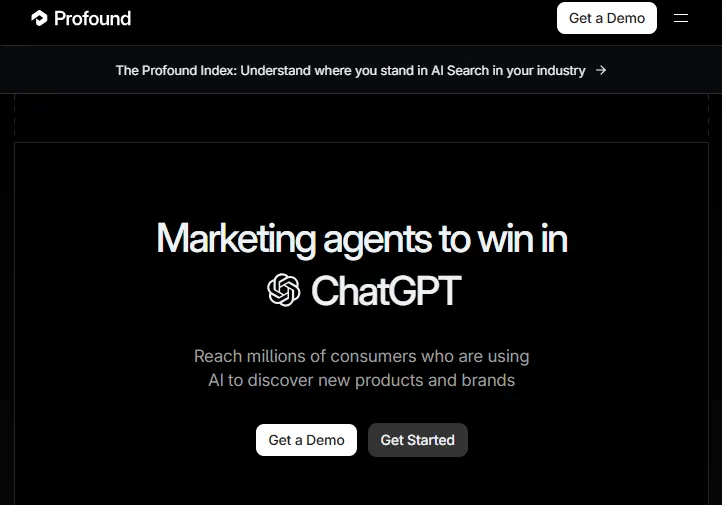
Profound is probably the most recognizable name in the AI visibility tools market right now. It’s heavily enterprise-focused and feels closer to a full intelligence platform than a lightweight tracking tool.
The first thing I noticed was how deep the analytics go. This isn’t just “your brand appeared 14 times in ChatGPT.” Profound tries to map prompts, citations, crawler activity, competitive share-of-voice, AI referral behavior, and visibility trends across multiple LLM ecosystems.
The platform feels built for large marketing teams, agencies managing enterprise clients, and companies where AI visibility reporting is becoming a board-level discussion. That said, it also feels heavier than most competitors. I liked the depth, but smaller teams may find the workflow a bit overwhelming compared to more focused tools like Peec AI. Pricing also climbs fast once you need broader platform coverage.
AI Platforms and LLMs It Tracks
- ChatGPT
- Google AI Overviews
- Google AI Mode
- Perplexity
- Claude
- Gemini
- Microsoft Copilot
- Grok
- Meta AI
- DeepSeek
(Coverage varies by pricing tier)
Features I Like
The biggest strength of Profound is depth. This is one of the few AI monitoring tools that genuinely feels enterprise-ready rather than a thin dashboard layered on top of API calls. I especially liked the prompt intelligence capabilities. Several reviews mentioned that Profound surfaces prompt-volume style data that works almost like keyword research for AI search ecosystems. That’s genuinely useful if you’re trying to understand how users phrase discovery questions inside LLMs.
Another strong point is reporting. If I were running an agency serving enterprise SaaS clients, this is probably the platform I’d feel most comfortable presenting in executive meetings. The crawler attribution and AI referral analysis features are also more advanced than most competitors right now.
Pros
- Very deep AI citation analytics
- Strong competitive visibility tracking
- Enterprise-grade reporting dashboards
- Broad LLM coverage
- AI prompt research capabilities
- Strong compliance positioning (SOC 2, GDPR, HIPAA references appear frequently)
- Good for multi-team collaboration
- One of the strongest tools for AI share-of-voice monitoring
Where It Misses Out
The biggest downside is complexity. I found that many users liked the data depth but felt the platform required more setup and interpretation than lighter AI tracking tools. Multiple Reddit discussions described it as “powerful but heavy.” Another recurring criticism is accuracy consistency. Some advanced users argued that API-based tracking doesn’t always match real user-facing LLM outputs, especially for Google AI Overviews and ChatGPT UI responses.
Whether that criticism is fully fair or not, it’s an important limitation of the entire category right now. AI search visibility is probabilistic by nature. And pricing can become aggressive very quickly.
Cons
- Expensive compared to mid-market alternatives
- Can feel overwhelming for smaller teams
- Some users question monitoring accuracy consistency
- Full platform coverage requires higher-tier plans
- No true “plug-and-play” simplicity
- Better suited for enterprises than startups
- Limited self-serve onboarding compared to newer tools
Pricing
Profound uses a credit-based model. If you want to track multiple engines like ChatGPT and Google AI Overviews, the Growth tier is probably where you’ll want to start.
- Starter Plan: $99 / month (100 credits, 50 tracked prompts, 1 Answer Engine)
- Growth Plan: $399 / month (400 credits, 100 tracked prompts, 3 Answer Engines)
- Enterprise Plan: Custom pricing (Up to 10 Answer Engines, API access, SSO)
I’d say the pricing makes sense for enterprise SaaS companies, large agencies, heavily funded startups, and brands where AI visibility is strategically important. For smaller companies, it may feel hard to justify unless AI-driven discovery already impacts pipeline significantly.
User Reviews
User sentiment around Profound is generally positive, especially among enterprise-focused teams. The most common praise includes advanced reporting, polished dashboards, strong multi-platform coverage, and strategic visibility insights. But recurring complaints also show up consistently: expensive pricing, steep learning curve, and “too much dashboard complexity.”
I read through the feedback on G2, and people consistently praise how clean the interface is and how helpful the support team is when you are first getting set up. Users really love how Profound takes confusing, complex AI data and turns it into simple steps you can actually use to improve your content. The only real complaint is the learning curve. Because the tool is so massive and packed with features, it will definitely take you some time to master it.
2. Peec AI
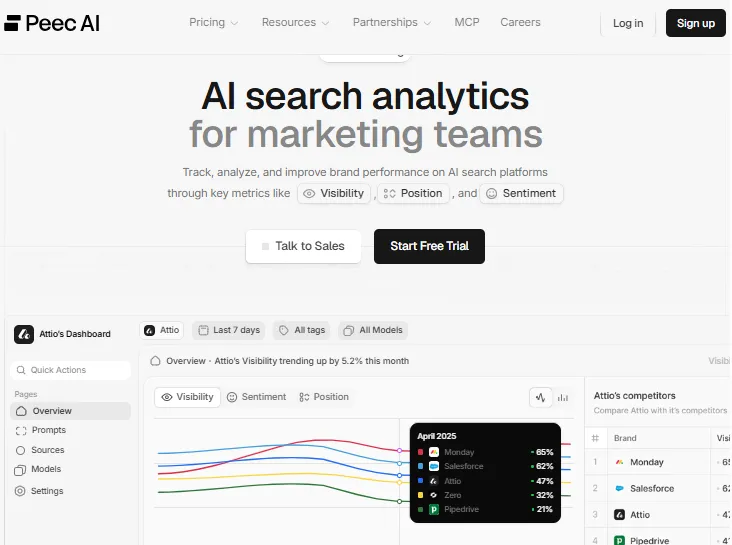
Peec AI feels almost like the opposite philosophy of Profound. Where Profound tries to become a full enterprise intelligence layer, Peec AI focuses on simplicity, usability, and clean AI visibility monitoring. And honestly, I think that’s why so many people like it.
The dashboard is much easier to understand quickly. Setup appears faster. The workflow is more approachable. You can start tracking prompts, visibility trends, competitor mentions, and AI citations without feeling buried in enterprise reporting architecture.
One consistent piece of feedback I found across reviews and Reddit was how “focused” and “easy to use” the platform is. If I were running a mid-sized SaaS company or agency and wanted reliable AI search visibility tracking without enterprise complexity, Peec AI would probably be near the top of my shortlist.
AI Platforms and LLMs It Tracks
- ChatGPT
- Google AI Overviews
- Perplexity
- Claude
- Gemini
- Microsoft Copilot
- DeepSeek
- Grok
(Some platforms require add-ons depending on the plan)
Features I Like
The simplicity is the real selling point. I liked how focused the product feels compared to many newer GEO tools trying to do everything at once. The visibility tracking interface is clean, competitor monitoring is easy to interpret, and the share-of-voice reporting feels genuinely practical instead of overly abstract.
Another interesting differentiator is that Peec AI reportedly simulates real browser sessions rather than relying entirely on APIs for some monitoring workflows. That potentially helps produce more accurate Google AI Overview tracking. I also think the unlimited-seat approach across all of their tracking plans is incredibly underrated for agencies.
Pros
- Very clean UI and reporting
- Easy onboarding
- Faster setup than most competitors
- Good visibility benchmarking workflows
- Strong multilingual and multi-country support
- Easier for non-technical marketing teams
- Competitive pricing relative to enterprise tools
- Strong agency usability
Where It Misses Out
Peec AI is still mostly a monitoring platform. That’s the recurring limitation I kept seeing during research. You get visibility insights, citations, and competitive tracking — but the platform doesn’t always help you operationalize improvements. Several reviewers described it as “great diagnostics, limited execution.”
Another issue is add-on pricing. Some users mentioned that once you start adding Gemini or Claude tracking, pricing increases more than expected. And compared to Profound, the overall data depth is lighter.
Cons
- Limited actionability workflows
- Fewer enterprise integrations
- Some AI platform tracking costs extra
- Less advanced analytics than Profound
- Limited content optimization tooling
- Can feel lightweight for enterprise reporting
- No strong “fix recommendation” ecosystem yet
Pricing
Peec AI takes a smart approach to pricing by splitting its tiers cleanly between in-house brands and marketing agencies, so you only pay for what fits your business model.
- Brands – Starter: $95 / month (50 prompts, 3 AI models)
- Brands – Pro: $245 / month (150 prompts, 3 AI models)
- Brands – Advanced: $495 / month (350 prompts, 3 AI models)
- Agencies – Essential: $245 / month (111 prompts, 10,000 credits)
- Agencies – Growth: $495 / month (277 prompts, 25,000 credits)
- Agencies – Scale: $795 / month (722 prompts, 65,000 credits)
I actually think the pricing position is smart. It’s expensive enough to feel professional, but still accessible for agencies, growth-stage SaaS teams, and companies experimenting with AI visibility tracking for the first time.
User Reviews
User feedback around Peec AI is consistently strong on usability. The most common praise: intuitive dashboard, fast onboarding, practical insights, and easier day-to-day usage compared to enterprise alternatives. The most common complaints: limited recommendations, lighter analytics, and additional platform costs.
A lot of Reddit discussions positioned Peec AI as the “best balance” between affordability and usability. I’d probably recommend Peec AI most often to agencies, B2B SaaS companies, and lean marketing teams that want AI visibility monitoring without enterprise overhead.
3. AIclicks
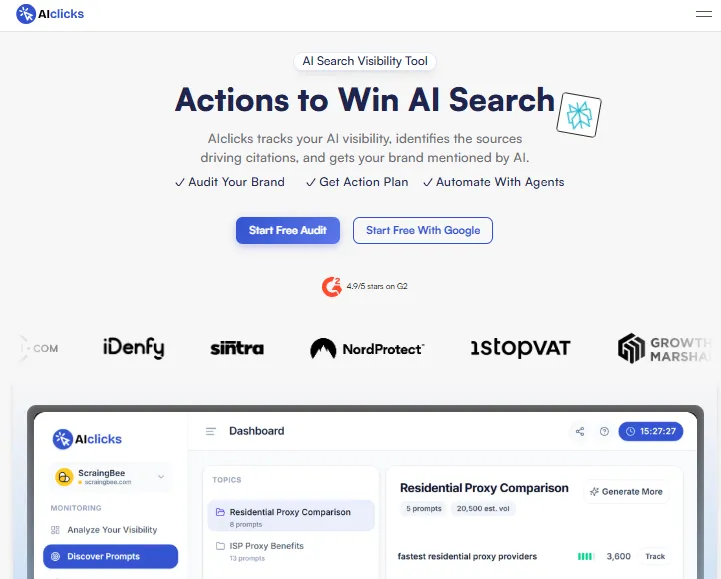
AIclicks is one of the more interesting “middle ground” AI visibility tools in the market right now. It sits somewhere between lightweight monitoring platforms and fully enterprise AI visibility suites.
The main draw here is the focus on practical GEO workflows rather than just high-level analytics dashboards. The platform seems designed for teams actively trying to improve AI visibility instead of only measuring it. Several comparisons also positioned AIclicks as one of the better pure-play GEO tracking platforms currently available.
AI Platforms and LLMs It Tracks
- ChatGPT
- Google AI Overviews
- Gemini
- Perplexity
- Claude
- Microsoft Copilot
- Grok
(Coverage appears broader than many SMB-focused competitors)
Features I Like
I liked the balance. Some GEO tools feel too enterprise-heavy. Others feel too lightweight. AIclicks lands somewhere in the middle.
The platform appears especially strong at prompt tracking, AI citation monitoring, and competitive share-of-voice workflows. I also liked the operational feel of the dashboards. They seem designed for marketers actually running optimization campaigns instead of purely executive reporting.
Pros
- Strong GEO-focused workflows
- Good prompt monitoring
- Useful citation tracking
- Practical dashboard usability
- Competitive visibility analysis
- Broader AI engine support
- Good mid-market positioning
Where It Misses Out
AIclicks still feels like an evolving platform. Compared to larger enterprise players, integrations are lighter, reporting maturity is lower, and long-term operational depth still appears limited. I also noticed fewer large-scale user reviews compared to tools like Semrush or Profound.
Cons
- Smaller ecosystem
- Less enterprise maturity
- Limited advanced integrations
- Evolving reporting infrastructure
- Smaller review footprint
- Still building long-term credibility
Pricing
AIclicks offers affordable self-serve tiers based on the number of LLMs you want to track, but they also have robust managed services if you want a “done-for-you” approach.
- Starter Plan: $59 / month (billed yearly) or $79 / month (monthly) – 30 prompts, 3 LLMs
- Pro Plan: $189 / month – 150 prompts, 4 LLMs
- Business Plan: $499 / month – 300 prompts, 6 LLMs
- Managed Services: Starts at $1,699 / month for “Done-For-You” AI SEO
That positioning makes AIclicks one of the more accessible dedicated GEO tools currently available.
User Reviews
User sentiment around AIclicks is generally positive around affordability, usability, and practical GEO workflows. The biggest criticisms: platform maturity, smaller ecosystem, and evolving analytics depth.
I’d probably recommend AIclicks for agencies, growth-stage SaaS companies, and marketers wanting dedicated GEO tooling without enterprise pricing.
4. Otterly.AI
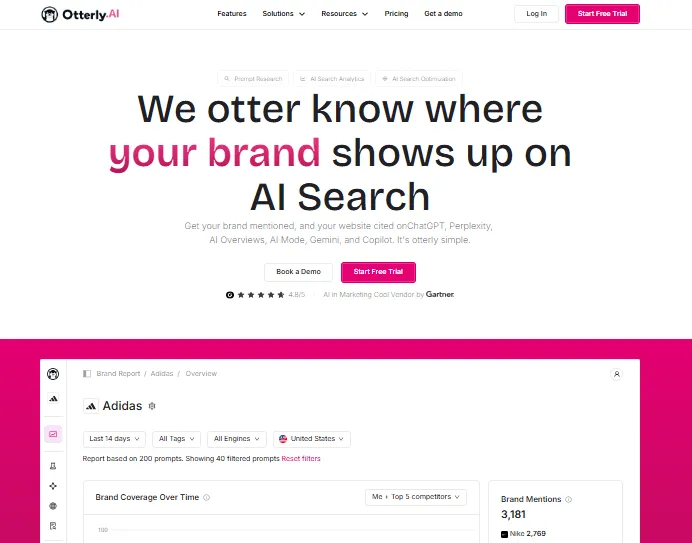
Otterly.AI is one of the more affordable AI visibility tools in the market, and that positioning shows up clearly in the product experience. This is a much lighter platform than Profound or even Peec AI.
The focus is mostly on basic AI search monitoring, visibility tracking, and citation observation across a smaller set of AI engines. I actually think Otterly fills an important gap in the market. Not every company needs enterprise-grade AI share-of-voice dashboards. Some teams just want to know:
- “Are we showing up in ChatGPT?”
- “Which competitors appear more often?”
- “Did our visibility improve after publishing content?”
For that use case, Otterly makes sense. The tradeoff is depth. You’ll probably outgrow it if AI visibility becomes a core reporting function for your organization.
AI Platforms and LLMs It Tracks
- ChatGPT
- Perplexity
- Gemini
(Coverage appears more limited than larger enterprise platforms)
Features I Like
Accessibility is the biggest win here. Otterly lowers the barrier to entry for AI visibility monitoring more than most competitors. The dashboards are simple, setup is straightforward, and pricing is approachable for smaller businesses that simply want visibility data without enterprise complexity.
For startups and smaller agencies, that simplicity is actually valuable. I also noticed several users mentioning that it works well as a lightweight monitoring layer paired with traditional SEO tooling.
Pros
- Very affordable entry pricing
- Beginner-friendly setup
- Clean lightweight interface
- Good for basic AI citation tracking
- Easy to understand reports
- Useful for smaller teams
- Lower commitment than enterprise platforms
Where It Misses Out
Otterly’s limitations become obvious fairly quickly if you need deeper workflows. The platform appears intentionally lightweight, but that also means fewer integrations, narrower AI engine support, less sophisticated reporting, and weaker competitive intelligence capabilities. Several reviewers mentioned that it works well for monitoring, but not necessarily for strategic optimization or enterprise reporting.
Cons
- Limited AI platform coverage
- Basic analytics compared to competitors
- Fewer enterprise workflows
- Minimal advanced reporting
- Limited optimization recommendations
- Easier to outgrow
- Not ideal for large agencies or enterprise teams
Pricing
Otterly offers a highly affordable entry point if you just want to test the waters of AI visibility. Just keep an eye on add-ons if you need specific Google AI or Gemini tracking.
- Lite: $29 / month (15 search prompts)
- Standard: $189 / month (100 search prompts, plus GEO audits)
- Premium: $489 / month (400 search prompts, plus GEO audits)
That makes it one of the cheapest legitimate AI visibility tracking tools currently available. For freelancers, startups, niche SaaS products, or small agencies, the pricing feels very reasonable.
User Reviews
User reviews around Otterly are generally positive for simplicity and affordability. The biggest praise: easy onboarding, lightweight reporting, and low cost. The biggest criticism: limited depth, fewer supported LLMs, and weaker advanced workflows.
I’d probably choose Otterly if I were just starting with AI visibility tracking, testing whether AI discovery matters for my brand, or managing a smaller marketing operation with limited budget. Overall, it feels less like a full GEO platform and more like a practical monitoring utility.
5. Rankscale
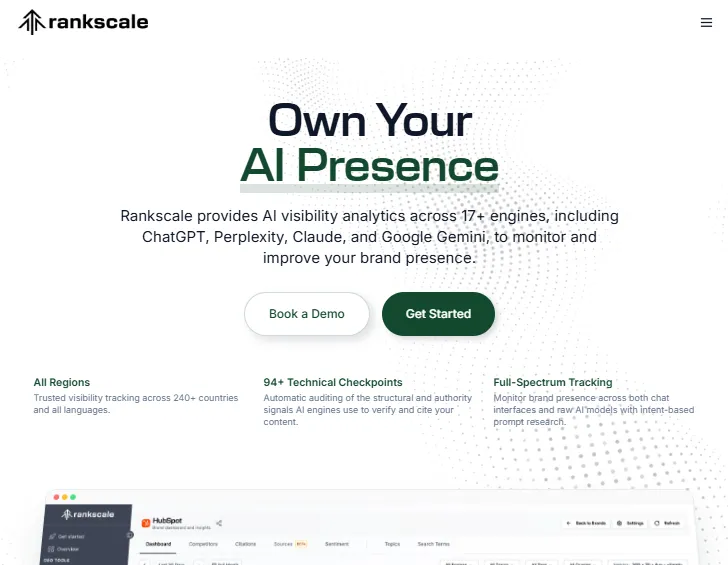
Rankscale feels very SEO-native compared to some of the more enterprise-heavy AI visibility tools. A lot of AI monitoring platforms today feel like they were built by analytics teams. Rankscale feels like it was built by people who understand rank tracking, SERP monitoring, and SEO workflows first — then adapted those ideas for AI search engines and LLMs.
Rankscale’s biggest differentiator is its emphasis on tracking prompts at scale. The platform leans heavily into monitoring how brands appear across large prompt sets inside ChatGPT, Google AI Overviews, Perplexity, and similar systems.
If I were running an SEO agency trying to operationalize AI visibility reporting for multiple clients, Rankscale would honestly be one of the more interesting options. It’s less enterprise-polished than Profound, but more SEO-practical in several workflows.
AI Platforms and LLMs It Tracks
- ChatGPT
- Google AI Overviews
- Perplexity
- Gemini
- Claude
- Microsoft Copilot
- Grok
(Coverage varies depending on plan and rollout stage)
Features I Like
The strongest thing about Rankscale is workflow familiarity. If you already live inside SEO tools all day, the product structure makes sense almost immediately. I liked the prompt clustering approach and visibility trend monitoring.
Instead of simply telling you whether your brand appeared, Rankscale tries to segment visibility by topic groups and prompt intent. That’s genuinely useful because AI visibility is rarely consistent across an entire category.
For example:
- You may dominate “best CRM for agencies”
- But disappear entirely for “best CRM for startups”
That nuance matters a lot in LLM tracking. Another thing I liked was how easy it felt to compare competitors side-by-side. Some enterprise AI share-of-voice platforms overcomplicate this. Rankscale keeps it practical.
Pros
- SEO-friendly workflow structure
- Strong prompt tracking capabilities
- Good competitive visibility monitoring
- Easier onboarding than enterprise tools
- Useful topic clustering
- Practical reporting for agencies
- Strong AI share-of-voice visualization
- Feels built for marketers rather than analysts
Where It Misses Out
The biggest limitation is maturity. You can tell the platform is evolving quickly, but some workflows still feel early-stage compared to larger AI visibility tools. A few reviewers also mentioned inconsistent tracking intervals and occasional prompt volatility issues.
Honestly, some of that is unavoidable in this category. AI search outputs fluctuate constantly. But compared to tools like Profound, the data depth and enterprise integrations are definitely lighter. I also found that the platform focuses heavily on monitoring rather than optimization recommendations.
Cons
- Still relatively early-stage
- Less enterprise-ready than Profound
- Limited advanced integrations
- AI visibility fluctuations can feel noisy
- Reporting customization is lighter
- Fewer advanced analytics workflows
- More monitoring-focused than optimization-focused
Pricing
Rankscale uses a highly predictable credit consumption model, making it easy to forecast costs based on your search volume.
- Essentials Plan: $20 / month (or €20/month; 120 credits)
- Pro Plan: $99 / month (1,200 credits, 4,800 AI responses)
- Enterprise Plan: $780 / month (12,000 credits, 48,000 AI responses)
The pricing feels positioned toward agencies, SEO consultants, growth-stage SaaS teams, and mid-market companies. I actually think the positioning makes sense. It sits between lightweight monitoring tools and expensive enterprise intelligence platforms.
User Reviews
User sentiment around Rankscale is generally positive among SEO practitioners. The most common praise: easy usability, practical dashboards, competitive tracking, and SEO-oriented workflows. The biggest complaints: platform maturity, limited advanced features, and occasional inconsistencies in AI output tracking.
Several users on Reddit described it as “one of the most SEO-native AI visibility tools” currently available. I’d probably recommend Rankscale most often for SEO agencies, consultants, and SaaS growth teams already comfortable with rank tracking workflows.
6. AthenaHQ
AthenaHQ takes a much more strategic and enterprise-oriented approach to AI visibility monitoring. This isn’t just a tool for checking whether your brand appeared in ChatGPT yesterday. The platform pushes deeper into AI perception analysis, brand positioning, and narrative monitoring across generative search systems.
My favorite aspect of AthenaHQ is its emphasis on understanding how AI models talk about your brand, not just whether you’re cited. That distinction matters more than people realize. A brand could technically appear in AI-generated answers frequently while still being framed negatively, inaccurately, or weakly compared to competitors. AthenaHQ seems built around solving that layer of the problem.
AI Platforms and LLMs It Tracks
- ChatGPT
- Google AI Overviews
- Gemini
- Perplexity
- Claude
- Microsoft Copilot
- Grok
(Additional models are also available upon request)
Features I Like
The perception analysis capabilities were easily the most interesting part of AthenaHQ during my research. Instead of only focusing on citation counts or visibility percentages, AthenaHQ tries to analyze sentiment, narrative framing, recommendation positioning, and competitive context inside AI-generated answers. I found that especially useful for enterprise brands where reputation and positioning matter as much as raw visibility.
Another thing I liked was the executive reporting angle. The dashboards appear designed for strategic stakeholders, not just SEO operators. If I were presenting AI visibility insights to leadership teams, AthenaHQ feels like one of the cleaner options.
Pros
- Strong brand perception monitoring
- Strategic AI narrative analysis
- Enterprise-oriented reporting
- Good executive dashboard structure
- Useful competitive positioning insights
- More nuanced than basic citation tracking
- Strong fit for larger brands
Where It Misses Out
AthenaHQ feels less tactical than some competitors. If your primary goal is prompt-level tracking, operational SEO workflows, or granular citation debugging, you may find the platform too high-level. I also noticed fewer discussions around agencies using AthenaHQ compared to tools like Peec AI or Rankscale.
Cons
- Less SEO-tactical than competitors
- Limited public pricing transparency
- Likely expensive for smaller teams
- Less community adoption currently
- Fewer hands-on optimization workflows
- Better for strategic monitoring than daily SEO execution
Pricing
AthenaHQ is built for mid-market and enterprise operations. They skip starter plans entirely and jump straight into massive credit pools.
- Self-Serve Plan: $295 / month (Includes 3,600 credits, tracking for 8 AI platforms, and 3 user seats)
- Enterprise Plan: Custom pricing (Unlocks API, multi-region tracking, and ACE citation engine)
- Note: They are currently offering 67% off the first month, bringing the starting cost down to $95.
For Fortune 500 brands, enterprise SaaS companies, and corporate communications teams, the pricing likely makes sense. For startups and agencies, it may feel difficult to justify.
User Reviews
Because AthenaHQ is more enterprise-focused, there’s less public review volume compared to mainstream SEO SaaS tools. Still, the feedback I found consistently highlighted strong strategic insights, executive-friendly reporting, and useful AI brand perception analysis. The biggest criticism was lack of transparency around pricing, onboarding, and technical methodology.
I’d probably choose AthenaHQ if AI-generated brand perception mattered heavily, executive reporting was critical, or I needed enterprise-grade stakeholder visibility.
7. Waikay
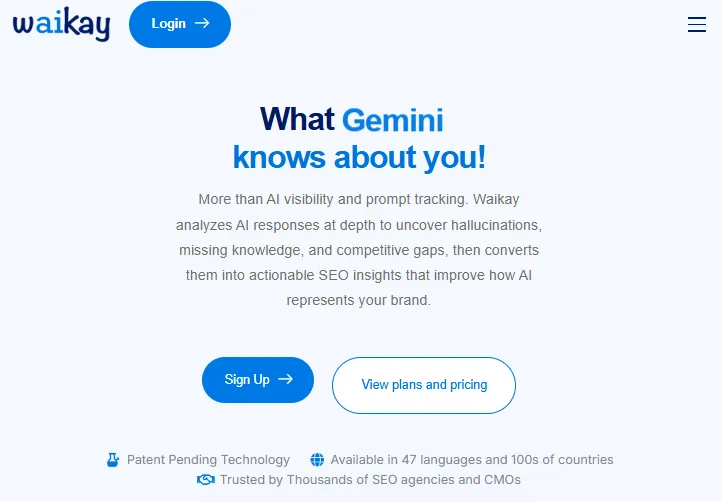
Waikay is one of the more analytics-heavy AI visibility tools I looked at during research, and it clearly leans toward enterprise intelligence rather than lightweight monitoring. The platform focuses heavily on AI search analytics, brand exposure tracking, and competitive visibility across generative engines.
The data visualization layer is what really caught my eye. The dashboards feel designed for teams that need recurring reporting, stakeholder visibility, and long-term trend analysis rather than just checking whether a citation appeared yesterday. If I were managing AI visibility reporting across multiple departments or enterprise clients, Waikay would definitely feel more scalable than smaller monitoring tools.
AI Platforms and LLMs It Tracks
- ChatGPT
- Google AI Overviews
- Gemini
- Perplexity
- Claude
- Microsoft Copilot
- You.com
Features I Like
The reporting layer is probably Waikay’s biggest differentiator. A lot of AI monitoring tools right now feel like prompt trackers, visibility checkers, or AI citation dashboards. Waikay feels more analytical.
I liked the historical visibility tracking and competitive benchmarking capabilities. Instead of simply tracking mentions, the platform attempts to show long-term visibility movement and comparative market positioning. That’s especially useful because AI visibility is extremely volatile day-to-day. Looking only at daily snapshots can become misleading very quickly.
Another thing I appreciated was the stakeholder-friendly presentation. The platform appears built for recurring reporting workflows rather than solo SEO operators.
Pros
- Strong reporting dashboards
- Good long-term visibility trend analysis
- Enterprise-friendly visualization
- Useful competitive benchmarking
- Strong executive reporting workflows
- Better analytics depth than lightweight tools
- Good fit for larger teams
Where It Misses Out
The biggest issue is accessibility. Waikay feels less approachable than tools like Peec AI or Otterly. The platform seems optimized for organizations already serious about AI visibility rather than companies just exploring the space. I also found fewer public discussions and user-generated tutorials compared to more established GEO platforms.
Another limitation is that the reporting depth can occasionally make the product feel less actionable. You get a lot of visibility analytics, but not always enough practical optimization guidance.
Cons
- Less beginner-friendly
- Smaller community footprint
- Can feel overly analytical for smaller teams
- Limited optimization recommendations
- Likely expensive for startups
- More enterprise-focused than SMB-focused
- Less intuitive than lighter competitors
Pricing
Waikay is very budget-friendly for growing businesses, and its multi-language scalability means it can grow alongside your global traffic.
- Free Plan: $0 (Includes 3 lifetime credits and up to 20 scraped prompts)
- Starter Plan: $24.95 / month (Track up to 120 API prompts)
- Small Teams: $69.95 / month (In-depth analysis for brand managers)
- Large Teams (Agencies): $199.95 / month (Track up to 360 API prompts, unlimited seats)
- Bigger Projects: $444.00 / month (For multi-language sites and larger scopes)
User Reviews
Public reviews for Waikay are still somewhat limited, but the sentiment I found leaned positive around dashboard quality, visibility analytics, and enterprise reporting capabilities. The most common concerns: pricing opacity, onboarding complexity, and lack of tactical optimization workflows.
I’d probably choose Waikay if I needed enterprise reporting, long-term AI visibility analytics, or stakeholder-facing dashboards for leadership teams.
8. Goodie AI
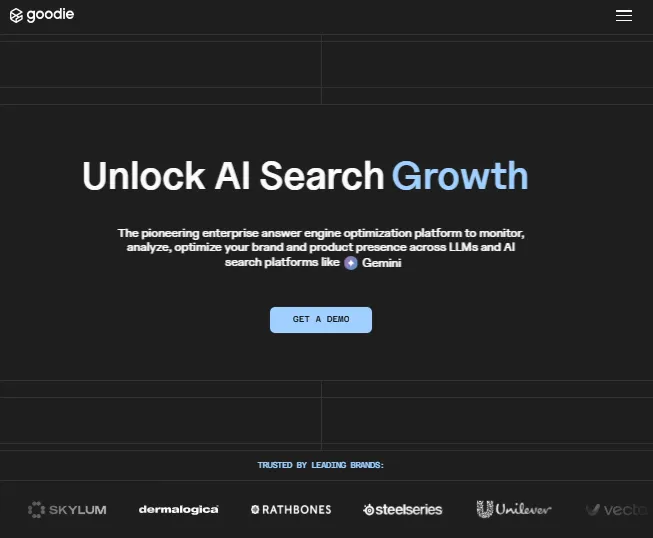
Goodie AI takes a much more content-centric approach to AI visibility monitoring. Instead of acting purely as an AI citation tracker, the platform tries to help brands understand how their content ecosystem performs across LLMs and AI search engines.
That positioning actually makes a lot of sense because AI visibility is increasingly tied to entity clarity, content structure, topical authority, and citation trust signals. I was particularly impressed by the balance between monitoring and optimization. The platform doesn’t just show visibility metrics — it attempts to connect them back to content performance and discoverability improvements.
If I were running a content-heavy SaaS company or publisher, I’d probably find Goodie AI more useful than some purely analytics-focused tools.
AI Platforms and LLMs It Tracks
- ChatGPT
- Google AI Overviews
- Gemini
- Perplexity
- Claude
Features I Like
I liked the content optimization angle quite a bit. A recurring problem with many AI visibility tools is that they tell you: “You’re losing visibility.” But they don’t clearly explain what content gaps exist, which entities are weak, or why competitors appear more often.
Goodie AI tries to bridge that gap. The platform appears particularly strong at surfacing content opportunities tied to AI discoverability. I also liked the way it frames AI visibility in relation to broader content strategy instead of treating LLM tracking as a separate silo.
Pros
- Strong content-focused workflows
- Useful optimization recommendations
- Good topical visibility analysis
- Helpful for publishers and SaaS blogs
- Bridges monitoring with strategy
- Easier interpretation than analytics-heavy platforms
- Practical content gap insights
Where It Misses Out
Goodie AI feels less enterprise-oriented than platforms like Profound or Waikay. If your organization needs advanced governance, executive dashboards, deep API integrations, or enterprise compliance workflows, the platform may feel lightweight.
Another issue is that content optimization recommendations in AI search are still partly experimental across the entire category. No tool fully understands LLM ranking systems yet.
Cons
- Less enterprise-ready
- Smaller analytics depth
- Limited advanced reporting
- Fewer integrations
- Less suitable for large agencies
- Optimization guidance can fluctuate
- Still evolving rapidly
Pricing
Goodie AI bundles AEO, traditional SEO, and competitive ads intelligence into one platform. It’s an enterprise-grade solution, so it requires a larger upfront commitment.
- Starter Tier: $399.00 / month (or $499/month for the “Lite” tier, depending on your billing cycle)
- Enterprise: Custom pricing (Requires contacting sales for large-scale data volume)
User Reviews
User feedback around Goodie AI tends to focus positively on usability, content insights, and actionable recommendations. The biggest criticisms: evolving feature depth, smaller platform ecosystem, and limited advanced enterprise workflows.
I’d probably recommend Goodie AI for content-led SaaS companies, publishers, and brands actively investing in GEO and AI-driven content discoverability.
9. PromptWatch
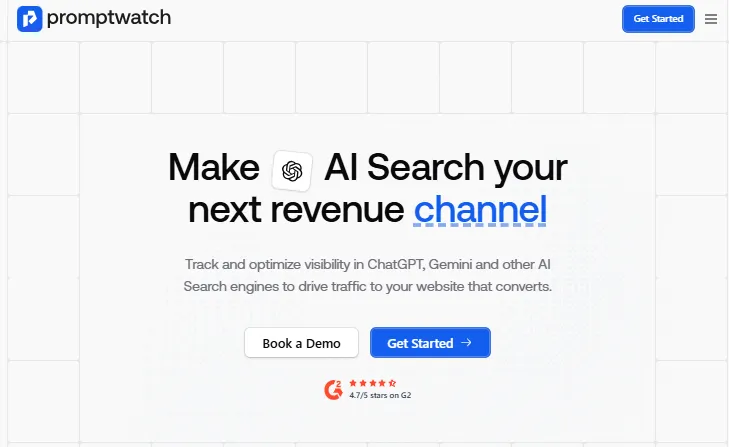
PromptWatch is one of the more technically interesting tools in the AI visibility ecosystem because it approaches the category from an observability and prompt-monitoring perspective. Compared to platforms built mainly for marketers, PromptWatch feels more infrastructure-oriented.
The sheer granularity of the tool is hard to ignore. The platform originally gained attention for LLM observability and prompt analytics, but it’s increasingly being used for AI search visibility tracking and AI response monitoring workflows as well. If I were part of a technically sophisticated SaaS company that wanted deep prompt monitoring and AI interaction visibility, this would absolutely be on my radar.
AI Platforms and LLMs It Tracks
- ChatGPT
- Claude
- Gemini
- Perplexity
- OpenAI API environments
- Custom LLM workflows
Features I Like
The biggest differentiator is observability depth. While most AI visibility tools focus primarily on citations, rankings, and brand mentions, PromptWatch goes deeper into prompt interactions, response tracking, workflow monitoring, and LLM behavior analysis.
I found this especially interesting for companies building AI-native products rather than only monitoring brand discoverability. Another thing I liked was the developer-oriented flexibility. The platform appears more customizable than many marketing-first GEO tools.
Pros
- Strong LLM observability workflows
- Deep prompt monitoring capabilities
- Technical flexibility
- Useful API monitoring
- Strong fit for AI-native SaaS products
- More customizable than many competitors
- Advanced response tracking
Where It Misses Out
PromptWatch is probably too technical for many traditional marketing teams. If your primary goal is easy AI visibility dashboards, executive reporting, or simple citation monitoring, the platform may feel overly infrastructure-focused. I also think the learning curve is steeper than tools built directly for SEO and growth teams.
Cons
- More technical than marketing-focused
- Steeper learning curve
- Less polished executive reporting
- Not ideal for non-technical teams
- Can feel infrastructure-heavy
- Weaker beginner onboarding
- Less plug-and-play than lighter GEO tools
Pricing
PromptWatch offers highly scalable tiers based on usage. If you commit to an annual plan, their entry tier becomes quite affordable.
- Essential Tier: $99 / month (~$74/month if billed annually)
- Professional Tier: $249 / month
- Business Tier: $579 / month
User Reviews
User sentiment around PromptWatch is generally positive among technical users. The biggest praise: flexibility, observability depth, and customization. The biggest complaints: complexity, technical onboarding, and less intuitive marketing workflows.
I’d probably choose PromptWatch if I needed advanced LLM monitoring, prompt observability, or technical AI workflow analytics beyond simple AI citation tracking.
10. Am I On AI
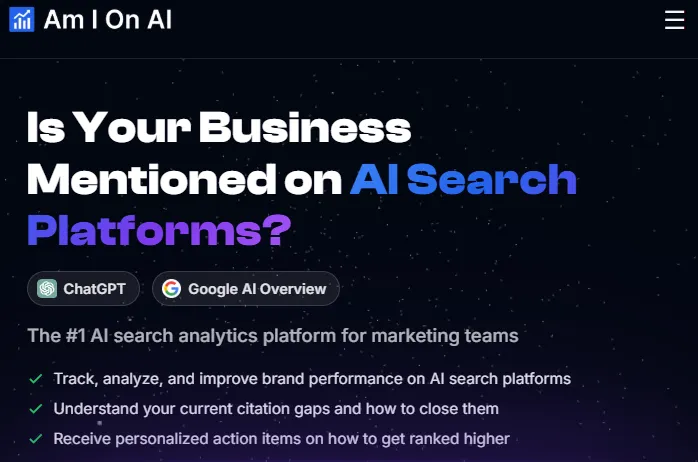
Am I On AI? is one of the simplest AI visibility tools currently available, and honestly, that simplicity is part of the appeal. The platform is designed around a straightforward question: “Does my brand appear inside AI-generated answers?”
The platform’s approachability is its strongest asset. You don’t need a full GEO strategy team to start using it. If I were a smaller SaaS company, startup, creator-led business, or consultant wanting quick AI visibility insights without enterprise complexity, this is probably one of the easiest entry points into the category.
AI Platforms and LLMs It Tracks
- ChatGPT
- Google AI Overviews
- Perplexity
- Gemini
- Claude
Features I Like
The simplicity is the product. I liked how quickly you can start checking brand visibility, competitor mentions, and AI citation presence.
A lot of AI monitoring tools today try to become full-scale enterprise ecosystems. Am I On AI? keeps things lightweight and understandable. That makes it useful for companies still validating whether AI visibility even matters for their market.
Pros
- Extremely beginner-friendly
- Fast setup
- Lightweight dashboard
- Easy visibility checks
- Affordable compared to enterprise tools
- Good for startups and consultants
- Low learning curve
Where It Misses Out
The tradeoff is depth. Compared to platforms like Profound or Peec AI, the analytics and reporting capabilities are much lighter. You’re not getting enterprise-grade reporting, advanced share-of-voice analysis, or deep optimization workflows. This is more of a visibility checker than a full AI search intelligence platform.
Cons
- Limited advanced analytics
- Fewer integrations
- Basic reporting
- Less useful for large agencies
- Limited enterprise workflows
- Easier to outgrow
Pricing
This tool offers a nice mix for agencies: you can run self-serve tracking, or opt for a completely managed setup if you’d rather hand off the execution entirely.
- Pulse Plan: $29 / month (Scans up to 50 prompts on Google AI Overviews)
- Pro Plan: $100 / month (Scans up to 150 prompts across ChatGPT and Google AIO)
- Council (Done-For-You): Starts at $250 / month (Scales up to $1,000/month depending on topic volume)
User Reviews
User sentiment is generally positive around ease of use, simplicity, and accessibility. The biggest complaints: limited depth, fewer advanced features, and lightweight reporting.
I’d probably recommend Am I On AI? for startups, consultants, indie SaaS founders, and teams just starting to monitor AI visibility.
11. Nightwatch
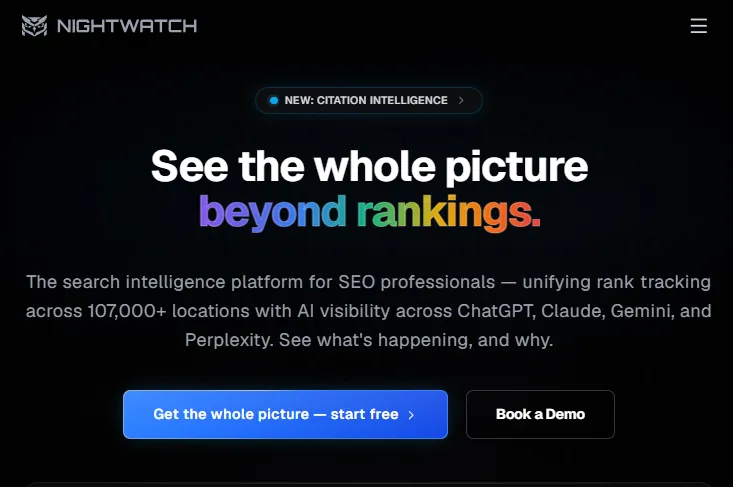
Nightwatch is interesting because it wasn’t originally built as an AI visibility platform. It started as a SERP tracking and SEO monitoring tool, but the company has gradually expanded into AI search monitoring and AI Overview tracking workflows. And honestly, this is probably where the market is heading overall: traditional SEO tools evolving into AI visibility platforms rather than AI tools fully replacing SEO suites.
Nightwatch’s existing ranking infrastructure is what makes it such a strong contender. The company already had strong keyword tracking capabilities before AI search exploded, which gives it an advantage in monitoring consistency and reporting maturity. If I were already using Nightwatch for SEO, I’d seriously consider expanding within the platform instead of immediately buying a standalone GEO tool.
AI Platforms and LLMs It Tracks
- Google AI Overviews
- ChatGPT visibility monitoring
- Traditional SERPs
- AI-enhanced search environments
Features I Like
The strongest advantage is workflow integration. Nightwatch combines traditional SEO rank tracking, AI Overview visibility, keyword monitoring, and SEO reporting inside a familiar SEO environment. That’s actually valuable because AI visibility doesn’t exist in isolation. In many industries, Google organic rankings and AI Overviews still overlap heavily.
I also liked the historical SERP tracking capabilities. Most newer GEO tools simply don’t have the same maturity around ranking infrastructure yet.
Pros
- Strong rank tracking foundation
- Good reporting maturity
- Familiar SEO workflows
- Combines SERP + AI monitoring
- Better historical tracking than many GEO startups
- Useful for agencies already using SEO tools
- Easier operational integration
Where It Misses Out
Nightwatch still feels more like an SEO platform adapting to AI search rather than a purpose-built AI visibility platform. That means less advanced LLM monitoring, fewer AI-native analytics, and weaker AI citation intelligence compared to dedicated GEO tools. If your primary goal is deep ChatGPT or Perplexity visibility analysis, tools like Profound or Peec AI will likely go further.
Cons
- AI visibility features are less mature
- More Google-centric
- Limited advanced LLM analytics
- Less AI-native than dedicated GEO tools
- Weaker AI citation analysis
- Fewer prompt-level workflows
Pricing
Pricing Because Nightwatch now includes AI visibility tracking alongside its traditional rank tracker, your costs will scale strictly with your total keyword and AI prompt footprint. (Note: Nightwatch prices in Euros).
- Starter: €99 / month or €79 / month billed annually (500 keywords, 5 websites, and 50 AI prompts)
- Professional: €199 / month or €159 / month billed annually (2,500 keywords, 25 websites, 150 AI prompts, plus API access and unlimited users)
- Agency: €499 / month or €399 / month billed annually (7,500 keywords, 100 websites, and 500 AI prompts)
- Enterprise: Custom Pricing (20,000+ keywords, unlimited AI prompts, unlimited websites, and dedicated infrastructure)
User Reviews
Nightwatch users consistently praise tracking accuracy, reporting quality, and usability. The biggest criticism in AI visibility discussions is simply that the platform isn’t as AI-native as newer dedicated competitors.
I’d probably recommend Nightwatch for SEO agencies, rank-tracking-heavy workflows, and teams wanting AI visibility inside an existing SEO stack.
12. Semrush
Semrush entering AI visibility tracking was inevitable. The company already owns massive portions of the SEO tooling ecosystem, so expanding into AI search monitoring, AI Overviews, and generative search visibility was the logical next step. And honestly, Semrush has one huge advantage most standalone GEO startups don’t: distribution. Millions of marketers already use Semrush daily. That matters.
A key takeaway from my research is that Semrush is approaching AI visibility as an extension of broader search intelligence rather than treating it like a completely separate category. That’s probably the correct long-term strategy.
AI Platforms and LLMs It Tracks
- Google AI Overviews
- AI-enhanced SERPs
- Early-stage LLM visibility monitoring
- Traditional organic search ecosystems
Features I Like
The biggest strength is ecosystem integration. Semrush can combine keyword research, SERP tracking, backlink analysis, content optimization, and AI visibility insights inside one platform. That’s incredibly attractive for agencies and SaaS teams already living inside Semrush every day.
I also think Semrush has a huge data advantage long term because of its existing search infrastructure.
Pros
- Massive SEO ecosystem integration
- Strong reporting infrastructure
- Familiar workflows
- Combines SEO + AI visibility
- Trusted enterprise brand
- Strong agency adoption
- Excellent supporting SEO data
Where It Misses Out
Right now, Semrush still feels early in AI visibility compared to dedicated GEO tools. The company clearly has the resources to catch up, but prompt-level monitoring, AI citation intelligence, and deep LLM analytics still feel less mature than platforms built specifically for AI search visibility. In other words: Semrush is currently “good enough” for many SEO teams, but probably not the deepest AI visibility platform available today.
Cons
- AI visibility tooling still evolving
- Less advanced LLM analytics
- More Google-centric than AI-native
- Weaker prompt-level intelligence
- Limited AI share-of-voice depth
- Not yet a full GEO replacement
Pricing
Semrush is an all-in-one SEO powerhouse. Adding their AI Visibility bundle gives you tracking baked right into your existing SEO workflow, though the combined cost is higher than standalone tools.
- Semrush AI Visibility Toolkit (Add-On): $99 / month per domain
- Semrush One Starter: Starts at ~$165 / month (Base SEO + AI visibility combo)
- Semrush One Pro+: $299 / month
- Semrush One Advanced: $549 / month
User Reviews
Semrush reviews remain extremely strong overall because of data depth, ecosystem breadth, and workflow integration. But among advanced GEO practitioners, the recurring criticism is that Semrush’s AI visibility tooling still feels early-stage compared to dedicated AI monitoring platforms.
I’d probably recommend Semrush if you already rely heavily on the Semrush ecosystem, want AI visibility alongside traditional SEO, or prefer platform consolidation over niche tooling.
13. Ahrefs Brand Radar
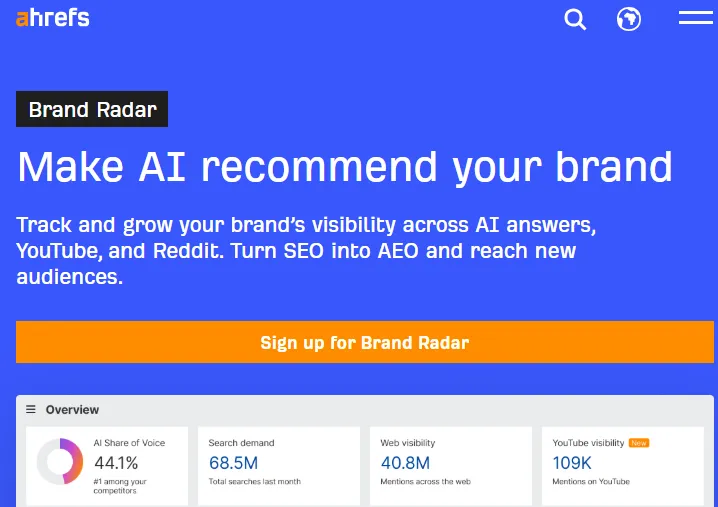
Ahrefs entering AI visibility tracking was almost inevitable. The company already owns one of the largest SEO datasets in the industry, so building AI brand monitoring on top of that infrastructure makes a lot of strategic sense.
The most interesting aspect of Ahrefs is how they approach AI visibility differently than pure GEO startups. Instead of focusing only on prompts and LLM outputs, Brand Radar tries to connect AI visibility back to broader brand authority and web presence signals. That’s important because LLMs don’t operate in isolation. Most AI systems still rely heavily on broader web authority, citations, links, entity relationships, and topical trust. If Semrush feels like the “marketing operating system” approach to AI visibility, Ahrefs feels more like the “authority graph” approach.
AI Platforms and LLMs It Tracks
- ChatGPT
- Google AI Overviews
- Perplexity
- Gemini
- Claude
- AI-enhanced search ecosystems
Features I Like
The biggest advantage is the underlying SEO infrastructure. Ahrefs already understands backlinks, topical authority, entity relationships, and brand mentions better than almost anyone. I liked the way Brand Radar ties AI visibility back to larger authority signals rather than treating GEO as a disconnected discipline.
Another strength is competitive intelligence. Ahrefs has always been strong at comparative SEO analysis, and that carries over nicely into AI visibility workflows.
Pros
- Massive SEO data ecosystem
- Strong authority analysis
- Good competitive monitoring
- Familiar workflows for SEO teams
- Strong backlink + entity integration
- Useful for brand authority analysis
- Trusted enterprise-grade infrastructure
Where It Misses Out
The biggest limitation right now is accessibility. A recurring criticism is that deeper AI visibility workflows can become very expensive quickly. Multiple users mentioned that advanced prompt tracking and AI monitoring sit behind costly add-ons.
Compared to dedicated GEO tools, Ahrefs also feels less AI-native. You get strong SEO intelligence layered into AI visibility, but not always the deepest prompt-level analysis or citation workflows.
Cons
- Advanced AI features can become expensive
- Less AI-native than pure GEO platforms
- Limited prompt workflow depth
- More authority-focused than citation-focused
- Enterprise costs climb quickly
- AI tooling still evolving
Pricing
Ahrefs requires a base subscription before you can add on their specialized Brand Radar modules.
- Base Subscription Requirement: Starts at $129 / month (Lite Plan)
- Brand Radar Add-on: +$199 / month per individual AI Index (e.g., just ChatGPT)
- All-Platform Bundle: +$699 / month (Covers all 6 AI indexes)
- Custom Prompts Add-on: Starts at an extra $50 / month
Basic AI visibility appears accessible on standard plans, but advanced AI monitoring reportedly starts becoming expensive at enterprise scale. For existing Ahrefs users, though, consolidation may still make financial sense.
User Reviews
Most users trust Ahrefs because of data reliability, backlink intelligence, and competitive SEO research. The recurring criticism in GEO conversations is that Ahrefs still feels like an SEO platform extending into AI visibility rather than a fully AI-native monitoring solution.
I’d probably recommend Ahrefs Brand Radar for SEO-first teams, authority-driven brands, and companies already heavily invested in the Ahrefs ecosystem.
14. BrightEdge
BrightEdge has quietly become one of the more serious enterprise players in AI search visibility. And honestly, this makes sense. BrightEdge has spent years serving large enterprise SEO organizations, so extending into AI search monitoring, AI Overviews, and GEO analytics was a natural evolution.
You can immediately feel how enterprise-ready the platform is compared to newer startups. This is not a lightweight “track your ChatGPT mentions” tool. BrightEdge feels built for global brands, governance-heavy organizations, and enterprise marketing operations needing AI visibility integrated into larger search workflows.
AI Platforms and LLMs It Tracks
- Google AI Overviews
- ChatGPT
- Gemini
- Perplexity
- Microsoft Copilot
- Enterprise AI search ecosystems
Features I Like
The reporting maturity is excellent. This is one area where enterprise SEO companies still have a major advantage over many newer GEO startups. I liked the integration between traditional SEO data, AI visibility tracking, content performance, and enterprise workflows.
Another thing that stood out was scalability. BrightEdge clearly understands how large organizations operate internally. If I were managing AI visibility for a Fortune 500 company, I’d trust BrightEdge more than many newer startups simply because of operational maturity.
Pros
- Enterprise-grade reporting
- Strong workflow integration
- Mature SEO infrastructure
- Good AI Overview tracking
- Excellent governance capabilities
- Scalable for large organizations
- Strong stakeholder reporting
Where It Misses Out
BrightEdge feels less innovative than some AI-native GEO startups. The platform is very strong operationally, but less exciting from a pure AI experimentation standpoint. If you want cutting-edge prompt intelligence, deep conversational citation analysis, or rapid GEO experimentation, tools like Profound or Scrunch may feel more advanced.
Cons
- Enterprise-focused pricing
- Less agile than AI-native startups
- Limited transparency around pricing
- Heavier onboarding
- Less experimental AI workflows
- Better for enterprises than SMBs
Pricing
BrightEdge doesn’t publish public pricing for their platform or the AI Hyper Cube module.
- Custom Pricing Only: You will need to schedule a corporate demo and request a tailor-made proposal based on your exact enterprise scale.
User Reviews
BrightEdge reviews are generally very strong among enterprise teams. The biggest praise: reporting maturity, workflow reliability, and scalability. The biggest criticism: pricing, onboarding complexity, and slower innovation compared to AI-native GEO startups.
I’d probably recommend BrightEdge for enterprise marketing teams, global brands, and organizations treating AI visibility as part of broader enterprise search operations.
15. Scrunch AI
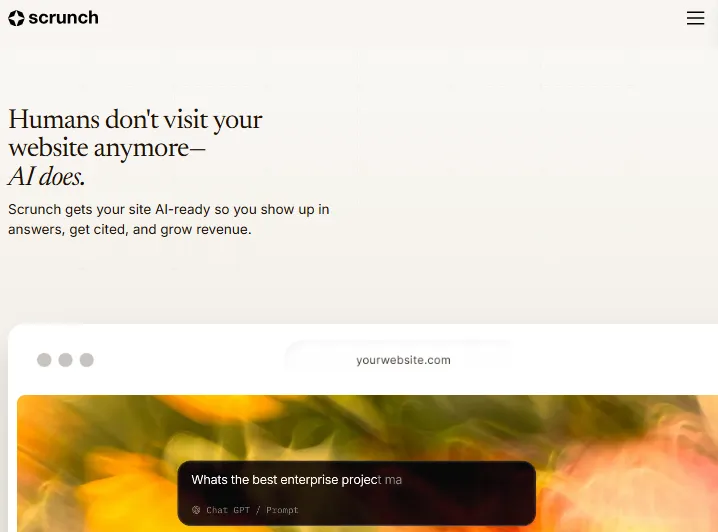
Scrunch AI is one of the more interesting newer entrants in the AI visibility tools space because it focuses heavily on AI discoverability optimization alongside monitoring. A lot of platforms stop at: “You appeared 12% of the time.” Scrunch AI tries to go one step further by helping brands understand why they are or aren’t being surfaced across LLMs.
I really appreciate their emphasis on content optimization and AI readiness workflows rather than just surfacing dashboards. If I were heavily investing in GEO (Generative Engine Optimization) initiatives, I’d definitely pay attention to Scrunch AI.
AI Platforms and LLMs It Tracks
- ChatGPT
- Google AI Overviews
- Gemini
- Claude
- Perplexity
- Microsoft Copilot
Features I Like
The strongest part of Scrunch AI is actionability. I liked that the platform doesn’t just surface visibility data — it also attempts to identify content gaps, entity weaknesses, citation opportunities, and optimization areas for AI discoverability. That’s important because many AI monitoring tools today create “visibility anxiety” without providing clear next steps. Scrunch AI feels more optimization-oriented than many competitors.
I also found the website intelligence and AI crawler analysis capabilities particularly interesting. The platform appears to analyze how AI systems interpret site structure and entity relationships.
Pros
- Strong optimization-oriented workflows
- Useful AI discoverability analysis
- Actionable recommendations
- Good content gap identification
- Helpful entity optimization insights
- More strategy-focused than basic monitoring tools
- Strong GEO positioning
Where It Misses Out
The biggest challenge with Scrunch AI is that some workflows still feel experimental. That’s not necessarily bad — the entire AI visibility category is experimental right now — but I think users expecting extremely stable SEO-style reporting may struggle with the variability.
I also found fewer large-scale user discussions compared to tools like Profound or Peec AI. Another issue is that optimization recommendations in AI search are still partly probabilistic. No platform can fully guarantee outcomes because LLM behavior changes constantly.
Cons
- Newer and less proven than larger competitors
- Some workflows still feel experimental
- Limited long-term review history
- AI optimization recommendations can fluctuate
- Less mature reporting ecosystem
- Smaller community footprint
Pricing
Scrunch offers a highly simplified pricing structure focused on the volume of prompts you need to track and whether you need custom Enterprise features.
- Core: $250 / month (Includes 125 unique prompts, 5 site audits per month, 1 brand workspace, 5 user licenses, and tracking across ChatGPT, Perplexity, Google AI Overviews, and Copilot)
- Enterprise: Custom Pricing (Includes custom prompt volume, custom brand workspaces, API access, SSO, expanded model coverage, and a dedicated account team)
(Note: They also offer specialized Agency tiers starting at $500/month if you need to manage multiple client workspaces).
User Reviews
Public review volume is still relatively limited, but the sentiment I found was generally positive around usability, optimization insights, and strategic recommendations. The most common criticism: evolving product maturity, limited transparency around methodology, and uncertainty around long-term tracking consistency.
I’d probably choose Scrunch AI if I cared more about improving AI visibility than just monitoring it, wanted actionable GEO recommendations, or needed a platform focused on AI discoverability workflows rather than pure analytics.
Don’t overthink your AI tracking setup
The AI world is moving crazy fast. What was just a fun experiment last year is now a must-have for marketing teams.
But here is the honest truth. You do not need a massive, expensive platform right out of the gate.
If you just want to see if ChatGPT knows who you are, start small. Grab a lightweight tool like Otterly.AI or Am I On AI?. If you run an agency and need to show reports to clients, Peec AI or Rankscale are right in that sweet spot.
Save the huge, expensive tools like AthenaHQ or Profound for later, when you actually have the budget and a large team to use all that data.
At the end of the day, a tracking tool is just a dashboard. It shows you the score, but it doesn’t play the game for you. You still have to put in the hard work to create great content that AI engines actually want to share.
Pick a tool that fits your budget today, set it up, and get back to building your brand.
Frequently Asked Questions
What is the difference between AEO and GEO?
Answer Engine Optimization (AEO) focuses on optimizing content for direct-answer systems like Google AI Overviews and voice search. Generative Engine Optimization (GEO) specifically targets Large Language Models (LLMs) like ChatGPT, Claude, and Perplexity. In practice, most modern AI visibility tools track both AEO and GEO metrics simultaneously.
What is the best tool to track brand mentions in ChatGPT?
The best tool to track ChatGPT mentions depends on your company’s scale. Profound and AthenaHQ are the best options for enterprise teams needing deep citation analytics. For marketing agencies and mid-market brands, Peec AI and AIclicks offer the best balance of multi-LLM tracking and affordable pricing.
How do AI search visibility tools actually track LLM citations?
Most AI search visibility trackers use API scraping to send hundreds of prompt variations to models like ChatGPT, recording how often your brand is cited. However, because API responses can differ from the consumer web UI, advanced GEO tools will often simulate real browser sessions to ensure the highest tracking accuracy.
Can traditional SEO tools track Google AI Overviews (AIO)?
Yes, major SEO platforms like Semrush, Ahrefs, and Nightwatch have updated their traditional rank trackers to monitor whether a Google AI Overview appears for a keyword. However, to track your share-of-voice across non-Google models like Perplexity or Microsoft Copilot, you need a dedicated LLM visibility tracker.
How do I improve my GEO and appear more often in AI answers?
To improve your Generative Engine Optimization (GEO) and increase your visibility in AI search, focus on three core strategies:
1. Publish primary data: LLMs highly favor citing unique statistics and original research.
2. Optimize for entity relationships: Ensure your brand is clearly linked to your industry’s core topics across highly trusted third-party websites.
3. Use clear content structures: Format your pages with direct Q&A formats, clean H2s, and bulleted lists that AI web crawlers can easily parse.