Best Go to Market Tools in 2026 | 24 Tools Tested and Ranked
Most sales teams I know are not losing deals because of a bad product.
They are losing because they are using tools that do not talk to each other, chasing leads that were never qualified, and running outreach campaigns that land in spam.
The stack is broken. And a broken stack makes even the best GTM strategy look like it is not working.
Go to market tools exist to fix exactly that. The right ones give your team speed, clarity, and a shorter path from first touch to closed deal.
This guide covers 24 of the best go to market tools in 2026. I tested them, dug into the pricing, read through hundreds of G2 reviews, and ranked them by how useful they actually are for a real revenue team.
TL;DR: 24 GTM Tools Compared
| # | Tool | Category | Starting Price | G2 Rating |
|---|---|---|---|---|
| 1 | HubSpot Sales Hub | CRM and Automation | Free / $20/seat/mo | 4.4 / 5 |
| 2 | Apollo.io | Prospecting and Sequencing | Free / $49/user/mo | 4.7 / 5 |
| 3 | Salesforce | Enterprise CRM | From $25/user/mo | 4.4 / 5 |
| 4 | Gong | Revenue Intelligence | Custom ($5K+ platform/yr) | 4.7 / 5 |
| 5 | ZoomInfo | Sales Intelligence | Quote-based | 4.4 / 5 |
| 6 | Clay | Data Enrichment | Free / $185/mo | 4.9 / 5 |
| 7 | Cognism | Sales Intelligence (EMEA) | Quote-based | 4.6 / 5 |
| 8 | 6sense | ABM and Intent Data | Free / from $50K+/yr | 4.3 / 5 |
| 9 | Seismic | Sales Enablement | Quote-based | 4.7 / 5 |
| 10 | Demandbase | ABM Platform | Quote-based | 4.3 / 5 |
| 11 | Salesforce Pardot | Marketing Automation | From $1,250/mo | 4.0 / 5 |
| 12 | Userpilot | Product Adoption | From $299/mo | 4.6 / 5 |
| 13 | UserGems | Buyer Signal Outbound | Quote-based | 4.8 / 5 |
| 14 | PartnerStack | Partner Management | Quote-based | 4.7 / 5 |
| 15 | HockeyStack | GTM Analytics | Quote-based | 4.7 / 5 |
| 16 | Metadata.io | Paid Campaign Automation | Quote-based | 4.5 / 5 |
| 17 | Reachdesk | Gifting and Direct Mail | Quote-based | 4.5 / 5 |
| 18 | OptinMonster | Lead Generation | From $9/mo | 4.3 / 5 |
| 19 | Oneflow | Contract Automation | Quote-based | 4.5 / 5 |
| 20 | Kaspr | LinkedIn Data | Free / paid plans | 4.4 / 5 |
| 21 | GoTo | Virtual Meetings | From $12/user/mo | 4.3 / 5 |
| 22 | Juro | Contract Management | Quote-based | 4.6 / 5 |
| 23 | Grow | Business Intelligence | Quote-based | 4.2 / 5 |
| 24 | Groove | Customer Support | From $24/user/mo | 4.6 / 5 |
Editorial Disclaimer: Pricing, plan details, and review counts in this article are accurate as of April 2026 and may change without notice. Always verify directly with the vendor before making a decision.
What Are Go to Market Tools?
Go to market tools are the software that sits between your product and your first paying customer.
They cover every stage of that journey. Finding the right buyers. Reaching them with the right message. Managing the pipeline. Closing the deal. And measuring what worked.
The category is broad by design. A CRM, prospecting database, contract platform, gifting tool, and revenue intelligence platform all play a role in your go to market strategy. If a tool helps your team move a deal forward, it belongs in your GTM stack.
Below are the 24 go to market tools you need. Each one solves a specific part of your pipeline. Pick what moves your deals forward.
1. HubSpot Sales Hub
G2 Rating: 4.4 / 5 (12,000+ reviews)
Best for: Growing SMB and mid-market teams that want CRM, pipeline, and automation in one place
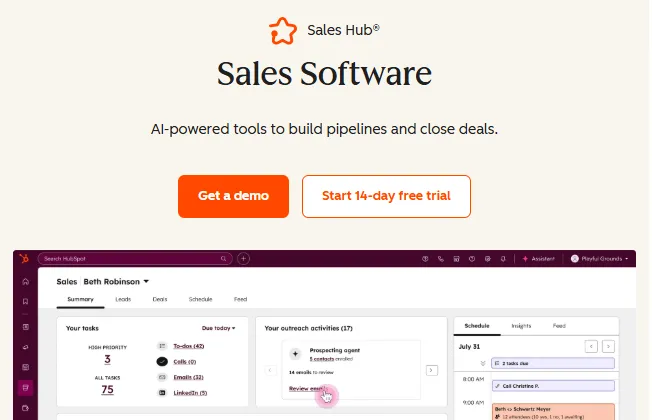
HubSpot’s free CRM is the best free anything in B2B software. Full stop. Contact management, deal pipelines, email tracking, meeting scheduling, and basic reporting — all free, all genuinely useful.
Then you hit the Starter-to-Professional cliff. Email sequences are only on the Professional plan at $100 per seat per month. That tier also comes with a mandatory $1,500 onboarding fee that catches a lot of teams off guard. And quoting? Not included at any tier. It is a separate paid add-on at approximately $84 per user per month.
If your sales process ends with a formal proposal, add $1,008 per user per year to the real cost before you compare HubSpot to alternatives.
“HubSpot is simple to use and user friendly. — G2 Reviewer”
“It has become too expensive as they strip free features into paid tiers. — G2 Reviewer”
Pricing:
- Free: up to 2 users, full CRM basics
- Starter: $20 per seat per month
- Professional: $100 per seat per month + $1,500 one-time onboarding fee
- Enterprise: $150 per seat per month + $3,500 one-time onboarding fee
2. Apollo.io
G2 Rating: 4.7 / 5 (9,000+ reviews)
Best for: SMB and mid-market outbound teams in North America
Apollo is the most reviewed GTM platform on G2. Over 600,000 companies use it. The platform combines a 275 million contact database with email sequencing, a built-in dialer, intent signals, and AI-assisted outreach — all in one place.
Where Apollo stands out is targeting. You can build and refine your ideal customer profile with strong filters. Slice by funding stage, hiring signals, technographics, and revenue range. It is a good fit if you want prospecting and outreach in a single tool.
The credit system, though, is clever in the way a gym membership is clever — easy to sign up, easy to forget how much you are spending. Phone reveals cost 8 credits each. Several G2 users report email bounce rates between 15 and 25 percent. Budget $150 to $400 per user per month once credits and overages come into play.
“Apollo tops both Lusha and Cognism for US outbound. The database coverage is strong. — G2 Reviewer”
“After initial trials, you want to put it to real work. Then it tricks you into believing it can do the heavy lifting. — G2 Reviewer”
Pricing:
- Free plan available
- Basic: $49 per user per month (annual billing)
- Professional: $79 per user per month (annual billing)
- Organization: $119 per user per month, minimum 3 users
- Monthly billing adds roughly 20 percent to each tier
3. Salesforce
G2 Rating: 4.4 / 5 (22,000+ reviews)
Best for: Mid-market and enterprise teams with complex, multi-stage sales processes
Salesforce is the market-leading CRM for teams that need deep customization and enterprise-grade reporting. The integration ecosystem is unmatched — nearly every tool on this list connects to Salesforce natively.
The catch is overhead. Salesforce needs a dedicated admin to run well. If your team does not have that, budget for a consulting partner on top of the license cost, or the platform will underperform.
Pricing: Starter Suite starts at $25 per user per month. Pro Suite is $100. Enterprise is $165. Unlimited is $330. All require annual billing.
4. Gong
G2 Rating: 4.7 / 5 (6,500+ reviews)
Best for: Mid-market and enterprise sales teams with 15 or more reps
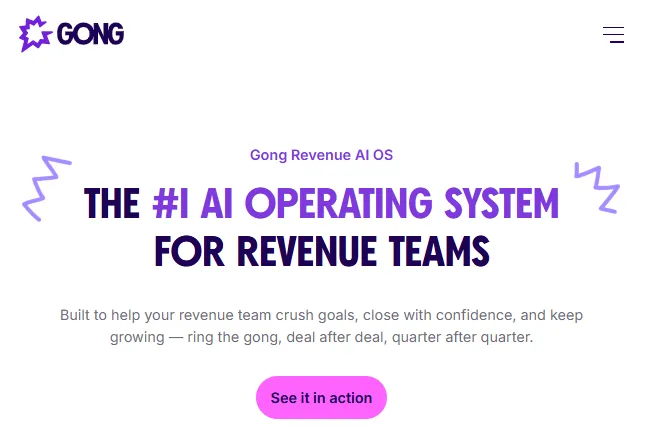
Gong is basically a microscope for sales conversations. Which is great — until you realize you are paying microscope prices for it.
The platform records every call and email, then surfaces patterns: what your top reps say differently, which deals have gone quiet, where competitors are being mentioned. For sales leaders managing large teams, the coaching and deal visibility value is real.
What is not great: the pricing model. The bill has three parts — a flat platform fee, a per-user annual license, and mandatory onboarding fees. A 10-person team pays roughly $21,000 or more in year one. Multi-year contracts with automatic renewal uplifts are standard. One G2 reviewer put it plainly: ‘It was a big mistake on our part to commit to a two-year term.’ Read that sentence before you sign anything.
Pricing (based on reported contract data — not publicly confirmed by Gong):
- Platform fee: $5,000 per year (flat, regardless of team size)
- Under 49 users: $1,600 per user per year (approx. $133 per user per month)
- 50 to 99 users: $1,520 per user per year
- 10-person team: approximately $21,000 in year one before onboarding
- Verify all figures directly with Gong before budgeting
5. ZoomInfo
G2 Rating: 4.4 / 5 (8,000+ reviews)
Best for: Enterprise teams with large addressable markets in North America
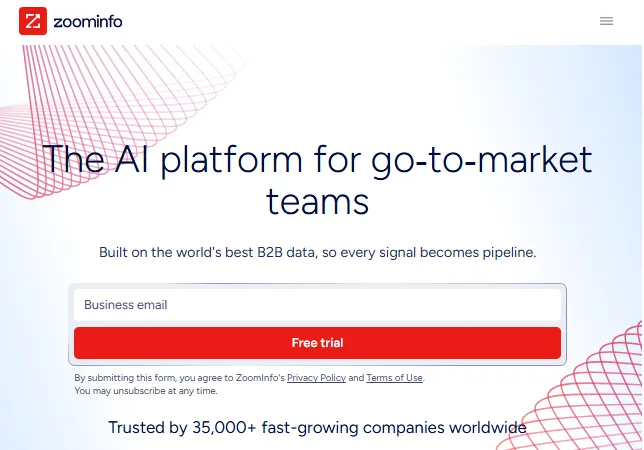
ZoomInfo is the market giant of sales intelligence. The database is massive. The intent data is strong. The integrations are deep. It is also one of the most complained-about tools on G2 for pricing opacity and aggressive contract renewal tactics.
The good news: ZoomInfo is very negotiable. Vendr data shows discounts of 30 to 65 percent are achievable. Never pay list price, and always negotiate at quarter-end.
Pricing: Quote-based. Expect $15,000 or more per year for small teams, $50,000 or more for enterprise. Annual contracts standard.
6. Clay
G2 Rating: 4.9 / 5 (500+ reviews)
Best for: RevOps teams running high-volume outbound with complex ICP criteria
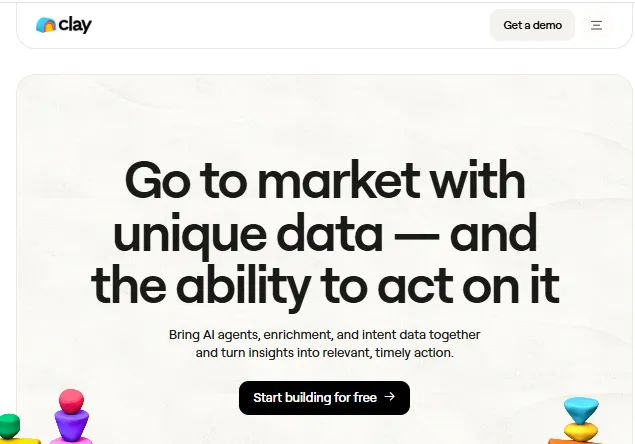
Clay is the tool that separates teams with a RevOps person from teams without one. If you have someone who gets excited about multi-provider waterfall enrichment, buy Clay immediately. If your team is three SDRs and a manager with no technical support, come back to this one later.
The product pulls from over 150 data providers in sequence. If provider A cannot find the email, Clay tries provider B, then C. That approach produces match rates no single database can match on complex ICP lists.
Clay crossed $100 million in ARR in December 2025 and hit a $3.1 billion valuation in its Series C. The March 2026 pricing overhaul cut data marketplace costs by 50 to 90 percent — a meaningful change for teams already in the platform. One important note: Clay does not do outreach. You still need a sequencing tool on top of it.
“It can get very expensive if you do not know how to use it with APIs. Creating the correct waterfall is what makes it a game changer for outbound. — G2 Reviewer”
Pricing:
- Free plan available
- Launch: $185 per month (annual billing) — 2,500 Data Credits and 15,000 Actions
- Growth: $495 per month (annual billing) — 6,000 Data Credits, unlimited Actions
- Legacy Starter ($149), Explorer ($349), and Pro ($800) plans remain for existing customers only
7. Cognism
G2 Rating: 4.6 / 5 (700+ reviews)
Best for: Teams running outbound in Europe, the UK, and the Middle East
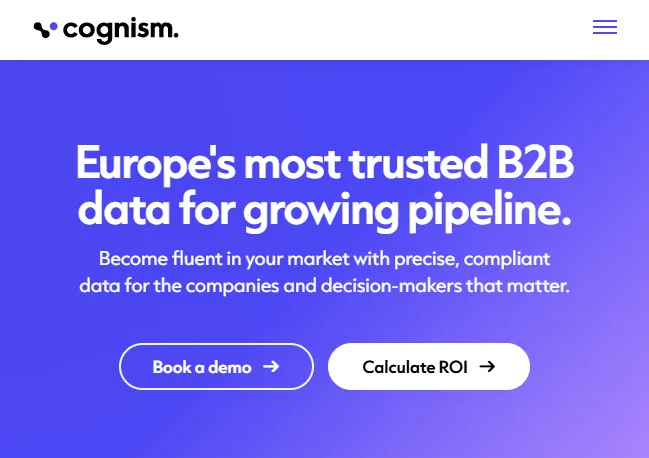
If Apollo is the tool I would give a new SDR working North America, Cognism is the one I would give a rep who dials into EMEA. The difference is mobile data quality. Cognism’s phone-verified numbers in Europe connect more reliably than anything else I have tested in that region.
The platform screens against Do Not Call lists across 15 countries. For teams selling into the UK, Germany, or the Nordics, that compliance layer is non-negotiable.
Fair warning: Cognism does not publish pricing. You need a demo, a sales call, and a custom quote. The fair-use cap of around 2,000 records per user per month is also not prominently mentioned at sign-up. Ask about it before you commit.
“All outbound leads stem from Cognism’s data. My pipeline value alone was $4.9 million in 2022. — SDR Manager, Cloudreach”
Pricing:
- Quote-based only — no public pricing
- Platinum (Grow): approx. $15,000 platform fee + $1,500 per user per year
- Diamond (Elevate): approx. $25,000 platform fee + $2,500 per user per year
- Discounts of 28 to 52 percent are common per Vendr benchmarking data
- Never accept the first number they send
8. 6sense
G2 Rating: 4.3 / 5 (1,000+ reviews)
Best for: Enterprise ABM teams with a mature RevOps function
6sense uses predictive AI to identify in-market buyers two to four weeks before they raise their hand. When it is set up correctly, it is one of the most powerful signals in B2B sales.
When it is not set up correctly, you have paid $55,000 for a platform your team uses once a month. The implementation takes four to eight weeks and requires a dedicated RevOps or marketing ops person to run day-to-day. It is not a tool you buy and leave running on autopilot.
Pricing: Free plan includes 50 credits per month. Paid plans are custom. Median annual contract is $55,211 per Vendr data. Enterprise packages reach $200,000 or more.
9. Seismic
G2 Rating: 4.7 / 5 (1,400+ reviews)
Best for: Enterprise teams managing large content libraries and structured sales training

Seismic gives reps instant access to pitch decks, case studies, and playbooks. Managers see which content gets used in deals and which content sits untouched. The coaching and learning module covers onboarding and rep development at scale.
For a GTM engineer, Seismic solves a real problem. It brings structure to content, tracks usage, and connects it to pipeline impact. This matters most in enterprise teams where ramp time is long and content gets messy fast.
Pricing: Custom pricing only. Demo required.
10. Demandbase
G2 Rating: 4.3 / 5 (1,000+ reviews)
Best for: B2B teams combining ABM with account-based advertising
Demandbase combines account identification, third-party intent data, and ABM advertising in one platform. Where 6sense leans heavily on predictive AI, Demandbase leans on ICP fit and advertising activation. A solid fit for marketing-led teams that want paid media spend connected directly to target account lists.
Pricing: Custom quote only. Contact Demandbase directly.
11. Salesforce Pardot
G2 Rating: 4.0 / 5 (3,000+ reviews)
Best for: Salesforce-native teams needing B2B marketing automation in the same ecosystem
Pardot, now officially called Marketing Cloud Account Engagement, sits inside the Salesforce ecosystem. It handles lead nurturing, email campaigns, and lead scoring without data sync headaches.
My honest take: I would only recommend Pardot if you are already deeply committed to Salesforce. If you are not, HubSpot Marketing Hub or Metadata will serve most teams better for less money.
Pricing: Growth starts at $1,250 per month for up to 10,000 contacts. Plus is $2,500. Advanced is $4,000. Premium is $15,000 per month.
12. Userpilot
G2 Rating: 4.6 / 5 (600+ reviews)
Best for: SaaS teams using a product-led or hybrid GTM motion
Userpilot builds in-app onboarding experiences without code. Product tours, in-app guides, feature announcements, and feedback surveys. The analytics layer shows exactly where users drop off during onboarding.
I think of Userpilot as the tool that answers: why are people signing up for the free trial but not converting? The answer is almost always somewhere in the onboarding experience, and Userpilot shows you exactly where.
Pricing: Starter is $299 per month. Growth is $799 per month. Enterprise is custom pricing.
13. UserGems
G2 Rating: 4.8 / 5
Best for: Teams running outbound triggered by job changes, promotions, and new funding events
UserGems watches for signals like a former champion moving to a new company, a key stakeholder getting promoted, or a target account raising a funding round. When any of those events happen, the platform triggers a personalized outreach sequence immediately.
The AI agent called Gem-E drafts messages based on the signal context and drops them directly into your CRM and sales engagement tools so reps can act without leaving their workflow. The logic is sound: the best time to reach a buyer is when something in their world just changed.
Pricing: Custom pricing only. A pipeline guarantee is included with some packages.
14. PartnerStack
G2 Rating: 4.7 / 5 (600+ reviews)
Best for: SaaS companies running affiliate, referral, and reseller partner programs
PartnerStack provides a dedicated network to find and activate GTM partners. The platform handles partner onboarding, reward tracking, payment automation, and performance reporting. The matching feature connects you to partners whose audience already overlaps with your ICP.
Pricing: Not listed publicly. Demo required for pricing.
15. HockeyStack
G2 Rating: 4.7 / 5
Best for: Revenue teams that need one source of truth across marketing, sales, and product data
HockeyStack unifies all GTM data into one platform. You ask questions in plain English — ‘which channels are generating our best enterprise pipeline?’ — and it answers without a SQL query or an engineering ticket.
For teams that argue about attribution in every single pipeline review, HockeyStack ends that argument. It tracks the full buyer journey and attributes revenue to specific activities across every touchpoint.
Pricing: Not publicly listed. Demo required.
16. Metadata.io
G2 Rating: 4.5 / 5 (400+ reviews)
Best for: B2B marketing teams spending $100,000 or more per year on paid media
Metadata automates paid B2B campaigns on LinkedIn and Facebook. It handles audience building, ad testing, budget optimization, and campaign reporting. The web personalization layer shows different content to different audience segments based on firmographic data.
For teams spending significant paid media budgets, the automation saves the equivalent of a full-time person’s worth of manual campaign management.
Pricing: Not listed publicly. Demo required for a custom quote.
17. Reachdesk
G2 Rating: 4.5 / 5 (500+ reviews)
Best for: B2B teams using gifting and direct mail as part of their ABM or customer expansion motion
Reachdesk sends personalized gifts, gift cards, and branded items at scale. You can trigger sends based on deal stage, meeting attendance, or customer milestones. I have seen a well-timed gift move a stalled enterprise deal faster than three months of follow-up emails combined.
Pricing: Custom pricing. Demo required.
18. OptinMonster
G2 Rating: 4.3 / 5 (1,000+ reviews)
Best for: Marketing teams converting website traffic into leads with pop-ups and opt-in forms
OptinMonster builds pop-ups, slide-ins, banners, and exit-intent forms for your website. Targeting rules let you show the right offer to the right visitor based on scroll depth, exit intent, and referral source.
For teams investing in inbound traffic, converting more of that traffic before it leaves is often the fastest pipeline win available without spending another dollar on ads.
Pricing: Basic starts at $9 per month billed annually. Plus is $19. Pro is $29. Growth is $49. All plans require an annual commitment.
19. Oneflow
G2 Rating: 4.5 / 5 (700+ reviews)
Best for: Sales teams that want interactive, trackable digital contracts
Oneflow creates contracts buyers can interact with directly in their browser. You can see when a contract is opened, which sections get reviewed, and when the buyer is close to signing. That engagement data removes the guesswork from follow-up timing.
Pricing: Custom pricing only. Contact Oneflow for a quote.
20. Kaspr
G2 Rating: 4.4 / 5
Best for: Individual reps and small teams prospecting directly on LinkedIn
Kaspr is a Chrome extension that pulls email addresses and phone numbers from LinkedIn profiles. It is GDPR and CCPA aligned. The setup is fast and requires no technical knowledge.
It is a smart starting point for teams doing most of their prospecting on LinkedIn who want affordable, compliant contact data without the complexity of a larger platform.
Pricing: Free plan available. Paid tiers include Start Up, Enterprise, and Custom. Full pricing is listed on Kaspr’s website.
21. GoTo
G2 Rating: 4.3 / 5 (1,000+ reviews)
Best for: Teams running high volumes of prospect meetings and product demos
GoTo is a video conferencing platform that requires no download or plugin. Prospects join from any device in seconds. Clean, professional, and reliable for teams running 20 or more discovery calls per week.
Pricing: Meeting functionality starts at $12 per user per month billed annually.
22. Juro
G2 Rating: 4.6 / 5 (400+ reviews)
Best for: Revenue teams that want fast, browser-native contract creation and signing
Juro lets sales teams create, send, and sign contracts from one browser-based platform. The AI assistant drafts contract language and flags risk clauses before legal sees them. No PDF downloads, no email chains, no version confusion.
A slow contract process kills deal momentum at the worst possible moment. Quarter-end should not be derailed by a PDF going back and forth six times.
Pricing: Custom pricing based on company size and feature needs.
23. Grow
G2 Rating: 4.2 / 5 (300+ reviews)
Best for: Non-technical teams that need business intelligence dashboards without a data engineer
Grow is a no-code BI tool. Connect your data sources, build visual dashboards, and share them with the whole team without writing a single SQL query or waiting three weeks for your data team to prioritize the request.
Pricing: Not publicly listed. Contact Grow directly for a quote.
24. Groove
G2 Rating: 4.6 / 5 (200+ reviews)
Best for: Small to mid-market teams that want an affordable shared inbox for customer support
Groove is a helpdesk tool for small support teams. Shared inbox, ticket assignment, resolution tracking, and 50+ response templates. For GTM teams launching into new markets, fast and responsive support in the early days builds the kind of word-of-mouth you cannot buy.
Pricing: Standard is $24 per user per month. Premium is $36. Advanced is $56. A 30-day free trial is available.
How to Choose the Right GTM Tools
Here is the framework I use when helping a team build or audit their stack.
Start with the constraint, not the tool. What is the single thing most limiting your pipeline right now? If the bottleneck is finding qualified buyers, start with sales intelligence. If it is low trial-to-paid conversion, look at product adoption. If deals are going dark with no visibility, add revenue intelligence. The tool should answer a specific problem.
Keep the count small. Most teams do not need more than four or five core platforms. The teams I see struggling most often have 12 tools and consistently use three of them.
Pick tools that push data into the CRM. Not tools that create a parallel source of truth nobody trusts. Your CRM is either the one place everyone believes or the one place nobody does. There is no in-between.
Match complexity to maturity. Clay is the right tool for a RevOps-led team with technical resources. It is the wrong tool for a team without them. Gong earns its price at 15 or more reps. At five, a simpler call recording tool does the same job for 90 percent less.
Buy the tool you need for the next 90 days. Not the one you think you might need in 18 months.
Frequently Asked Questions
What is the best go to market tool for a small team?
Apollo.io is the strongest starting point for teams under 10 people. The free tier gives you real database access and basic email sequencing on day one. Pair it with HubSpot’s free CRM to manage the pipeline. Together they cover most of what an early-stage team needs without any monthly spend.
How much should a GTM stack cost?
A five-person outbound team on Apollo Professional plus HubSpot Starter would spend roughly $600 to $800 per month. A mid-market team adding Gong and 6sense can reach $100,000 per year or more. Start with what solves your most urgent problem, not what looks impressive on a budget slide.
How do I choose the right go to market tools for my business?
Start with your bottleneck. If you lack leads, focus on prospecting tools. If deals stall, look at sales engagement or enablement tools. The best go to market tools are not the most popular ones, but the ones that solve your current pipeline problem.
Are all sales tools considered go to market tools?
Not all sales tools qualify. A tool becomes part of your go to market stack only if it directly impacts revenue. If it helps generate leads, move deals forward, or close customers, it fits. Otherwise, it is just operational software.
How many go to market tools do you actually need?
Most teams need fewer tools than they think. A focused stack of 3 to 6 tools is often enough to run an effective go to market strategy. Adding more tools without clear use cases can slow down execution and increase costs instead of improving results.