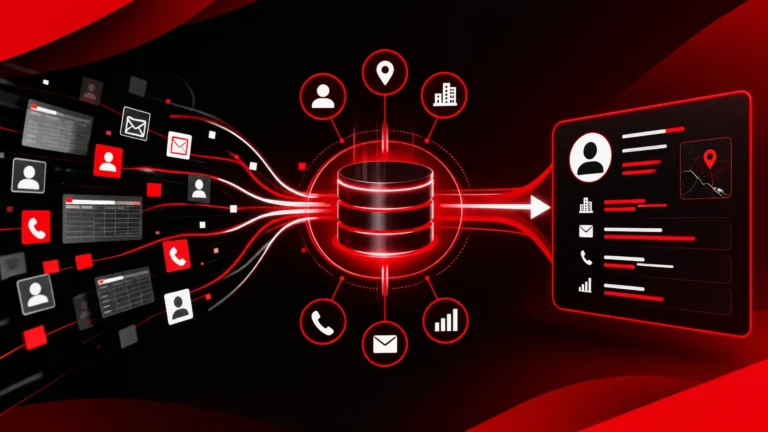
What Is Intent Data? Types, Sources, and How to Use It
TL;DR
- Intent data is behavioral proof that a company is researching a product, service, or problem, before anyone fills out a form.
- It splits into two types: first-party data from your own site and product, and third-party data pulled from outside networks.
- Buyers finish roughly 70% of their research before talking to a seller, per 6sense’s own study of 900+ buyers.
- Calling too early, before that research wraps up, lowers your odds of winning the deal. It doesn’t raise them.
- Intent shows timing, not fit. Pair it with firmographic and technographic data before you act on a single spike.
Intent data tells you a company is researching your category. Most sales teams see that signal and pick up the phone immediately.
That’s usually the wrong move, and the research backs me up.
This guide breaks down what intent data is, first-party versus third-party sources, and how providers collect it behind the scenes. You’ll also see why calling too fast can cost you a deal, plus what to check before you buy.
What Is Intent Data?
Intent data is behavioral information showing a company is actively researching a product, service, or business problem. It comes from content consumption, search activity, review-site visits, and similar signals. The signal points to timing: who’s in-market right now, not just who fits your target list on paper.
Picture a company reading three articles about revenue operations software this week. Then it visits two review pages for tools in that category.
Nobody there filled out a form. Nobody answered a cold call. The intent existed anyway, sitting in server logs and content platforms most vendors never check.
Sales and marketing teams use this signal to answer one question: who’s shopping right now? That’s a different question than who matches your ideal customer profile on paper.
Fit and timing are separate problems. Most B2B data only solves one of them.
Intent Data vs. Other B2B Data
Intent data is one of five core types of B2B data, and people mix it up with the other four constantly.
| Data Type | What It Tells You | Example |
|---|---|---|
| Firmographic | Who the company is | Industry, headcount, revenue |
| Technographic | What the company runs | CRM, cloud provider, dev stack |
| Contact | Who to reach inside the company | Name, title, email, phone |
| Intent | When they’re ready to talk | Research activity, review visits, content downloads |
Firmographic data narrows your list to companies that fit. Technographic data shows what they already run, which flags a chance to switch them over. Contact data gets you to the right person once you know who to call.
Intent answers a question the other three can’t touch. Is this account paying attention right now, or still just a row in a spreadsheet?
First-Party vs. Third-Party Signals
Knowing what intent data is only gets you halfway there. Where it comes from decides how much you can trust it.
First-Party Signals
First-party intent data comes from your own properties, your website, your product, your email list, your gated content. A prospect hitting your pricing page three times in a week counts. So does a free-trial user activating a paid feature out of nowhere.
This is the highest-confidence signal available, because you watched it happen yourself. The catch is scope: first-party data only covers people who already found you.
Third-Party Signals
Third-party intent data comes from outside your properties: industry publications, review sites, content networks, and ad exchanges. A provider pulls this activity across thousands of sites and sells you the pattern.
Most of the confusion in this market starts here, because not every provider collects it the same way. I’ll get into that in the next section.
Search, Engagement, and Purchase Intent
Some vendors slice third-party data into subtypes:
- Search intent: keywords someone typed into Google
- Engagement intent: content read on your site or a partner’s
- Purchase intent: pricing visits, demo requests, comparison searches
The labels shift by vendor. Underneath, it’s still first-party or third-party collection wearing a different name.
How Providers Collect Signals
Two collection methods dominate the third-party market, and they produce different quality.
Bidstream Data
Bidstream data comes from ad exchanges. A provider scrapes keywords off pages sitting in real-time ad auctions.
There’s no record of how often a visitor returned, or how long they stayed. It’s cheap, and the quality shows.
Cooperative Networks
Cooperative networks work differently. A publisher agrees to share visitor activity, and the provider tracks a normal pattern for that domain over time.
Bombora runs one of the larger co-ops in this space, built from more than 5,000 participating B2B websites. Bidstream data has no baseline, so one visit looks the same as a hundred. Co-op data tracks activity against each domain’s normal pattern, so a spike means something real.
Providers increasingly fold third-party intent into broader sales intelligence platforms instead of selling it standalone. Worth checking before you shop. You might already be paying for it inside a tool you own.
Why Acting Too Fast Backfires
Every intent data pitch promises the same thing: catch buyers earlier, win more deals. The research says something close to the opposite.
The Dark Funnel Problem
Most of a buyer’s research happens somewhere you can’t see it: peer conversations, private communities, third-party review sites. 6sense built a name for this blind spot: the Dark Funnel. The industry has since adopted it as shorthand for research activity that never touches your own tracking.
Intent data is the closest thing to a flashlight for that dark space. It won’t show you everything, but it beats flying blind.
Early Contact Lowers Win Rates
This is the part most intent data pitches skip. B2B buyers complete about 70% of their buying journey through independent research before they talk to a seller. That’s from 6sense’s own survey of more than 900 B2B buyers.
The finding that surprised 6sense’s own team: contact made before that 70% mark lowers the odds of winning the deal. Doesn’t matter if the buyer or the seller initiates it.
I’ve watched this happen on real accounts. A rep sees a spike, calls within the hour, and gets a cold, guarded response.
It’s not that the account lacks interest. They haven’t finished forming an opinion yet, and an eager rep just interrupted that process mid-thought.
Chasing Ghosts: The Noise Problem
Timing isn’t the only failure point. Intent signals get noisy fast.
A single visit to a comparison page isn’t the same as a five-day research binge from three people in procurement. Plenty of platforms score both the same way anyway.
Sales leaders have a name for the fallout: chasing ghosts. Accounts light up hot on the dashboard, then go cold the second someone calls.
The fix isn’t ignoring the data. It’s using the signal to change what you say and when you reach out, not just deciding who gets called first.
Questions to Ask a Provider
Not every provider deserves your budget, and a sales demo won’t show you the weak spots. Ask these before you sign anything.
- How is the signal collected? Bidstream scraping, a co-op network, or your own first-party sources? Bidstream-only providers carry the weakest quality of the three.
- What counts as a spike? Every platform sets its own threshold. A provider that can’t explain its baseline is guessing, not measuring.
- Is this account-level or contact-level data? Most third-party intent identifies a company, not a person inside it. Anyone promising named contacts from third-party signals alone is overselling.
- How fresh is the signal by the time I see it? A spike that reaches your dashboard three days late already lost most of its value. Push for exact latency, not a vague real-time claim.
- What’s the consent basis behind the data? Ask how the publisher network gets consent, and whether that consent covers resale to a company like yours. A vague answer is a legal exposure, not just a sourcing detail.
How to Start Using Intent Data
If this belongs in your stack, don’t run every account through it right out of the gate.
Step 1: Pick one signal to test. Start with a single third-party topic or your own pricing-page traffic. Testing everything at once buries the one signal that moves pipeline.
Step 2: Set a real threshold. Decide what counts as meaningful activity before you turn on alerts. A 10-person company visiting one page twice isn’t the same signal as a 1,000-person enterprise account researching for a week.
Step 3: Route it to a person, not a dashboard. An alert nobody sees for hours might as well not exist. Connect the platform to Slack or your CRM, and treat it like any other enrichment field.
Step 4: Change the message, not just the timing. Don’t turn a warm signal into a generic cold call. Reference what the account likely researched, and lead with something educational instead of a demo pitch.
Step 5: Watch your own customers too. Apply the same signals to existing accounts. A customer researching a competitor is an early churn warning worth a same-week conversation.
Where This Fits Your GTM Stack
None of these tactics work alone. Intent data earns its budget line once you stack it against everything else you know about an account.
Pairing Intent With ABM
Run account-based marketing? Pairing intent signals with account tiers and warm-path routing becomes the next layer on top of this system.
Pairing Intent With Technographic Data
Outside ABM, technographic data pairs naturally with intent. A company running a competitor’s tool with zero research activity is low priority.
The same company, layered with a fresh research spike, is worth calling first. Whoever owns data quality on your side, usually RevOps, should own the thresholds and routing rules across every signal type. Not just intent.
Is Buying Intent Data Legal?
Before any of this goes into production, it helps to know what the law actually covers.
Buying and using B2B intent data is legal in the United States and most of Europe. How the data was collected, and what you do with it after, is where the risk sits.
Where Bidstream Falls Short
Third-party bidstream data sits on the weakest legal ground. It’s typically scraped from ad-exchange auctions without a clear, documented consent trail.
That gap creates real exposure under GDPR’s consent rules for cookie-based tracking. Cooperative networks avoid this. Publishers in a co-op agree to share visitor data and handle consent before it reaches the provider.
What Changed With the CCPA
California’s B2B exemption under its privacy law ended on January 1, 2023. Business contacts in California now carry the same privacy rights as individual consumers.
Plenty of B2B teams still haven’t updated their lists for it. Check where a provider’s signal comes from before you sign, the same way you’d check a used car’s history before buying it.
Conclusion
Intent data isn’t a shortcut to warmer conversations. It’s a signal telling you who’s paying attention, and timing it wrong costs you the deal instead of winning it.
Start with one signal. Set a real threshold. Route it to a person who’ll act within hours, not days.
Want more GTM breakdowns like this one? Subscribe to the GTMonly newsletter for practitioner-level frameworks delivered straight to your inbox.
Frequently Asked Questions
What is intent data in B2B marketing?
Intent data is behavioral information showing a company is actively researching a product, service, or business problem. It comes from content consumption, search activity, and review-site visits. Sales and marketing teams use it to spot in-market accounts, instead of relying on fit alone.
What’s the difference between first-party and third-party intent data?
First-party intent data comes from your own website, product, and email activity. Third-party intent data is pulled by an outside provider from publishers, review sites, and ad networks you don’t own. First-party data carries higher confidence but smaller scope.
Does intent data replace lead scoring?
No, they answer different questions. Lead scoring rates people who already interacted with you, based on fit and engagement. Intent data reveals research happening on sites you don’t own, before anyone touches your funnel. The strongest setups use both together.
Is buying B2B intent data legal?
Yes, buying and using B2B intent data is legal in the United States and most of Europe. The risk sits in how a provider collected the signal, not in the purchase itself. Co-op networks with documented consent carry far less exposure than scraped bidstream data.
Does intent data replace an ideal customer profile?
No. Intent data shows timing, not fit. An account with strong intent but the wrong company size or industry is still the wrong account. Fit filters your list first, and intent tells you which accounts to prioritize.
How accurate is B2B intent data?
Accuracy depends on collection method. Bidstream data has no historical baseline and produces more false positives. Co-op networks and first-party signals track activity against a domain’s normal pattern instead, which makes a real spike easier to spot.
Should I call an account the moment an intent signal fires?
Not usually. 6sense’s research shows contact made before a buyer finishes roughly 70% of their research lowers the odds of winning. Use an early signal to shape content and messaging first, then time direct outreach closer to when the buyer is ready.