What Is Account-Based Experience (ABX)?
TL;DR
- Account-based experience (ABX) is a B2B go-to-market strategy that runs account-based personalization across the full lifecycle: pre-sale, sale, and post-sale.
- It coordinates marketing, sales, and customer success so a target account gets one consistent experience instead of three disconnected ones.
- The formula: ABM + customer experience = ABX. Same targeting, wider scope, deeper focus on how the account feels at every touch.
- The big add over ABM is post-sale: onboarding, adoption, expansion, and renewal, where most account value actually lives.
- ABX runs on continuous orchestration and shared account data, not one-off campaigns. Adopt it once your ABM foundation already works.
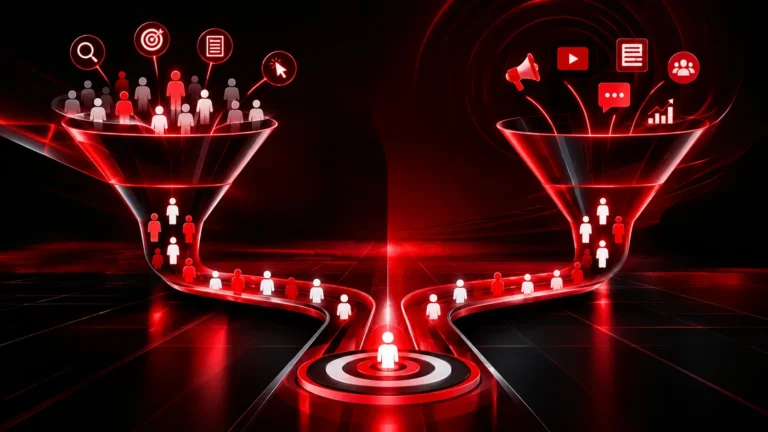
Account-based experience (ABX) is a B2B go-to-market strategy that takes everything you do to win a target account and stretches it across the account’s whole life with you. Pre-sale. The deal itself. And every stage after: onboarding, adoption, expansion, renewal.
The formula the field settled on says it cleanly: ABM plus customer experience equals ABX. You keep account-based targeting. You add a relentless focus on how the account experiences each touch. Then you put marketing, sales, and customer success on the same page so the account meets one company, not three.
This guide covers what ABX is, the problem it fixes, how it differs from ABM, the components of a real program, the benefits, and the honest test for whether you’re ready to run it.
What ABX Means in Practice
ABX sits one level above account-based marketing as a go-to-market strategy. Strip away the acronym and it comes down to three moves.
- Full-lifecycle personalization. The same account targeting and tailored messaging you use to win a deal gets applied after the deal too: onboarding, driving adoption, expansion, renewal. Acquisition is one chapter. ABX writes the whole book.
- Cross-functional alignment. Marketing, sales, and customer success work off one shared view of the account and coordinate their touches. When each team shows up, the story holds together instead of contradicting itself.
- Experience over tactics. The emphasis moves from running individual campaigns to building trusted, useful interactions that compound into a relationship. A campaign ends. An experience keeps paying off through expansion and renewal.
The thread tying all three together is a simple truth about how people buy now. Buyers live with information abundance and attention scarcity, so interruption stops working. What earns attention is relevance and trust, delivered at the moment the account is actually open to it.
The Problem ABX Fixes
Take one account in a live buying decision. The CFO is digging into your pricing. The CTO is reading your technical docs. Somewhere in the same building, an end user is clicking around your help center.
Three people. One company. All sizing you up at once.
Run disconnected ABM and each of them meets a different version of you. Finance content for the CFO, technical content for the CTO, and nobody syncs the two. So when they compare notes on Monday, your messages don’t match.
The deeper failure shows up inside your own walls:
- Marketing says one thing in its campaigns.
- Sales says another on the call.
- Customer success has no idea who this account is or what was promised.
Deals die in those gaps. A seven-figure opportunity slips because one decision-maker hit a clumsy, contradictory experience and quietly lost faith. ABX closes the gaps. The CFO and CTO still get content built for their role, but it’s coordinated, so the narrative survives the moment they talk to each other. The account deals with one company that clearly gets them.
ABM vs ABX: The Real Difference
ABM and ABX share a foundation. Both go after high-value named accounts and personalize hard for them. Three things separate them: scope, success metrics, and the engine that drives them.
| ABM | ABX | |
|---|---|---|
| Scope | Identify and win target accounts | Pre-sale, sale, and post-sale |
| Owned by | Marketing, with sales | Marketing, sales, and customer success |
| Measures | Pipeline, closed deals | Plus adoption, retention, expansion, account health |
| Engine | Can run on campaigns | Continuous orchestration and account intelligence |
| Focus | Targeting and personalization | The whole experience, end to end |
The cleanest way to hold the difference: ABM is how you win the account, ABX is how you win it, keep it, and grow it. ABM is a chapter inside ABX, not a rival to it. You don’t throw out your ABM work, and the types of ABM you already run still apply. You connect that work to sales and customer success so the experience stops snapping at the handoffs.
How ABX Plays Out: A Before and After
The difference gets concrete fast when you watch the same account run through both models.
Without ABX:
- Marketing runs an account-based ad.
- Sales follows up and closes the deal.
- Customer success inherits the account with a thin handoff, learns the relationship from scratch, and ends up fighting churn reactively months later when the account is already cooling.
With ABX:
- Personalized pre-sale content warms the buying committee.
- Sales and customer success build a joint onboarding plan before the ink dries.
- Usage-focused campaigns drive real product adoption after launch.
- Expansion offers land based on what the account is actually doing in the product, not a calendar reminder.
Same account, same product, two completely different outcomes. Time-to-value drops, expansion gets far more likely, and the only variable is whether the experience was coordinated or left to chance at every handoff.
The Core Components of an ABX Program
Four pieces hold an ABX program together. Miss one and the experience cracks somewhere along the journey.
1. Enriched Account Intelligence
You start by selecting target accounts and going deep on them: the buying committee, the usage context, the signals.
- A sharp ideal customer profile is the floor, because ABX magnifies whatever list you point it at.
- Strong sales intelligence surfaces the buying signals that tell you when an account is open to engaging.
- Account research maps the committee so you know who to reach and what each person cares about.
Aim this at the wrong accounts and you just deliver a beautiful experience to companies that will never buy.
2. Unified Data and Orchestration
The three teams need one shared system: a common CRM, shared playbooks, and joint success plans.
- This is where good revenue operations earns its budget, owning the data and the workflows.
- Orchestration coordinates touches across channels based on what the account is actually doing, the same matching, routing, and timing that power a well-run ABM campaign.
- The right ABM platform keeps marketing, sales, and customer success acting on the same account picture in real time.
Break the data silos and the experience fractures the moment an account changes hands.
3. Personalized Plays by Lifecycle Stage
Different stages of the journey need different plays. Each one speaks to where the account actually is, not where your funnel wishes it was.
- Pre-sale: content that frames the problem and builds trust.
- Onboarding: plays that drive first value fast.
- Growth: campaigns that push adoption and surface expansion fits.
- Renewal: proactive plays that protect the account and grow it.
4. Lifecycle Measurement
ABX measures further down the road than ABM does. The metrics that prove ABM worked carry over, then ABX adds the post-sale numbers.
- Pre-sale: pipeline, account engagement, buying-committee coverage.
- Sale: win rate, deal velocity, deal size.
- Post-sale: time-to-value, adoption, expansion rate, renewal, account health.
The Benefits of ABX
When the four components click, the payoff shows up across the whole account relationship, not just at the point of sale.
- Fewer deals lost to broken journeys. Coordinated messaging means no contradictions when the buying committee compares notes.
- Faster time-to-value. A joint sales-to-CS onboarding plan gets the account to its first win sooner.
- Stronger retention. Customer success inherits context instead of starting cold, so problems get caught before they become churn.
- More expansion revenue. Expanding an account you already own costs far less than landing a new one, and ABX is built to spot those moments.
- Tighter team alignment. One shared account view ends the marketing-says-X, sales-says-Y standoff.
When to Adopt ABX
ABX is a step up, which means it assumes the step below is solid. Two signals tell you you’re ready.
- You sell to a defined set of high-value accounts and you need growth from both new deals and expansion inside accounts you already own. If expansion revenue matters to your number, the post-sale half of ABX is where the money is.
- You can genuinely align marketing, sales, and customer success around shared account data, and you’re ready to measure outcomes across the full lifecycle, not just acquisition.
If those aren’t true yet, ABX is premature. Layering experience orchestration on a shaky base just spreads the cracks across more teams. Get the ABM strategy working first, prove the motion, then evolve it into ABX once the base can hold the weight.
The smartest place to start is where the experience breaks today. The handoff from sales to customer success is the usual suspect. Fix that transition before you touch anything else, and you get most of the ABX benefit for a fraction of the effort.
The Bottom Line
Account-based experience is what account-based marketing grows into once you stop thinking in campaigns and start thinking in relationships. Same sharp targeting, far wider scope: the full lifecycle, three teams, one experience the account can actually trust.
The payoff is concrete. Fewer deals lost to disjointed journeys, faster time-to-value, stronger renewals, and more expansion revenue from accounts you already fought to win. The catch is just as concrete. None of it works on a shaky base.
Get your account-based marketing humming, align the three teams around shared data, then pull customer success into the machine. Do that, and a target account stops feeling worked by three departments and starts dealing with one company that genuinely gets it.
Frequently Asked Questions
What is account-based experience (ABX)?
Account-based experience (ABX) is a B2B go-to-market strategy that applies account-based personalization across the full lifecycle, pre-sale, sale, and post-sale, by coordinating marketing, sales, and customer success around one shared view of each target account. The goal is a single consistent experience that wins, keeps, and grows the account. In short, ABX is ABM plus customer experience.
What is the difference between ABM and ABX?
ABM focuses on identifying and winning target accounts, measured mostly by pipeline and closed deals. ABX extends that across pre-sale, sale, and post-sale, brings customer success into the work, and adds metrics for adoption, retention, and expansion. ABM can run on campaigns; ABX runs on continuous orchestration and shared account intelligence.
Is ABX replacing ABM?
No. ABX builds on ABM instead of replacing it. You keep the targeting and personalization, then add customer experience discipline and connect sales and customer success across the lifecycle. The usual path into ABX is linking an existing ABM program to the rest of the account journey rather than starting from zero.
What are the core components of an ABX program?
Four components: enriched account intelligence to understand buying committees and usage context, unified data and orchestration so teams act on one account view, personalized plays for each lifecycle stage from onboarding to renewal, and lifecycle measurement that tracks outcomes from pipeline through expansion.
What teams own ABX?
ABX is jointly owned by marketing, sales, and customer success, with revenue operations holding the data and workflows together. Marketing builds awareness and engagement, sales runs the deal, and customer success drives onboarding, adoption, and expansion. Shared data and shared metrics across all three keep the experience consistent.
What metrics does ABX use?
ABX keeps the account-level metrics ABM uses, like pipeline and account engagement, then adds lifecycle measures: time-to-value, adoption, expansion rate, renewal, and overall account health. The focus widens from acquisition to the health of the entire account relationship.
When should a company adopt ABX?
Adopt ABX when you sell to a defined set of high-value accounts, you need growth from both new deals and expansion, and you can align marketing, sales, and customer success around shared account data. If your ABM foundation, team alignment, or account data isn’t solid yet, build those first. ABX amplifies a working system; it won’t fix a broken one.