ICP vs Buyer Persona: The Difference and How to Use Both
TL;DR
- An ideal customer profile (ICP) picks the companies worth selling to. A buyer persona describes the people inside those companies and how they decide.
- Build the ICP first, using win rate, sales cycle, deal size, and retention by segment.
- Build personas from interviews with recent buyers, including the ones who chose a competitor or did nothing.
- Make one persona per buying role, not one per job title. B2B purchases involve far more people than one persona can cover.
- In founder-led, product-led, and B2C sales, the two can collapse into one. Know when that happens.
ICP vs buyer persona sounds like a vocabulary question. In practice, it decides where your pipeline leaks.
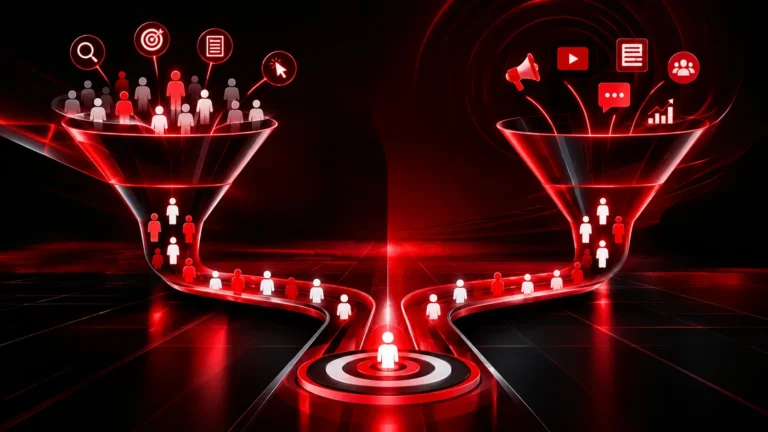
An ideal customer profile (ICP) picks the companies worth selling to. A buyer persona describes the people inside them and what it takes to win each one over.
Build only personas, and you’ll write sharp emails to CFOs at companies that will never buy. Build only an ICP, and you’ll reach the right companies with messages nobody there cares about. You need both, and the hard part is building them from evidence instead of a whiteboard.
ICP vs Buyer Persona in One Minute
An ICP describes a type of company: its industry, size, tech stack, and situation. A buyer persona describes a type of person in that company: their goals, fears, objections, and how they evaluate options.
| Ideal customer profile | Buyer persona | |
|---|---|---|
| Unit | Company (account) | Person (contact) |
| Question it answers | Which accounts are worth pursuing? | Who is involved, and what will convince them? |
| Built from | CRM data: win rate, deal size, sales cycle, retention | Interviews with recent buyers, call recordings, lost-deal reviews |
| Main users | Sales leadership, SDRs, RevOps, demand gen | Content, product marketing, sales reps |
| Lives in | Account fields, target lists, fit scores | Contact role fields, messaging, content, talk tracks |
| How many | Usually one to three | One per buying role, often three to five per ICP |
| Goes stale when | You change pricing, markets, or product | Buyer priorities or the buying group changes |
The short version: the ICP chooses the account, and the persona shapes the conversation.
What an Ideal Customer Profile Is (and Isn’t)
An ideal customer profile describes the kind of company that buys from you, succeeds with your product, and stays. The third part matters most. A segment that signs fast and churns in a year isn’t your ideal customer, however good it looks on the bookings report.
Most of an ICP comes from company-level data. That means firmographic data like industry, headcount, revenue, and region, plus technographic data like the systems a company already runs.
The part people skip is the situation.
“Software companies with 200 to 1,000 employees” is a list. Add “that just hired their first RevOps lead” and it becomes an ICP. Now it explains why they’d buy now.
Two additions make an ICP far more useful:
- Tiers. Tier 1 accounts match every criterion, Tier 2 miss one, and Tier 3 are worth a light touch. Tiers stop sales from treating a perfect fit and a partial fit the same way.
- A negative ICP. This is the list of companies you walk away from, like accounts too small to afford you or industries that churn. It saves as much time as the ICP itself.
An ICP is not a wish list. The enterprise logos you’d love on your website don’t belong in it until you’ve won and kept a few.
What a Buyer Persona Is (and Isn’t)
A buyer persona is a research-based profile of someone who influences or makes the purchase. A useful one explains how that person decides, not just who they are.
The strongest framework I know for this comes from Adele Revella and the Buyer Persona Institute. Their 5 Rings of Buying Insight break a persona into five questions:
- Priority initiative: What triggered the search for a solution now, while others stuck with the status quo?
- Success factors: What results does the buyer expect from the purchase?
- Perceived barriers: What makes them doubt your solution, or makes them choose a competitor or nothing at all?
- Decision criteria: Which capabilities do they compare when weighing options?
- Buyer’s journey: What steps do they take, which resources do they trust, and who else gets involved?
Notice what’s missing: age, hobbies, a stock photo, and a cute alliterative name. None of that changes what a marketer writes or what a rep asks on a call. If a detail doesn’t change a decision, cut it.
The same source adds a rule I’d tattoo on every persona doc. An insight counts when several buyers mention it. When only one buyer says it, it’s an outlier.
Why B2B Needs Both: The Buying Group Problem
If one person made every B2B purchase, you could get away with one persona. Nobody buys that way anymore.
Forrester’s State of Business Buying 2024 found that 13 people are involved in the average buying decision. And 89% of purchases involve two or more departments. The same research found that 86% of B2B purchases stall during the buying process.
That changes how you think about personas.
You’re not building a profile of “the buyer” anymore. You’re mapping the roles in a buying group. Then you build a persona for each role that regularly shapes the outcome.
Thirteen people doesn’t mean 13 personas. Group them by what they do in the decision:
- Economic buyer: signs off on the budget.
- Champion: wants the change and sells it internally.
- User: lives with the product every day.
- Technical evaluator: checks integration, security, and data.
- Blocker: can delay or kill the deal, often from legal, procurement, or IT.
That 86% stall rate is where blocker personas earn their keep. A deal rarely dies because the champion lost interest. It dies in a security review nobody prepared for.
When the ICP and the Persona Are the Same Thing
Sometimes the line between the two nearly disappears.
Founder-led sales to small businesses. When you sell to a 12-person agency, the owner is the economic buyer, the champion, and often the user. One profile covers both the company and the person.
Product-led growth. In a free trial or freemium model, the user often arrives before anyone thinks about buying. The first user’s persona matters more than usual, while ICP fit matters later, at upgrade time.
Scoring usage alongside company fit is standard practice in product-led growth.
B2C. Consumer brands rarely use the term ICP at all, because the buyer and the customer are the same person. Personas and segments do the work.
The opposite also happens. If you sell to both mid-market and enterprise, you may need two ICPs, each with its own personas. An enterprise deal adds procurement, legal, and security roles that a mid-market deal never sees.
How to Find Your ICP With Numbers
Opinions about who your best customer is are cheap. Your CRM already holds the answer.
Export your closed deals from the last 12 to 24 months, won and lost. Group them by one trait at a time, like company size, industry, or tech stack. Then compare the segments on the numbers that matter:
| Segment (illustrative) | Win rate | Avg. deal size | Sales cycle | Still a customer after 12 months |
|---|---|---|---|---|
| 50 to 199 employees | 31% | $8,000 | 35 days | 71% |
| 200 to 999 employees | 27% | $22,000 | 60 days | 90% |
| 1,000+ employees | 12% | $48,000 | 150 days | 88% |
The numbers above are made up, but the pattern is common.
The smallest segment wins most often and churns most. The largest pays most but wins rarely and takes five months. The middle segment is the ICP here: decent win rate, strong deal size, and customers who stay.
Run the same comparison on industry and tech stack. The traits that keep showing up in the strong segments become your ICP criteria. The traits that show up in churned accounts go on your negative ICP.
These criteria then power the rest of your go-to-market. They’re the filters that narrow TAM to SAM in TAM, SAM, and SOM market sizing. They also become the fit side of your lead scoring model.
What to do: Look for a segment that is strong on at least three of the four columns. If no segment stands out, your data may be too thin, so extend the time range before drawing conclusions.
How to Build a Buyer Persona From Interviews
Personas built in a conference room describe what your team believes. Personas built from interviews describe what buyers do.
Who to interview: people who made a buying decision in your category recently, ideally within the last few months. Include buyers who chose you, buyers who chose a competitor, and buyers who decided to do nothing. The last two groups teach you the most, because they tell you what didn’t work.
How many: keep interviewing each buying role until new conversations stop adding new themes.
What to ask: one or two open questions per ring, then follow up on anything specific.
| Ring | Questions to ask |
|---|---|
| Priority initiative | “What happened that made you start looking for a solution when you did?” |
| Success factors | “What did you expect to be different six months after buying?” |
| Perceived barriers | “What almost stopped you? Why did you rule out other options?” |
| Decision criteria | “What did you compare between the options on your shortlist?” |
| Buyer’s journey | “Walk me through the steps. Who else got involved, and when?” |
Ask about the decision, not your product. “What did you think of our demo?” gets you politeness. “Walk me through how you chose” gets you the truth.
You can also mine what you already have. Recorded discovery calls and lost-deal notes often contain the same insights in the buyer’s own words.
Write every insight in the buyer’s language, and keep a few direct quotes. Those phrases become your headlines, subject lines, and sales talk tracks.
Example: One ICP With Its Buyer Personas
Take an expense management platform. Everything below is illustrative, so build yours from your own data.
ICP: Professional services and software companies with 200 to 2,000 employees in North America and the UK. They use a cloud accounting system the platform integrates with, and finance still handles expenses through spreadsheets and email. Negative ICP: companies under 100 employees, or those mid-way through a multi-year contract with a competitor.
Personas inside that ICP:
- Controller (champion). Triggered by a month-end close that keeps slipping. Wants fewer manual corrections. Worries the rollout will disrupt the close. Needs to see a clean integration with the accounting system.
- CFO (economic buyer). Triggered by poor visibility into spending between closes. Wants control and accurate forecasts. Asks about payback period. Needs a business case with real numbers.
- Finance operations manager (user). Tired of chasing receipts and approvals every week. Worries about training time. Needs to see the approval workflow working.
- IT or security lead (blocker). Rarely excited, often decisive. Needs security documentation, data storage details, and access controls before approving.
Put the ICP and personas together, and outreach to one target account changes by role:
| Persona | Opening angle |
|---|---|
| Controller | If expense cleanup is slowing your close, this is how peers cut that step out. |
| CFO | This is how a company your size got a live view of spending instead of waiting for month-end. |
| Finance ops manager | Chasing receipts by email every week? This is what an automated approval flow looks like. |
Same account, three different reasons to care. That’s why cold email personalization works best at the persona level first, then the individual.
Where Each One Lives Day to Day
An ICP and personas stuck in a slide deck change nothing. They need to live in the systems your team uses every day.
The ICP lives on the account. Add fields for ICP tier and fit score in your CRM, and build target account lists from them. If you run account-based marketing, Tier 1 accounts become your one-to-one or one-to-few programs.
Personas live on the contact. Add a buying role field, like champion, economic buyer, user, or blocker, and fill it during discovery. Route contacts into sequences written for their role.
Personas also shape your content plan. Map each piece of content to the persona and ring it serves. That turns B2B content marketing from “what should we write next?” into a checklist of the questions each role asks.
Sales uses both on every call. The ICP tells a rep whether the account deserves a full sales cycle. The persona tells them which questions to ask and which objections to expect.
Common Mistakes With ICPs and Buyer Personas
- Personas built from assumptions. If no buyer was interviewed, you have a guess with a nice layout.
- One persona for the whole buying group. A controller and a security lead want opposite things from the same product.
- Job titles instead of buying roles. A “Head of Operations” can be a champion at one company and a blocker at another.
- An ICP based on logos you want. Aspirational accounts belong on a target list, not in the ICP.
- No negative ICP. Without one, reps keep chasing accounts that look close enough.
- Never revisiting either one. New pricing, a new market, or a new product line can change who buys within a year.
ICP vs Buyer Persona vs Target Audience vs Target Market
These four terms get mixed up constantly. They’re zoom levels on the same picture.
| Term | Describes | Example |
|---|---|---|
| Target market | The broad market you plan to sell into | Mid-market finance teams in North America |
| Target audience | The group your marketing is aimed at | Finance leaders and finance operations staff |
| Ideal customer profile | The specific companies most likely to buy and stay | Software firms with 200 to 2,000 employees still managing expenses by spreadsheet |
| Buyer persona | The people inside those companies and how they decide | A controller whose month-end close keeps slipping |
Where to Start
Export last year’s closed deals and compare segments on win rate, deal size, cycle length, and retention. That spreadsheet gives you the first real draft of your ICP.
Then book short interviews with a few recent buyers, including at least one you lost. Their answers will tell you more about your personas than any template.
Getting ideal customer profile vs buyer persona right comes down to order and evidence. Pick the right companies with data, then learn the people inside them by listening.
Frequently Asked Questions
What is the main difference between an ICP and a buyer persona?
An ICP describes the type of company that is the best fit for your product. A buyer persona describes a person inside that company, including their goals, concerns, and how they make buying decisions. The ICP decides which accounts to pursue, and the persona shapes how you talk to the people in them.
Which should you create first?
Create the ICP first. Personas only matter inside companies that can buy from you and succeed. Building personas first often leads to the right message reaching people at companies that can’t afford you or don’t have the problem.
How many buyer personas does a B2B company need?
Create one persona for each buying role that regularly shapes your deals. For many B2B products, that means three to five. Cover the economic buyer, the champion, the user, and common blockers like IT or procurement.
Can you have more than one ideal customer profile?
Yes. Companies selling to distinct segments, such as mid-market and enterprise, often need a separate ICP for each. Keep the total small so sales and marketing can stay focused.
Is a buyer persona the same as a customer avatar?
They’re often used as synonyms. “Customer avatar” is more common in B2C and small business marketing, while “buyer persona” is the standard term in B2B.
How often should you update your ICP and buyer personas?
Review both at least once a year. Update them sooner after a pricing change, a new market, a new product line, or a shift in who wins and churns.