Outbound Lead Generation: The B2B Playbook for Starting Conversations That Convert
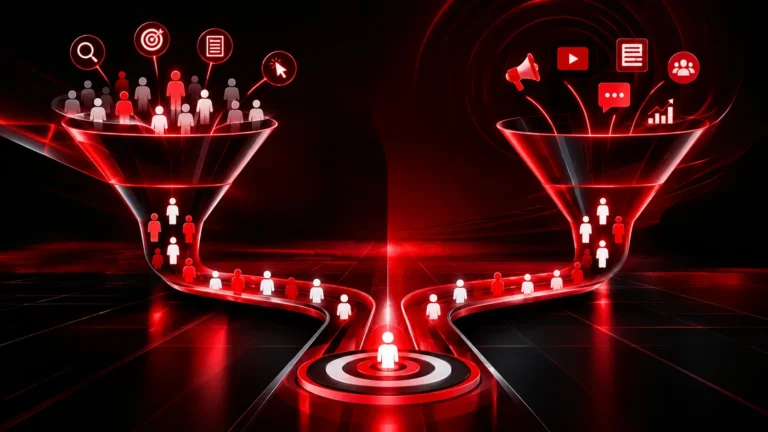
Outbound lead generation is finding buyers who fit your ideal customer profile and contacting them first, through cold email, calls, or LinkedIn. Your team makes the first move, so the message has to earn attention in seconds. Done well, it books meetings faster than any other B2B channel.
Key Takeaways: Outbound Lead Generation
- How it works: You define who to target, build a verified list, and find a reason to reach out now. Then a multichannel sequence turns contacts into booked meetings.
- What separates good outbound from spam: Timing and relevance. Messages tied to a real trigger, like a new leader or a funding round, earn replies. Generic blasts to static lists get ignored.
- Why deliverability matters: If your emails land in spam, nothing else matters. Google requires email authentication for every sender, plus stricter rules once volume gets high.
- What the law expects: In the United States, the FTC says CAN-SPAM has no exception for B2B email. Every message needs honest headers, a postal address, and a working opt-out.
- Which channels to use: The strongest programs combine two or three channels, usually email plus LinkedIn, with calls added for high-value accounts.
- How to measure it: Judge outbound by positive replies, meetings, and pipeline. Emails sent and open rates tell you almost nothing.
- When to choose it: Outbound shines with a defined list of target accounts or a large deal size. It’s also the fastest fix for a pipeline gap this quarter.
Outbound lead generation got its bad reputation honestly. For years, it meant buying a list, loading 10,000 contacts into a sequence, and praying fewer than 1% hit “report spam.”
That playbook is finished. Inbox providers filter it, buyers ignore it, and regulators can fine it.
The idea underneath still works, though. Pick the accounts you want, and go start the conversation instead of waiting.
I’ve seen a well-run outbound motion fill a calendar faster than anything else in B2B. This guide is the version that holds up now, from targeting and data to sequences, compliance, and measurement.
What Is Outbound Lead Generation?
In outbound lead generation, the seller acts first. That’s the clearest line in the inbound vs. outbound debate: who starts the conversation.
Outbound is usually run by SDRs (sales development reps), BDRs, founders, or an outside agency. Their job is to turn a cold contact into a qualified meeting.
Outbound Lead Generation vs. Outbound Prospecting
The terms get used interchangeably, but they cover different scopes. Outbound prospecting is the hands-on work of finding and contacting individuals. Outbound lead generation is the system around it: targeting, data, infrastructure, sequences, compliance, and measurement.
You can be a brilliant prospector and still run a broken outbound system. The failures I see are usually system failures, which is also why prospecting vs. lead generation is worth separating in your reporting.
Does Outbound Lead Generation Still Work?
Yes, with a higher bar than before. Three shifts explain why.
Buyers start more conversations on their own. They research through search, AI tools, peers, and review sites before they talk to anyone. Outbound has to reach them at the right moment, or put you on their radar before research begins.
Inboxes got stricter. Gmail, Yahoo, and other providers now enforce authentication and spam-complaint limits. A sloppy setup can bury every email you send.
Reply rates are low by nature. In my experience, cold email replies sit in the low single digits for typical campaigns. Strong targeting and timing are what push a program above that.
What this means for you: Contact fewer, better-fit people at a moment that matters to them. Volume alone stopped working a long time ago.
The Outbound Lead Generation Process in 7 Steps
Step 1: Define Who You’re Targeting
Every outbound program starts with one question: who exactly am I trying to reach?
Write down your ideal customer profile, including industry, company size, region, and tech environment. Add the two or three job titles that feel the pain you solve.
Then estimate how many accounts fit. A TAM, SAM, and SOM breakdown helps here. A market of 800 accounts calls for deep, account-based outreach, while 80,000 accounts can support a more scaled approach.
Step 2: Build and Verify Your List
Your list is the biggest lever in outbound. A great message sent to the wrong person is still spam.
A few rules I follow:
- Build small, tight segments when you build a prospect list, instead of one giant list.
- Verify every email right before a campaign, since B2B contacts change jobs constantly.
- Map several contacts per account, because B2B deals involve groups, not individuals.
- Fill gaps with data enrichment, like company size, industry, and role, so you can personalize properly.
If you’re choosing a data source, compare B2B contact database providers on accuracy for your specific region and roles.
Step 3: Find a Reason to Reach Out Now
This step separates modern outbound from spam. Instead of emailing a static list, look for a trigger that makes your message timely.
Strong buying signals include:
- A new VP or C-level hire in the team you sell to.
- A funding round or acquisition.
- Rapid hiring in a relevant department.
- Repeat visits to your pricing or comparison pages.
- Research activity on your category, picked up through intent data.
- A public post about a problem you solve.
A message tied to a real signal reads like help. The same message without one reads like a mass campaign.
Step 4: Set Up Infrastructure That Reaches the Inbox
Email deliverability deserves a seat in your outbound strategy. Treating it as an IT ticket is how domains get burned.
Google’s email sender guidelines set the baseline:
- Every sender needs SPF or DKIM authentication.
- Bulk senders (5,000+ messages a day to personal Gmail accounts) need SPF, DKIM, and DMARC, plus one-click unsubscribe on marketing messages.
- Reported spam rates should stay below 0.3%.
On top of that, a few habits protect your reputation:
- Use separate sending domains for outbound, so your main domain stays safe.
- Warm up new inboxes gradually before running campaigns.
- Keep daily volume per inbox modest, and spread sends across several warmed-up inboxes.
Step 5: Write Messages People Want to Answer
Learning how to write a cold email starts with one rule: keep it short, specific, and about the reader. This structure works well:
- Trigger: Why you’re writing to them now.
- Relevance: The problem that trigger usually creates.
- Proof: One line showing you’ve solved it before.
- Ask: A low-friction question instead of a demand for 30 minutes.
An example:
Subject: New sales leader at Acme
Hi Priya, saw that Acme brought on a new VP of Sales last month.
New sales leaders usually rebuild pipeline reporting in their first quarter, and it often eats days of RevOps time.
I recently helped a similar team cut that work from two days to two hours a week.
Worth comparing notes on how you’re handling it?
Keep it under 100 words, and skip attachments and long company intros. Real cold email personalization comes from the trigger and the problem it creates.
Step 6: Build a Multichannel Sequence
A single email rarely gets the job done. A sequence combines several touches across channels over two to three weeks.
| Day | Channel | Touch |
|---|---|---|
| 1 | First email tied to a trigger | |
| 2 | View profile and send a connection request with no pitch | |
| 4 | Phone | Short call referencing the email |
| 6 | Follow-up with a new angle, like an insight or example | |
| 9 | Message once connected, sharing something useful | |
| 12 | Short follow-up with a different question | |
| 16 | Polite close-out: “Should I stop reaching out?” |
Every touch should add something new. “Just bumping this up” adds nothing.
Adjust channels to your buyers. Some pick up for cold calling, while others only respond to LinkedIn prospecting.
Step 7: Handle Replies and Book Meetings Fast
A reply is where the real work starts. Sort every response and act quickly.
| Reply type | What it looks like | What to do |
|---|---|---|
| Positive | “Sure, let’s talk.” | Book a meeting within hours, with a calendar link |
| Objection | “We already use a tool for this.” | Ask one curious question before moving on |
| Referral | “Talk to my colleague.” | Thank them and contact the referral with context |
| Not now | “Check back next quarter.” | Set a dated reminder and add to nurture |
| Opt-out | “Remove me.” | Remove them immediately and permanently |
Positive replies cool off fast. A meeting booked within the hour is far more likely to happen than one arranged two days later. Use the first call as a proper discovery call to confirm fit before pitching.
Outbound Lead Generation Channels Compared
| Channel | Best for | Watch out for |
|---|---|---|
| Cold email | Personalized outreach across many accounts | Deliverability, spam complaints, and opt-out rules |
| Cold calling | Fast conversations and complex questions | Low connect rates and regional calling laws |
| LinkedIn outreach | Warming up contacts and building credibility | Weekly invitation limits and bans on automation tools |
| Direct mail | Reaching senior executives at key accounts | Cost per touch and slow feedback |
| Warm introductions | High-trust conversations with top accounts | Hard to scale |
| Event outreach | Booking meetings around conferences | Timing and competition for attention |
The strongest programs combine two or three channels. Email plus LinkedIn works especially well for B2B audiences, with calls added for higher-value accounts.
Compliance Rules You Can’t Skip
This isn’t legal advice, so check with counsel for your situation. Every outbound team should still know the basics.
The FTC’s CAN-SPAM compliance guide is clear on the essentials:
- The law makes no exception for business-to-business email.
- Headers and subject lines must be honest.
- Every message needs a valid physical postal address and a clear way to opt out.
- Opt-out requests must be honored within 10 business days.
- Each violating email can carry penalties of up to $53,088.
- You stay responsible even when an agency sends emails on your behalf.
Other regions set a higher bar. Whether cold email is legal in the EU and UK usually depends on legitimate interest under GDPR. Canada’s CASL is stricter still.
Whether cold calling is legal depends on the country and phone type. LinkedIn’s User Agreement also bans unauthorized automation.
Outbound Lead Generation Metrics
Measure outbound with lead generation metrics that run from list quality all the way to pipeline.
| Metric | Formula | What it tells you |
|---|---|---|
| Bounce rate | Bounced emails ÷ Emails sent × 100 | Whether your data is clean |
| Reply rate | Replies ÷ Contacts reached × 100 | Whether targeting and copy land |
| Positive reply rate | Interested replies ÷ Contacts reached × 100 | Whether the replies are worth having |
| Meeting rate | Meetings booked ÷ Contacts reached × 100 | Whether conversations convert |
| Meeting-to-opportunity rate | Opportunities ÷ Meetings held × 100 | Whether you’re reaching real buyers |
| Pipeline per SDR | Opportunity value created ÷ Number of SDRs | Whether the program pays for itself |
Track positive replies separately. Plenty of replies are “not now” or “remove me,” and a high raw reply rate can hide a weak program.
Outbound Funnel Math: A Worked Example
These numbers are illustrative assumptions. Plug in your own.
| Step | Assumption | Result |
|---|---|---|
| Verified contacts in a campaign | 1,000 | |
| Reply rate | 4% | 40 replies |
| Share of replies that are positive | 30% | 12 interested prospects |
| Positive replies that book a meeting | 60% | About 7 meetings |
| Meetings that become opportunities | 40% | About 3 opportunities |
Three opportunities from 1,000 contacts can be a great result if your deal size is large. It can be a terrible one if your deals are small. That’s why outbound economics depend on average contract value far more than raw volume.
In-House SDR Team vs. Outbound Agency
| Factor | In-house SDRs | Outbound agency |
|---|---|---|
| Speed to launch | Slower: hiring, training, and ramp time | Faster: existing process and infrastructure |
| Product knowledge | Deeper over time | Lighter, especially early |
| Control over messaging | Full | Shared |
| Learning stays in the company | Yes | Partly |
| Best for | Proven market and long-term outbound plans | Testing outbound, new markets, or short-term gaps |
If you hire an agency, ask how they verify lists, protect your domains, and handle opt-outs before you sign. Your name is on every email they send.
How AI Is Changing Outbound
AI has made research and first drafts far faster. A rep can summarize an account, spot a trigger, and draft an opening line in minutes.
It has also flooded inboxes with fake personalization. Buyers now recognize the pattern: a compliment about a LinkedIn post, followed by a pitch that could go to anyone.
How I’d use AI in outbound:
- Use it for research, like summarizing company news and spotting triggers.
- Use it for first drafts, then rewrite in your own voice.
- Keep a human review step before anything is sent.
- Never let it invent facts about a prospect or their company.
AI should help you be more relevant to fewer people. If it’s helping you send more generic emails to more people, it’s working against you.
Common Outbound Lead Generation Mistakes
- Buying or scraping huge lists. Unverified data wrecks deliverability and wastes rep time.
- Sending without a trigger. Generic timing produces generic results.
- Blasting high volume from one inbox. It’s the fastest route to the spam folder.
- Stopping after one email. Follow-ups often produce a large share of replies.
- Follow-ups that add nothing. “Just checking in” gives nobody a reason to reply.
- Pitching in the first LinkedIn message. It kills trust before the conversation starts.
- Ignoring opt-outs and legal basics. It’s risky, and it damages your brand.
- Measuring emails sent instead of meetings and pipeline. Busy dashboards can hide empty calendars.
My Take
Outbound lead generation is the most honest test of your positioning. When you reach out first, nobody is already interested. Your message has to earn attention in two sentences.
That’s why good outbound sharpens the whole company. You learn which problems hit hardest, which titles care, and which triggers create urgency. Feed that back to marketing, and inbound improves too.
So go small before you go big. Pick 200 accounts that fit, find a real reason to contact each one, and write like a human who did their homework. Scale only what earns replies.
FAQs About Outbound Lead Generation
What is outbound lead generation?
Outbound lead generation is the process of finding buyers who fit your ideal customer profile and contacting them first. Common channels include cold email, cold calling, LinkedIn outreach, and direct mail. The goal is to start sales conversations with accounts that haven’t reached out on their own.
What are examples of outbound lead generation?
Examples include an SDR emailing a VP of Sales after a funding announcement and a founder calling target accounts after a conference. A rep connecting with decision-makers on LinkedIn counts too, as do direct mail campaigns and warm introductions through mutual connections.
Does outbound lead generation still work?
Yes, when it’s targeted and timed well. Generic, high-volume campaigns perform poorly because inbox filters and buyers both ignore them. Teams that use clean data, real buying signals, and relevant messaging still book meetings reliably, especially with defined target account lists.
What is a good reply rate for outbound emails?
Cold email reply rates typically sit in the low single digits. Anything steadily above about 5% suggests strong targeting and messaging. Track positive replies separately, since some replies are opt-outs or polite rejections that inflate the raw number.
How many follow-ups should an outbound sequence have?
B2B outbound sequences typically use four to seven touches over two to three weeks, across email, LinkedIn, and phone. Each touch should add a new angle, like an insight or example. End the sequence with a polite close-out message rather than stopping abruptly.
Is cold email legal for B2B outbound?
In the United States, B2B cold email is legal if it follows the CAN-SPAM Act, which has no B2B exception. Emails need honest headers, a postal address, and a working opt-out honored within 10 business days. The EU, UK, and Canada have stricter rules.
What is the difference between inbound and outbound lead generation?
In inbound lead generation, buyers find you through content, search, or events and reach out first. In outbound lead generation, your team identifies buyers and contacts them first. Inbound compounds over time, while outbound produces conversations faster and lets you choose your targets.
Should I hire an outbound agency or build an SDR team?
An agency is usually faster for testing outbound or covering a short-term pipeline gap. An in-house SDR team builds deeper product knowledge and keeps learning inside the company. Many companies test with an agency first, then build in-house once the playbook works.
How do you build a lead list for outbound?
Start with your ideal customer profile and filter accounts by industry, size, region, and role. Add several contacts per account, enrich records with firmographic data, and verify every email right before sending. Small, tightly segmented lists usually outperform large generic ones.